Chapter 9 - The Courtroom Where My Mother Finally BrokeThree weeks later, Noah came home from the NICU.
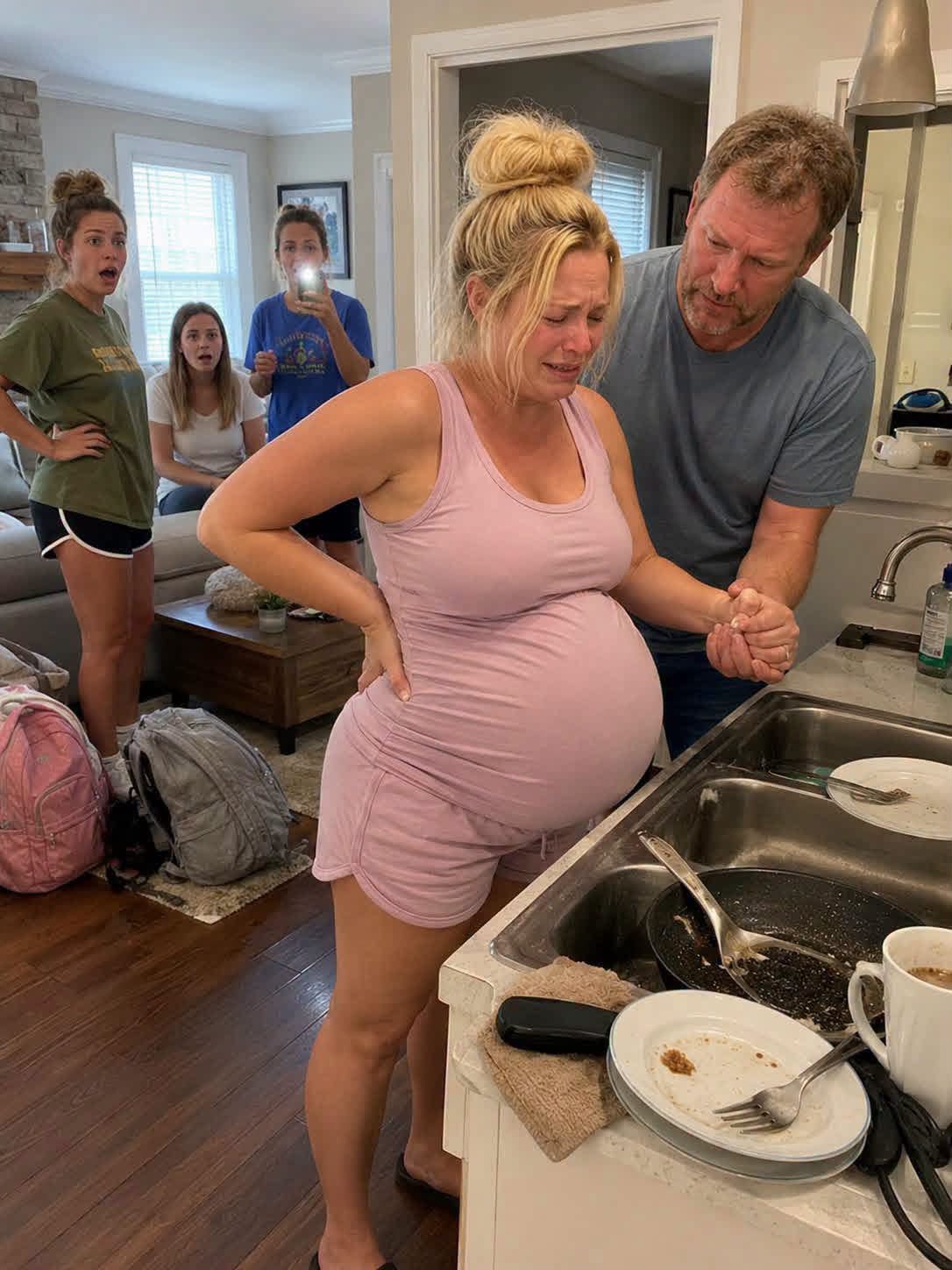
He was still tiny.
Too tiny for the newborn clothes we had washed twice and folded with nervous hands.
But he came home breathing on his own, wrapped in a blue blanket, with Emily sitting beside him in the back seat like she was guarding a miracle.
We did not go back to the apartment right away.
Not permanently.
The locks had been changed, the cameras installed, the lease updated, but the walls still held too much. Emily said she could smell that night in the kitchen even after I scrubbed the tile three times.
So we stayed in a short-term rental Paul helped us find through a client who owned a small furnished unit.
It was not fancy.
The fridge hummed too loud.
The kitchen table had scratches.
The bedroom window stuck when it rained.
But nobody had a key except us.
That made it feel like a palace.
For two weeks, we lived quietly.
Noah ate.
Slept.
Cried.
Emily healed slowly.
I learned how to warm bottles, track diapers, wash pump parts, and survive on ninety-minute stretches of sleep. I also learned that peace did not mean nothing hard happened.
Peace meant the hard things were not made harder by people who enjoyed your pain.
Then came court.
The first hearing was for the protective order.
My mother arrived wearing black.
Not funeral black.
Performance black.
Brittany walked beside her with sunglasses and a stiff mouth. Kayla and Lily followed, both looking smaller outside the apartment where they had once ruled the room.
Paul stood with us.
Emily held Noah’s carrier close, though the baby slept through everything like he had no idea his tiny life had forced generations of dysfunction into daylight.
My mother saw the carrier and started crying.
Not softly.
Loud enough for people nearby to turn.
“My grandson,” she whispered. “My poor grandson.”
Emily’s hand tightened around the handle.
I stepped slightly in front of her.
Paul leaned in. “Do not engage.”
I didn’t.
That alone enraged my mother.
Inside the courtroom, Teresa tried to become every version of herself at once.
The devoted mother.
The grieving widow.
The misunderstood grandmother.
The woman abandoned by an ungrateful son.
When the judge asked her to respond to the allegations, she dabbed her eyes with a tissue.
“I love my son,” she said. “I love my daughter-in-law. I was only trying to help. Pregnancy is emotional. Emily misunderstood normal family tension.”
Normal family tension.
Paul placed the hospital records on the table.
Then the photos of Emily’s wrists.
Then the text messages.
Then the group chat.
The courtroom became very quiet.
My mother’s tissue stopped moving.
Paul read one message aloud.
If you tell Ethan, I’ll make sure he chooses us over you.
My mother shifted.
“That was taken out of context.”
Paul read another.
After the baby comes, we’ll make sure she doesn’t control this family anymore.
The judge looked over her glasses.
“Mrs. Carter, what context would improve that statement?”
My mother opened her mouth.
Closed it.
Brittany stared at the floor.
Kayla looked like she might be sick.
Then Paul played the voicemail.
Your wife is doing what weak women do. She is turning a son against his mother.
My mother whispered, “I was upset.”
Emily sat beside me, silent but trembling.
I placed my hand over hers.
Then came Brittany’s video.
The hospital hallway clip.
The flowers.
The fake concern.
The phone recording.
Teresa’s mask dropping as she called Emily ungrateful.
Angela’s voice in the background saying they were stressors.
The judge watched without expression.
When it ended, my mother said, “That video shows we came peacefully.”
Paul asked, “Peacefully, while violating hospital instructions and recording a patient without consent?”
Brittany snapped, “I was protecting us!”
The judge looked at her.
“From what?”
Brittany froze.
Paul did not smile.
He simply opened another folder.
“Your Honor, there is an additional pattern of financial control and exploitation connected to Mr. Carter, including suspected identity misuse. That matter is being handled separately, but it supports the need for boundaries and no contact.”
My mother’s head jerked up.
“That has nothing to do with Emily.”
I turned and looked at her.
For the first time that morning, I spoke.
“It has everything to do with Emily.”
The judge allowed it.
So I continued.
“I worked so much I wasn’t home to see what was happening. I worked because they told me they needed help. Phones. Bills. Prescriptions. Rent. Food. Emergencies that never ended. And while I was killing myself trying to be a good son, they were telling my wife she was worthless in the home I paid for.”
My voice shook, but I kept going.
“My son was born early after my wife collapsed cleaning their mess. I can’t change that. But I can make sure they never get close enough to do it again.”
Emily cried silently beside me.
My mother stared at me with hatred so naked that even the judge noticed.
The protective order was granted.
No contact with Emily.
No contact with Noah.
No entry to our residence.
No harassment online or through third parties.
My mother stood up too fast.
“This is insane,” she said. “You are letting her erase me.”
The judge’s tone sharpened.
“Mrs. Carter, sit down.”
Teresa did not.
She pointed at Emily.
“You think you won? He will get tired of you. Men always do. When the baby cries all night and bills pile up and your pretty victim act stops working, he’ll remember who his real family is.”
The bailiff moved.
I stood slowly.
Paul touched my arm, but I did not step toward her.
I only said, “My real family is sitting beside me.”
My mother’s face broke.
Not from sadness.
From defeat.
Because the words she had feared most had finally been said in public.
The bailiff guided her back.
The judge warned her once.
That should have been the end.
But Teresa Carter had never known how to leave a room without trying to own it.
As we walked out, she hissed behind me, “You’ll come crawling back when that woman ruins your life.”
Emily stopped.
I felt her hand leave mine.
For one terrifying second, I thought my wife might collapse again.
Instead, she turned.
She faced my mother with Noah sleeping between us.
“No,” Emily said softly. “He crawled for you. He stands for us.”
Even Paul looked surprised.
My mother had no answer.
Outside the courthouse, reporters were not waiting. There was no dramatic crowd. No music. No perfect movie ending.
Just gray sky, courthouse steps, and a baby who woke up hungry at exactly the wrong time.
Noah began to cry.
Emily laughed through tears.
I took the diaper bag.
Paul smiled.
“Go feed your son.”
So we did.
In the courthouse parking lot, in the back seat of a used car with a cracked cup holder, Emily fed Noah while I stood outside blocking the wind with my body.
She looked up at me.
“You okay?”
I thought about my mother’s words.
About crawling back.
About blood.
About guilt.
Then I looked at my wife holding our son with more tenderness than my family had shown her in months.
“I’m getting there,” I said.
She nodded.
“That’s honest.”
I smiled.
“I’m learning.”
The financial case continued after that.
Fraud reports.
Credit disputes.
Statements.
Phone calls.
Documents.
My mother denied everything until Paul produced the forged signature, the email trail, and records connecting her to accounts opened in my name.
Brittany cried when she was questioned.
Kayla claimed she did not know where the money came from.
Lily said Mom handled everything.
And Teresa?
Teresa blamed my dead father.
Then blamed Emily.
Then blamed me.
But blame was not proof.
Proof was proof.
Charges came later.
Not all at once.
Not with the dramatic speed people expect from stories.
Real consequences move slowly.
But they moved.
My mother lost access to the accounts.
The fraudulent debt was disputed.
Brittany had to return the phone.
Kayla lost the insurance I had been paying for.
Lily had to face her school balance herself.
For the first time, their lives became their own problem.
At night, when Noah cried and Emily winced from healing and I stumbled around half-asleep trying to help, I would sometimes feel guilt creeping in.
Not guilt for protecting my wife.
Old guilt.
Son guilt.
The kind planted deep.
Then I would remember the kitchen floor.
The water.
The broken plate.
Emily whispering my name.
And guilt would turn into fuel.
One evening, nearly two months after the hearing, we returned to the apartment one last time to pack.
Emily stood in the kitchen doorway.
I watched her face carefully.
“You okay?”
She looked at the sink.
Then the tile.
Then me.
“I hate this room,” she said.
“Me too.”
“But I’m not afraid of it anymore.”
I reached for her hand.
She squeezed mine.
Noah slept against my chest in a carrier, making tiny noises against my shirt.
Emily smiled at him.
“He’s going to have a better home than this.”
“Yes,” I said. “He is.”
“What kind?”
I looked around the apartment.
The couch where my mother had sprawled.
The kitchen where Emily had broken.
The bedroom where my father’s letter had waited like a buried truth.
Then I looked at my wife.
“Quiet,” I said. “Warm. Ours.”
Emily leaned her head against my shoulder.
For the first time, the future did not feel like another bill waiting to come due.
May you like

It felt like a door.
And this time, only we had the key.