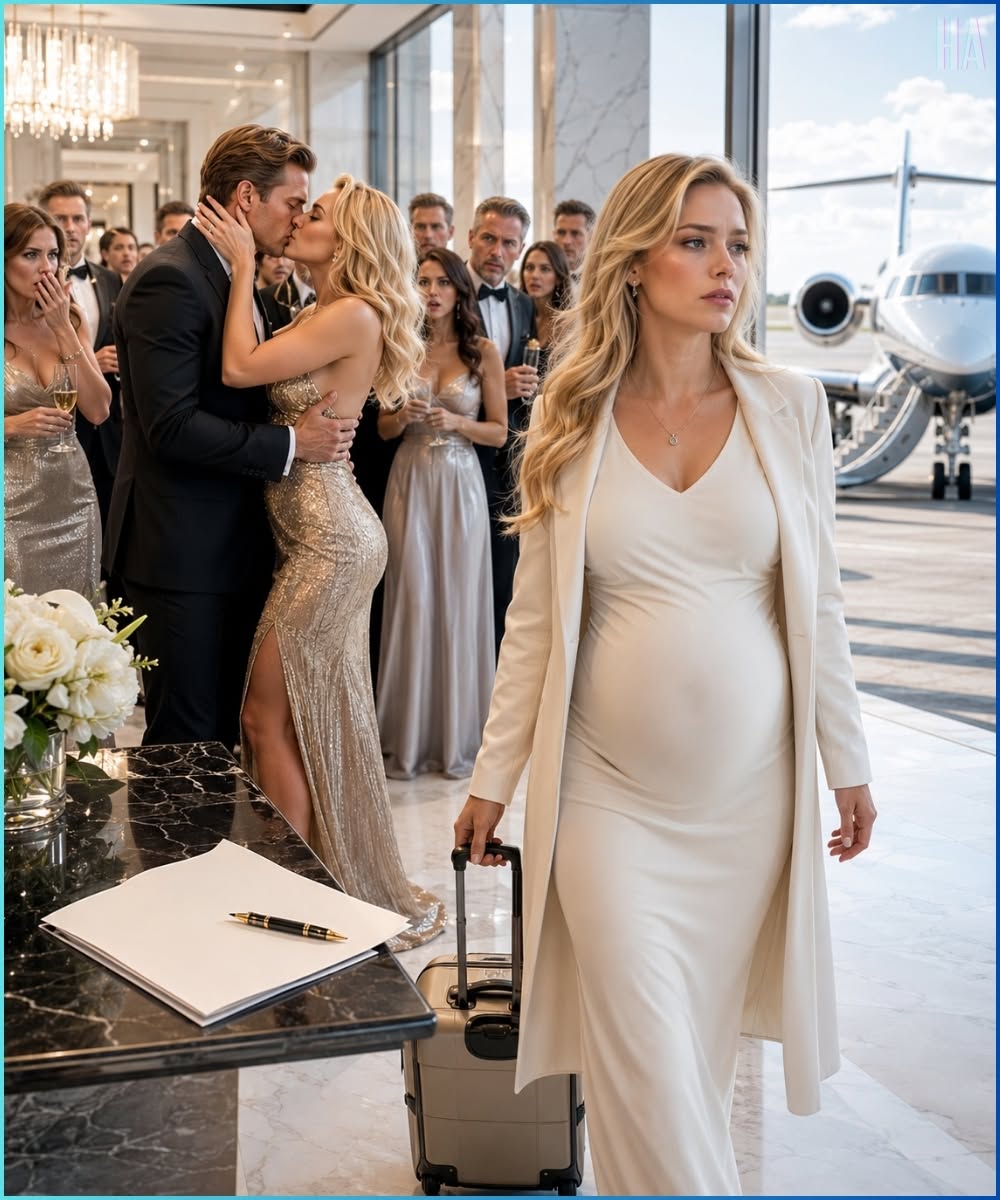
Chapter 8 - The House That Finally Chose PeaceTessa was caught two days later at a private airfield outside Sacramento.
She was wearing a wig, carrying a passport under the name Teresa Vaughn, and traveling with two hard drives, $74,000 in cash, and a diamond bracelet she had listed as a “business asset.”
The arrest made the news before breakfast.
By noon, her polished online empire collapsed.
The luxury wellness brand.
The empowerment speeches.
The photos of her standing in white linen beside inspirational quotes about abundance.
All of it cracked open.
Former employees came forward.
Vendors said she had not paid them in months.
Investors admitted she had exaggerated revenue.
A designer released emails showing Tessa personally approved the farmhouse brochures, including the label over my grandmother’s cemetery hill.
Event Lawn Expansion.
That phrase followed her everywhere.
People turned it into comments, headlines, memes.
Tessa had wanted my land to make herself famous.
She got famous for trying to turn a graveyard into a cocktail lawn.
Brandon did not smile in court.
Neither did my mother.
Neither did my father.
The first hearing drew reporters, locals, former foster kids, creditors, and half the county’s gossip population.
I sat between Mia and Sam.
Sam wore his good jacket over a bandage and glared at everyone like the courthouse had personally offended him.
Across the aisle sat my mother.
No pearls today.
No soft makeup.
No costume.
She looked smaller without performance.
Brandon sat beside his public defender, eyes sunken, hands folded. He did not look at me at first.
My father did.
Richard Whitmore turned from the defense table and smiled like we were sharing a private joke.
I looked through him.
That bothered him more than anger would have.
The prosecutor laid it out cleanly.
Fraudulent transfer.
Forgery.
Identity theft.
Conspiracy.
Financial exploitation.
Illegal debt structuring.
False death documentation.
Insurance fraud.
The list went on long enough that even the reporters stopped typing for a second.
My mother’s attorney argued she had been manipulated by her husband.
Brandon’s attorney argued he had been manipulated by Tessa.
Tessa’s attorney argued she had been manipulated by Brandon.
My father’s attorney argued he had not technically been dead on purpose.
That was the moment Sam leaned over and whispered, “I’d like to hear someone be dead by accident for five years.”
I almost laughed.
Almost.
Then Mia stood for the trust.
She did not shout.
She did not dramatize.
She simply placed my grandmother’s documents into the record.
The trust.
The restrictions.
The video.
The buried evidence.
The forged signature.
The judge watched all of it.
When Grandma’s face appeared on the courtroom screen, the room went silent.
I had not expected that to hurt.
It did.
Her voice filled the courtroom.
“You are not responsible for saving people who keep setting fire to your life.”
Brandon finally looked at me.
There were tears in his eyes.
I did not look away.
Not because I wanted him to suffer.
Because I wanted him to understand that tears were no longer currency between us.
When the video ended, my father leaned back in his chair, furious.
My mother covered her face.
Tessa stared at the table.
The judge removed his glasses.
Then he said, “This court has seen greed. It has seen family conflict. It has seen financial deception. But rarely does it see all three carried out with such contempt for the dead, the living, and the vulnerable beneficiaries of a protected trust.”
The emergency freezes remained.
The fraudulent liens were voided.
The attempted sale was declared invalid.
My properties were restored under court protection.
Hollow Ridge Capital was placed under investigation.
My father was remanded without bail.
Tessa too.
Brandon was granted bail only after surrendering his passport and agreeing to supervised release.
My mother was ordered to have no contact with me except through counsel.
When it was over, I walked out of the courthouse into bright afternoon sun.
Reporters shouted questions.
“Clara, do you have a statement?”
“Do you blame your brother?”
“What happens to the farmhouse now?”
I kept walking.
Then I stopped.
Because behind the reporters stood a young woman named Lily Carter.
She had come through the farmhouse program three years earlier after aging out of foster care with $11, a backpack, and no one to call when her car broke down.
Now she was a nursing student.
She held a cardboard sign.
SAVE THE HOUSE THAT SAVED US.
Behind her stood dozens of others.
Former kids.
Current volunteers.
Neighbors.
Caretakers.
People who understood what my family never had.
That a house is not valuable because of what it can be sold for.
It is valuable because of who becomes safe inside it.
I walked to Lily and hugged her.
That was the photo that went viral.
Not Brandon in cuffs.
Not Tessa hiding behind sunglasses.
Not my father alive after five years of fraud.
Me, crying in front of a courthouse, surrounded by young adults who had once needed a place to land.
The caption people shared most was simple:
She didn’t just save a farmhouse. She saved a future.
Three months later, the first apples ripened.
The air smelled like grass, cinnamon, and rain.
The farmhouse porch had been repainted. The gate repaired. The cemetery restored. The fake survey marks removed from the hill.
My grandmother’s headstone had fresh flowers.
I visited her every Sunday.
Sometimes I talked.
Sometimes I just sat.
The criminal cases were still moving through court, slow and heavy, the way justice often moves. But the civil case ended faster.
Tessa’s company assets were liquidated.
The money recovered did not cover everything, but it covered enough.
My father’s hidden accounts covered more.
Brandon’s share of what remained from our parents’ estate was redirected toward restitution.
My mother sold her house.
Not because I forced her.
Because the court did.
The first check I received from the recovery fund sat on my desk for three days.
I did not deposit it.
I did not celebrate it.
Money returned after betrayal does not feel like victory.
It feels like evidence.
On the fourth day, I used it to create the Eleanor Whitmore Independence Fund.
Housing deposits.
Trade school tuition.
Emergency medical bills.
Legal documents.
Therapy.
Not glamorous things.
Necessary things.
The kind of help that keeps young people from choosing between hunger and danger.
On opening day, we held dinner in the restored barn.
Long wooden tables.
Mismatched chairs.
String lights.
Apple pies cooling near the window.
Sam carved turkey like he was guarding it from enemies.
Mia arrived late with files under one arm and wine under the other.
Luis and Maribel danced in the corner when they thought no one was watching.
At sunset, I stepped outside alone.
The porch swing moved gently in the wind.
For years, I thought peace would arrive loudly.
Like a verdict.
A check.
An apology.
A slammed door.
But peace came quietly.
It sounded like laughter from the barn.
Like plates being passed.
Like young people arguing over pie.
Like no one asking me to sacrifice my safety to prove my love.
A car pulled up at the gate.
For one second, my body remembered fear.
Then I saw Brandon step out.
He looked thinner.
Older.
His supervised release officer waited in the driver’s seat.
Sam appeared beside me before I called him.
“I can send him away,” he said.
I looked at my brother through the gate.
His hands were empty.
His face was pale.
For once, he did not look entitled.
He looked ashamed.
“I’ll talk to him here,” I said. “Gate stays locked.”
Sam nodded.
I walked down the drive.
Brandon stood on the other side of the iron bars.
Neither of us spoke at first.
Then he said, “I’m not here to ask for anything.”
I waited.
He swallowed hard.
“I know that doesn’t mean much.”
“It doesn’t.”
He nodded like he deserved that.
“I signed the plea.”
I already knew. Mia had told me that morning.
“I’m testifying against Dad. And Tessa.”
“And Mom?”
His face twisted. “If they ask.”
That was honest, at least.
He looked past me at the farmhouse, the lights in the barn, the people laughing.
“I hated this place,” he said.
“I know.”
“Not because of Grandma.”
I said nothing.
“Because every time I came here, I could feel what I wasn’t.”
The wind moved between us.
For once, Brandon did not fill silence with blame.
“I told myself you got lucky,” he said. “That Grandma chose you because you were better at pretending. But she chose you because you stayed. And I hated you for that.”
His voice broke.
“I’m sorry, Clara.”
I had imagined that apology for years.
In some versions, I cried.
In some, I forgave him instantly.
In some, I screamed.
But real life was quieter.
“I believe that you’re sorry right now,” I said. “I don’t know yet if you’re changed.”
He nodded.
“That’s fair.”
“It will take years, Brandon.”
“I know.”
“And you may never be allowed back inside this gate.”
His eyes filled, but he did not argue.
“I know.”
That was the first sign that maybe, somewhere beneath the wreckage, my brother had finally found the beginning of truth.
I looked at him for a long moment.
Then I said, “Get well. Tell the truth. Pay what you owe. That’s all I can give you.”
He wiped his face.
“That’s more than I deserve.”
“Yes,” I said. “It is.”
The release officer called his name.
Brandon stepped back.
Before he got in the car, he looked at the farmhouse one last time.
Not like he owned it.
Not like he wanted to sell it.
Like he finally understood he had almost destroyed something sacred.
Then he left.
I walked back up the drive.
Sam was waiting on the porch.
“You okay?”
This time, I thought about it.
The house behind me glowed warm.
The orchard stretched dark and safe beyond the lights.
The gate was locked.
The people inside were laughing.
And for the first time in my life, no one who hurt me had a key.
May you like
“Yes,” I said.
And I meant it.