Chapter 10 - MARK’S PERFECT LIEMark could no longer control the house, the money, or Emily’s movements.
So he tried to control the story.
A video appeared online two months after the birthday party.
The title read:
RETIRED FEDERAL PROSECUTOR DESTROYS INNOCENT SON-IN-LAW.
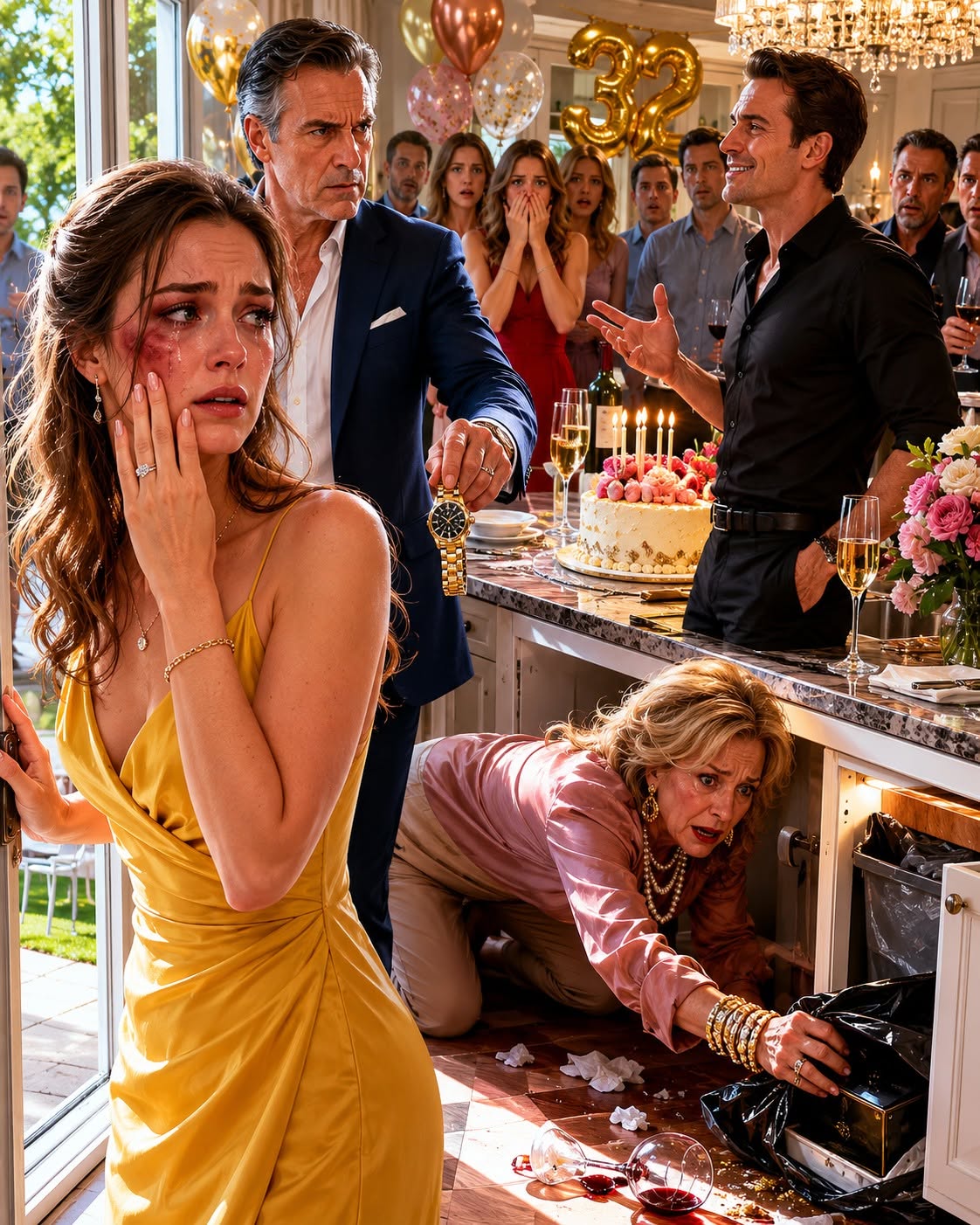
The video showed Robert entering the kitchen.
It showed him removing his watch.
It showed Emily walking into the garden.
Then the footage cut to Mark being placed in handcuffs.
Missing were the bruises.
Missing was Mark’s confession.
Missing was Diane crawling toward the recording device.
A narrator claimed Robert had used political connections to frame Mark and seize marital property.
The video included clips of Emily crying, dropping a glass, and speaking angrily in her kitchen.
Every clip had been taken from the hidden cameras.
None included the hours of abuse before her reactions.
Within a day, the video had hundreds of thousands of views.
Some viewers called Emily a liar.
Others accused Robert of corruption.
Strangers analyzed her face, voice, clothing, and marriage.
They asked why she had stayed.
Why she had smiled in old photographs.
Why she had not called police earlier.
Why no one else had seen Mark strike her.
Emily read the comments until her hands became numb.
Robert took the phone from her.
“Don’t.”
“They think I made it up.”
“Some people decide what they believe before evidence exists.”
“What if the jury sees this?”
“The court will address it.”
“I look insane in those clips.”
“You look frightened.”
“I’m screaming.”
“Because he locked you inside your home.”
“But they don’t see that.”
“Then they are not seeing the truth.”
The prosecution traced the upload to Savannah Reed.
She had received the edited video from Thomas Vane’s office before his devices were seized.
Savannah claimed she posted it because Mark’s family deserved to tell their side.
The court issued a protective order preventing further release of private recordings.
But the video had already spread.
Emily wanted to hide.
Instead, Lauren showed her something else.
The original birthday recording had also been posted.
Not by police.
By one of the guests.
Aaron had uploaded the full video after watching Mark’s edited version.
It began with the cake.
Lauren laughing behind the camera.
Guests gathering in the kitchen.
Then Robert entered.
“My dear,” he said. “Why is your face covered in bruises?”
Mark’s confession followed clearly.
“Yes, I did it. I slapped her instead of saying happy birthday.”
The full video showed the awkward laughter.
It showed Diane blaming Emily.
It showed Robert asking his daughter for one nod.
It showed Diane crawling beneath the sink.
It showed Mark attempting to stop Lauren from recording.
It showed everything.
Aaron attached a written statement.
I was there. I laughed because I was uncomfortable and afraid of Mark. That laugh has kept me awake every night. Emily did not invent what happened. We helped Mark by pretending not to see it.
The second video spread faster than the first.
Comments changed.
Survivors shared their own experiences.
People recognized the edited clips as manipulation.
Legal analysts discussed the financial evidence.
Former colleagues defended Robert’s integrity.
But Emily did not feel victorious.
Public support was still public attention.
Her worst moments had become entertainment.
A television producer offered money for an exclusive interview.
A podcast requested access to the recordings.
A publisher suggested a book.
Emily declined everything.
“This isn’t a story to me,” she told Lauren. “It’s my life.”
Lauren nodded.
“Then you decide how much belongs to anyone else.”
Mark’s smear campaign created another problem for his defense.
The hidden recordings were under a court preservation order.
Their public release suggested someone connected to Mark or Vane had retained unauthorized copies.
Digital investigators traced the edited video to an external server.
The server contained folders labeled with women’s names.
Natalie.
Rebecca.
Emily.
Two others.
Each folder contained private recordings edited to portray the women as unstable.
The files proved a long-term pattern of coercion and blackmail.
One folder was labeled CAROLINE HAYES.
Emily sat with Detective Cole when investigators opened it.
The folder contained photographs of Caroline meeting Samuel Price.
Copies of her private emails.
Audio captured outside Emily’s house.
And a recording from the Cleveland hotel.
The audio was damaged but understandable.
Caroline’s voice came first.
“You stole from those women.”
Diane answered.
“They gave Mark what he deserved.”
“You forged medical records.”
“You don’t know what you’re talking about.”
“I know enough.”
Daniel’s voice interrupted.
“Give me the envelope.”
Caroline said, “Touch me and Robert will bury all of you.”
There was a struggle.
A sharp cry.
Then a long, terrible sound.
Silence followed.
Daniel whispered, “She fell.”
Diane replied, “Get the envelope.”
“Call someone.”
“Not yet.”
The recording ended.
Emily removed the headphones.
For six years, she had imagined her mother alone at the bottom of those stairs.
Now she knew Caroline had not been alone.
She had been surrounded by people who valued a stolen envelope more than her life.
Robert listened after Emily.
When the audio ended, he remained seated.
Detective Cole gave him time.
Finally, he asked, “Why did they record it?”
“Daniel appears to have carried a body camera for security work. Vane’s server received automatic backups.”
“The evidence was sitting there for six years.”
“Yes.”
Robert looked toward Emily.
“Your mother was brave.”
Emily held the fountain pen from the blue gift.
“She was afraid.”
“Bravery does not require the absence of fear.”
That evening, Emily decided to release one statement publicly.
She did not discuss evidence that could affect the trial.
She did not describe every assault.
She wrote four paragraphs.
My husband’s defenders have asked why I stayed.
I stayed because abuse rarely begins with the worst day. It begins with apologies, explanations, and small rules that slowly become walls.
I stayed because I was taught to distrust my own memory.
I am speaking now because silence protected everyone except me.
The statement was shared millions of times.
May you like

But the response that mattered most came from a woman named Rebecca Sloan.
I saw your words, she wrote. I am ready to come back.
Related Stories