Chapter 2 - The Babysitter Who Saw EverythingMarisol Vega did not look like the kind of woman my mother expected to lose against.
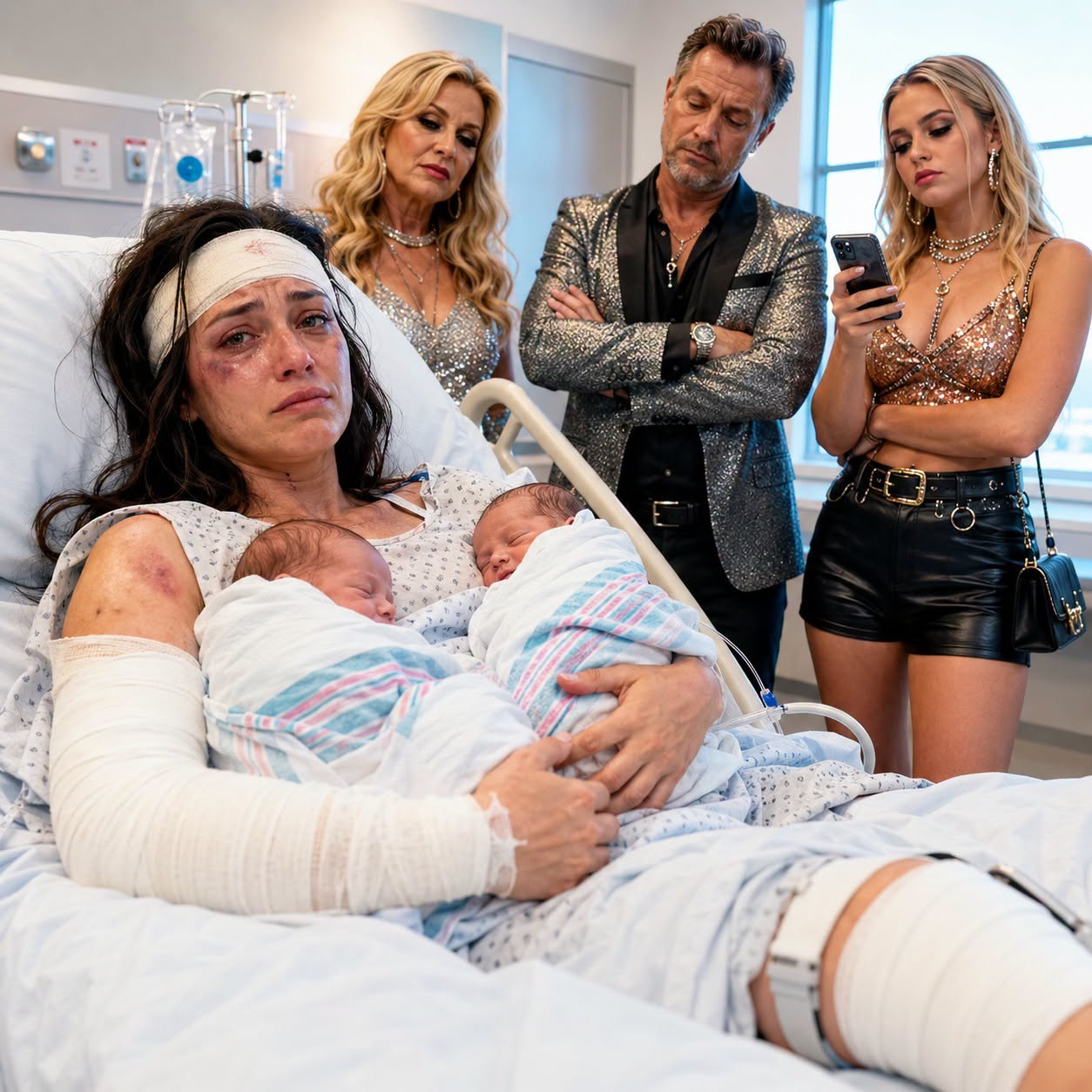
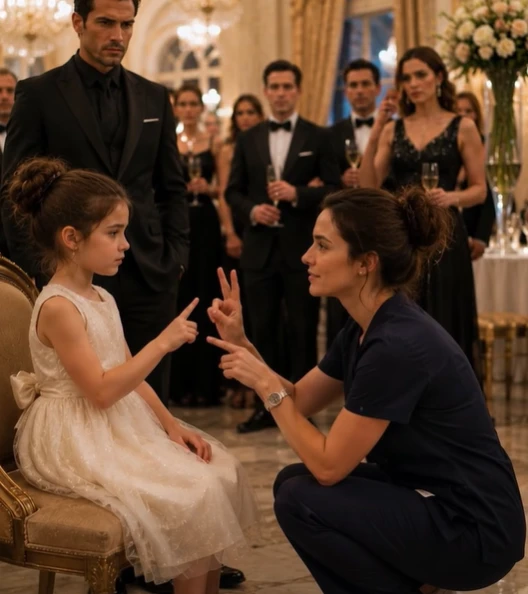
She was small, calm, and soft-spoken, with silver-threaded black hair pulled into a bun and reading glasses hanging from a chain around her neck. She made soup from scratch, sang lullabies in Spanish, and folded children’s pajamas like tiny hotel towels.
But when my mother tried to force her way into my house three days after the accident, Marisol became a locked door with a heartbeat.
The call came while I was being helped into a wheelchair for physical therapy.
My phone buzzed on the tray beside me. Marisol’s name lit up the screen.
“Claire,” she said quietly, “your mother is outside.”
My hands went cold.
“Are the kids safe?”
“Yes. They’re in the upstairs playroom with headphones on. I told them we’re practicing quiet castle time.”
Through the phone, I could hear pounding.
Then my mother’s voice.
“Open this door! This is my daughter’s house!”
Marisol did not raise her voice.
“Mrs. Hartwell, you are not authorized to enter.”
Vanessa shouted something I could not make out.
Marisol continued, “This property has new security instructions. You need to leave.”
My father’s voice came next, lower and more embarrassed.
“Come on, Marisol. We’re family.”
Family.
That word had become a costume they wore whenever they wanted access.
I gripped the phone so tightly my knuckles ached.
“Put me on speaker.”
Marisol did.
My mother was mid-sentence. “—holding those babies hostage from their own grandparents!”
I inhaled carefully through the rib pain.
“Mom.”
Silence.
Then, sweet as poison, she said, “Claire, thank God. Tell this woman to open the door.”
“No.”
The silence changed.
“What?”
“You heard me.”
Vanessa laughed sharply. “You’re seriously doing this from a hospital bed?”
“Yes,” I said. “And if you don’t leave, Marisol is calling the police.”
My mother’s voice went icy.
“You would call the police on your own parents?”
“You tried to get my six-year-old son to unlock the back door while I was in the hospital.”
“That is not what happened.”
“Then explain it to the doorbell camera.”
Another silence.
I had learned something since the crash.
People who manipulate in private hate being recorded in public.
My mother lowered her voice. “Claire, sweetheart, emotions are running high. We came because we’re worried about the children.”
“No, you came because the mortgage company called again.”
Vanessa exploded.
“You selfish witch!”
Marisol’s voice cut in, calm and firm. “That’s enough. I’m calling the police now.”
“Don’t you dare,” Mom snapped.
But Marisol already had.
The officers arrived nine minutes later.
I watched it all from the security app on my phone while a physical therapist waited awkwardly beside my wheelchair.
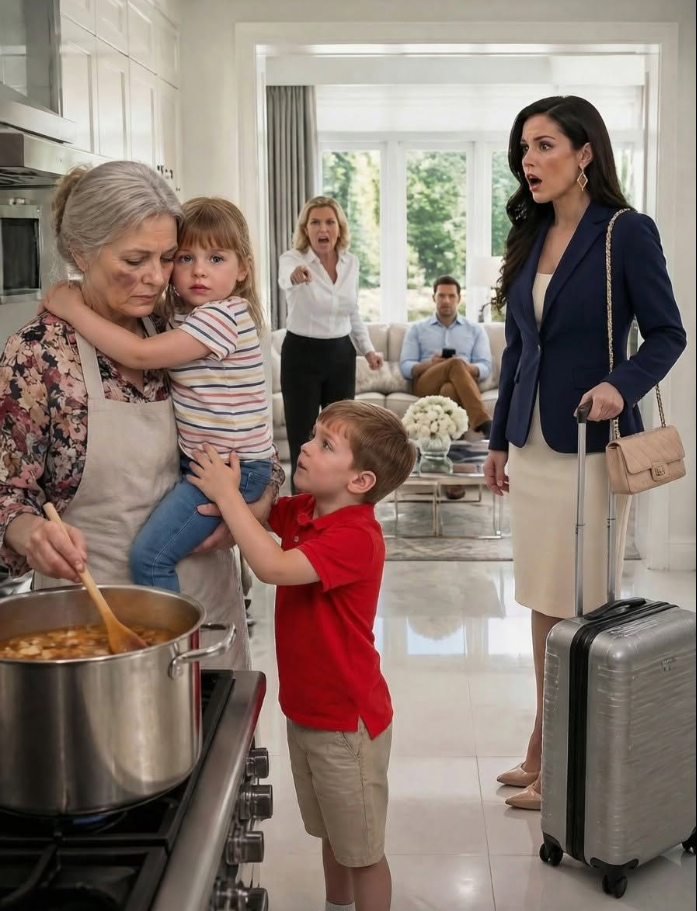
My mother changed the moment she saw the police. Her shoulders softened. Her mouth trembled. She became the wounded grandmother, the confused mother, the victim of a cruel daughter’s misunderstanding.
Vanessa folded her arms and cried without tears.
My father stood behind them, staring at the ground.
One officer spoke with Marisol. The other reviewed the legal notice Daniel had sent. Then they asked my parents to leave.
My mother pointed toward the house.
“My grandchildren are in there with a stranger!”
Marisol opened the folder Daniel had prepared and handed over her credentials, background check, emergency authorization, and pediatric care plan.
The officer looked impressed.
Vanessa looked furious.
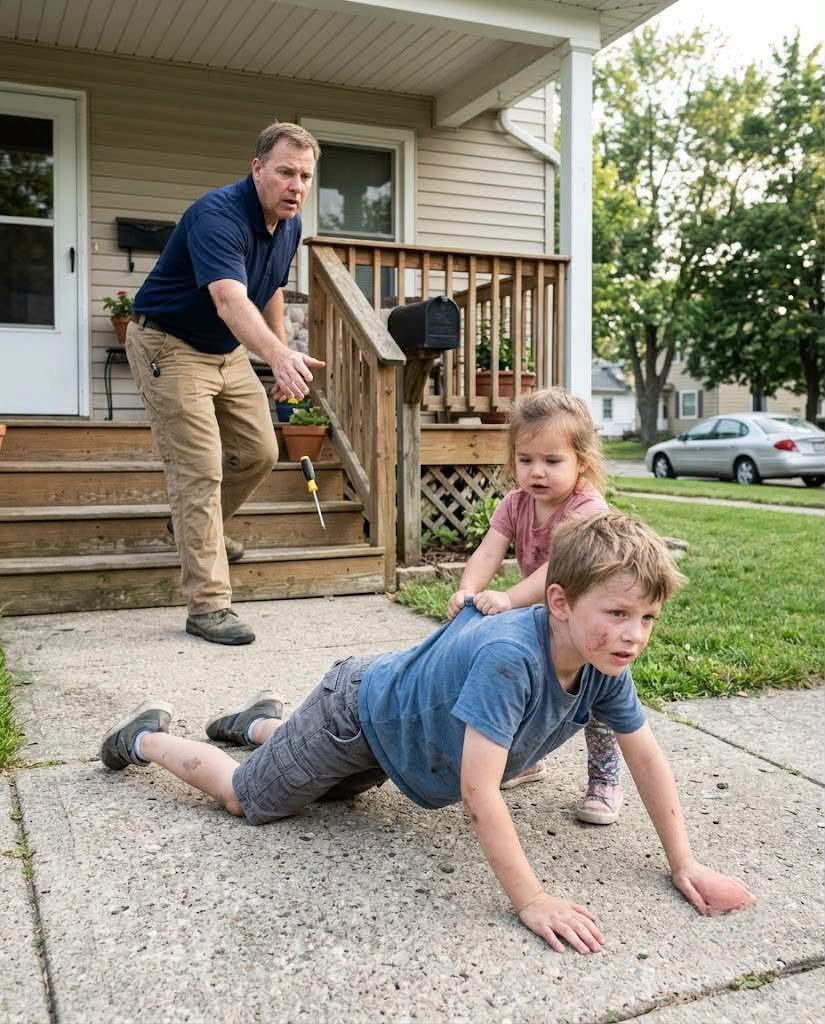
Then Noah appeared in the upstairs window.
My little boy, small and serious, holding Lily’s hand.
My mother saw him and lifted both arms dramatically.
“Noah! Grandma loves you!”
He did not wave.
He did not smile.
He simply stepped back from the window and pulled the curtain closed.
That broke something open inside me.
Not sadness.
Clarity.
Children notice who feels safe.
That evening, after the police left and my parents drove away, Marisol called me again. The twins were asleep. Lily’s fever was gone. Noah had asked whether Grandma was mad at him.
I closed my eyes.
“What did you tell him?”
“The truth,” Marisol said. “That grown-up feelings are not children’s responsibility.”
I cried again, but differently this time.
Not because I was broken.
Because someone had finally said the words I wished I had heard at six years old.
Daniel came by later with printed screenshots of Vanessa’s Facebook post. It had already spread across family groups, church circles, school acquaintances, and old neighbors.
My daughter cut us off after we gave her everything.
My sister became cruel the minute she got a little money.
We just wanted to see the children.
Some comments were exactly what I expected.
How sad.
Money changes people.
Grandparents have rights too.
But others made Vanessa careless.
One woman named Ruth Ellis wrote, Didn’t Claire pay for your birthday trip last year?
Another wrote, Wait, isn’t Claire the one who bought your car?
Then my cousin Megan commented, I remember Aunt Elaine saying Claire covered the mortgage.
Vanessa deleted those comments within minutes.
But Daniel had screenshots.
“Do nothing yet,” he said.
I stared at the papers.
“Doing nothing is hard.”
“Doing nothing publicly,” he corrected. “Privately, we prepare.”
“For what?”
He looked at me with the tired eyes of a man who had seen too many families turn ugly over money.
“For the moment they realize shame is all they have left.”
The next morning, a social worker came to my hospital room.
Her name was Paula Greene. She was kind, professional, and carrying a report.
My parents had filed a welfare complaint.
They claimed I was medically incapacitated, emotionally unstable, financially reckless, and isolating the twins from family support.
I listened without interrupting.
Then I handed Paula a folder.
Inside were Marisol’s credentials, the pediatrician’s note, the home care schedule, the meal plan, emergency contacts, school communication, security logs, and Daniel’s legal filings.
Paula read silently.
Then she looked up.
“This is more organized than most custody plans I see in court.”
I gave a tired smile. “Fear is a great administrator.”
She softened.
“Your parents also alleged that you recently stopped paying essential housing costs for elderly dependents.”
I laughed once.
It hurt my ribs.
“They are fifty-nine and sixty-one. My sister is twenty-eight. Nobody is elderly. Nobody is my dependent.”
Paula’s mouth twitched, but she stayed professional.
“Do you have documentation?”
Daniel, standing near the window, opened another folder.
“We have five years of mortgage payments, utility payments, credit card statements, rent transfers to Vanessa Hartwell, travel expenses, and written messages acknowledging all support was voluntary.”
Paula looked through them.
Her eyebrows rose slightly.
When she finished, she closed the folder and said, “I’ll complete my visit to the home, but at first review, the children appear protected.”
I nodded.
“Thank you.”
At the door, she paused.
“Mrs. Hartwell?”
I looked up.
“People who file complaints like this sometimes escalate when the first complaint fails.”
My stomach tightened.
“How?”
She hesitated.
“Unexpected school pickups. Emergency contact interference. Claims of abandonment. Sometimes they show up with relatives to create pressure.”
After she left, I called the twins’ school from my hospital bed.
I removed my parents and Vanessa from every pickup list.
I changed every password.
I updated every emergency contact.
And then I did the hardest thing of all.
I called my father.
He answered on the first ring.
For a moment, neither of us spoke.
Then I said, “Dad, did you agree to that welfare complaint?”
His breathing changed.
“Your mother thought—”
“No. I asked if you agreed.”
Silence.
Then he said, “Claire, the mortgage is due.”
There it was.
Not regret.
Not love.
The mortgage.
I hung up before he could say anything else.
That night, Noah asked over video chat, “Mommy, are Grandma and Grandpa bad?”
I looked at my son’s worried face and knew this answer would matter for years.
“No, baby,” I said softly. “But they are making bad choices. And my job is to keep you and Lily safe from bad choices, even when grown-ups make them.”
He nodded slowly.
“Marisol says safe people don’t make kids feel guilty.”
I smiled through tears.
“Marisol is very smart.”
Lily leaned into the screen. “When you come home, can we have pancakes?”
“Yes,” I whispered. “The biggest pancakes.”
But after they fell asleep, Marisol sent me one more message.
It was a photo from the front porch camera.
A man I did not recognize had walked up to my house at 11:47 p.m., looked directly into the camera, and slipped something under the door.
May you like

The envelope had one sentence written across the front.
You should have paid what you owed.
Related Stories