Chapter 7 - The Courtroom TrapThe first hearing was supposed to be procedural.
That was what Daniel said.
Just scheduling. Temporary orders. Nothing dramatic.
But families like mine do not enter courtrooms looking for procedure.
They enter looking for theater.
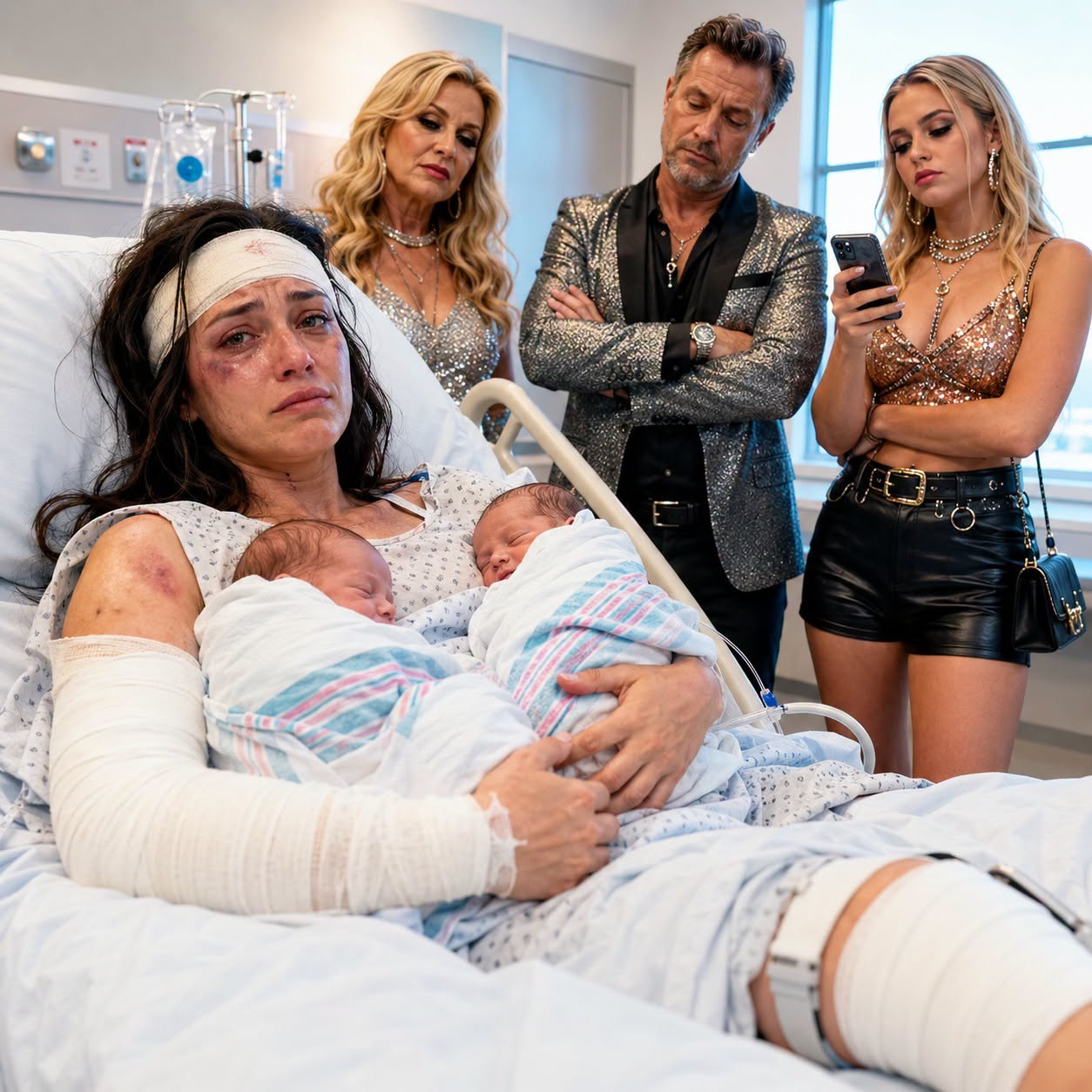
I arrived in a wheelchair, wearing a navy dress that hid the brace as much as possible and makeup that did not quite cover the exhaustion beneath my eyes. Daniel pushed me through the courthouse hallway while Marisol stayed home with the twins.
My parents stood near the courtroom doors.
My mother wore black, as if attending a funeral for her own reputation. Vanessa stood beside her in a cream suit, eyes swollen but perfectly lined. My father stood several feet away from both of them.
That distance told me everything.
When my mother saw me, she placed one hand over her heart.
“My baby,” she whispered loudly enough for everyone nearby to hear.
I looked past her.
Daniel leaned down. “Don’t engage.”
“I wasn’t planning to.”
Inside the courtroom, my mother’s attorney painted a picture so false I almost admired the architecture.
He described my parents as aging, vulnerable, financially dependent people who had relied on my “repeated promises of support.” He said my sudden cutoff had caused emotional trauma and imminent homelessness. He said my accident had clearly affected my judgment.
Then he said the sentence they had built everything around.
“Mrs. Hartwell is being influenced by outside parties who seek to isolate her from family.”
Outside parties.
Meaning Daniel.
Meaning Marisol.
Meaning anyone who stood between my mother and my bank account.
When it was our turn, Daniel rose slowly.
“Your Honor, my client did not abandon dependents. She discontinued voluntary financial gifts to competent adults after they refused to assist with emergency childcare while she was hospitalized after a serious accident.”
My mother dabbed her eyes.
Daniel continued.
“Furthermore, these same adults attempted to bypass a caregiver, contact minor children after being instructed not to, and one petitioner attempted an unauthorized school pickup using altered documents.”
The judge looked up.
My mother’s attorney stiffened.
Daniel placed the school report on the table.
“And finally,” he said, “we have reason to believe a fraudulent loan was obtained using my client’s forged signature, with funds benefiting the petitioners and their other daughter, Vanessa Hartwell.”
Vanessa’s face went white.
My mother stopped crying.
The judge removed her glasses.
“That is a serious allegation.”
“Yes, Your Honor.”
“Is there evidence?”
Daniel glanced at me.
I nodded.
He submitted Priya’s forensic report, Adam’s statement, the loan documents, metadata findings, and bank transfer records.
The courtroom changed temperature.
My mother’s attorney asked for a recess.
The judge denied it.
“Ms. Hartwell,” the judge said to Vanessa, “are you represented by counsel?”
Vanessa swallowed.
“This isn’t about me.”
The judge’s stare sharpened.
“It appears that may not be true.”
For the first time in my life, Vanessa had no line prepared.
My mother tried to speak.
The judge raised one hand.
“Mrs. Hartwell, I strongly advise you to let your attorney speak.”
My father suddenly stood.
His chair scraped loudly across the floor.
Everyone turned.
“Your Honor,” he said, voice shaking. “I need to say something.”
My mother hissed, “Robert, sit down.”
He did not.
The judge studied him.
“Mr. Hartwell, you have counsel. Speak carefully.”
My father looked at me.
For one heartbreaking second, I saw shame.
Real shame.
Then he said, “I signed some of the paperwork.”
My mother closed her eyes.
Vanessa whispered, “Dad, don’t.”
He kept going.
“I signed because Elaine said Claire would help once she calmed down. Vanessa said the signature was just a formality because Claire had always paid anyway.”
The courtroom went dead silent.
My pulse pounded in my ears.
My father gripped the table.
“I know that doesn’t make it right.”
“No,” the judge said coldly. “It does not.”
My mother rose halfway from her chair.
“He’s confused. He’s under stress.”
My father turned on her.
“No, Elaine. I’m done.”
Those three words struck harder than any gavel.
My mother stared at him as if he had slapped her.
He looked back at me.
“I’m sorry, Claire.”
I did not forgive him.
Not then.
Maybe not ever.
But I believed him.
There is a difference.
The judge suspended the civil claim pending fraud investigation, extended the protective order, and warned my mother and Vanessa against any further contact.
As we left the courtroom, reporters were not waiting.
This was not that kind of story.
But relatives were.
Cousins. Church friends. Neighbors. People who had read Vanessa’s posts and come expecting to watch me be exposed.
Instead, they watched Vanessa rush into the hallway and vomit into a trash can.
My mother walked past everyone with her head high, but her hand shook around her purse strap.
My father came toward me.
Daniel stepped between us.
“It’s okay,” I said.
My father stopped a few feet away.
“I didn’t know Elaine went to the school.”
That mattered.
Not enough.
But it mattered.
“You knew about the loan,” I said.
He nodded.
“I told myself you’d pay it and we’d fix it later.”
“Dad, you put my children’s home at risk.”
His eyes filled.
“I know.”
“No. I don’t think you do. Because if you did, you wouldn’t be standing here asking me to see your guilt. You’d be asking what Noah and Lily need to feel safe.”
He flinched.
Then nodded slowly.
“What do they need?”
“Distance.”
The word broke him.
But he accepted it.
My mother did not.
At the far end of the hallway, she turned back and shouted, “You think this is over? You have no idea what your precious father has hidden from you!”
The hallway froze.
My father went gray.
Daniel’s hand tightened on my wheelchair.
I looked at my father.
“What is she talking about?”
He closed his eyes.
And I knew.
May you like

The loan was not the oldest secret.
It was only the first one desperate enough to surface.