Chapter 3 - The Letter Carol BuriedMy parents arrived at my house just after eleven.
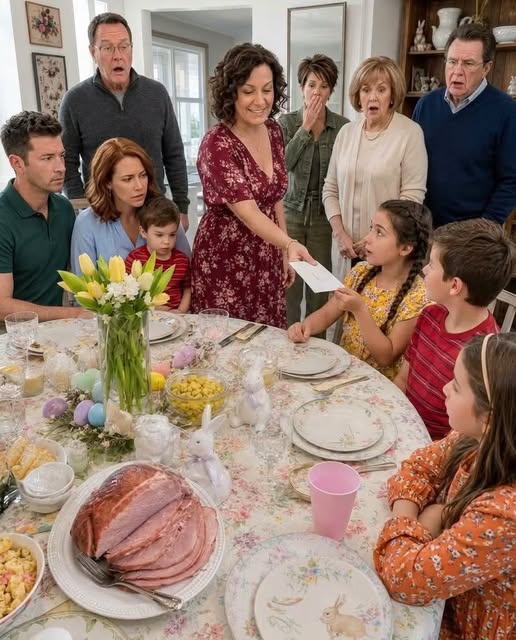
Dad looked as if he had aged five years overnight. He walked slowly up the front path, one hand pressed against his side where his surgery scar still bothered him. Mom carried a sealed envelope in both hands like it was fragile enough to shatter.
Marianne opened the door.
For one painful second, nobody moved.
Then my mother looked at her and started crying again.
“I am so sorry,” Mom said.
Marianne’s face trembled.
But she did not step back.
She stepped forward.
My mother hugged her like someone finally admitting the house had been on fire for years.
Dad stood behind them, eyes red.
When he looked at me, he did not make excuses.
“I failed you yesterday,” he said.
I nodded once.
He looked toward the living room, where Ethan and Lily were building a blanket fort.
“I failed them too.”
That mattered.
Not because it fixed anything.
Because it did not.
But because silence had finally stopped pretending it was peace.
We gathered at the kitchen table.
The same kitchen table where Marianne had helped my mother plan birthday meals, medication schedules, and holiday menus. The same table where no one had ever thought to call her family loudly enough for Carol to hear.
Mom placed the envelope in front of me.
My name was written across the front in my grandfather’s handwriting.
Ryan and Marianne.
My throat tightened.
“Where was this?”
Dad leaned back, exhausted.
“In your grandfather’s safe behind the bookshelves. Carol told us she cleared it after the funeral. She said it only had tax files.”
“Why did you open it now?”
Dad’s jaw hardened.
“Because last night, when she threatened my medical reimbursements, I heard your grandfather’s voice in my head.”
“What did he say?”
Dad looked at the envelope.
“He said Carol always confuses stewardship with ownership.”
I carefully opened it.
Inside were three pages.
The first was a letter.
The second was a copy of an amendment to the family trust.
The third was a handwritten note in blue ink.
I began reading aloud.
Ryan,
If this letter reaches you, it likely means your Aunt Carol has forgotten the difference between protecting the family and controlling it.
Marianne covered her mouth.
I kept reading.
I have watched you with Marianne and her children. I know some people in this family whisper about blood. They are fools. Blood is biology. Family is duty, love, sacrifice, and the people who show up when showing up costs something.
Your grandmother was not blood to my eldest son when I married her. She raised him anyway. Anyone who claims adopted children are lesser has forgotten the roots of this family.
My eyes burned.
Ethan appeared in the hallway.
He had heard.
Lily stood behind him, clutching her stuffed rabbit.
I wanted to stop reading, but Marianne shook her head.
So I continued.
For that reason, I executed the attached amendment recognizing legally adopted children and stepchildren raised within the family household as equal family descendants for purposes of goodwill distributions, education support, and youth beneficiary benefits.
Carol objected. Strongly.
That line felt like thunder.
Dad swore under his breath.
Mom whispered, “She told us the amendment failed.”
I turned to the second page.
There it was.
Signed.
Notarized.
Dated six months before Grandpa died.
Marianne leaned over the page.
“She knew.”
“Yes,” I said.
Carol had not forgotten Ethan and Lily.
She had erased them.
The handwritten note was shorter.
Ryan,
You may be pressured one day to sign documents for Carol. Read everything. Never confuse guilt with obligation. If she uses the word “family” to make you smaller, she is not speaking for me.
Protect your wife.
Protect those children.
They are ours.
—Grandpa
Lily walked slowly to the table.
“Daddy,” she whispered, “what does that mean?”
I picked her up and sat her on my lap.
“It means Great-Grandpa knew you were family.”
Her eyes widened.
“He did?”
Marianne smiled through tears.
“He did, baby.”
Ethan came closer.
“What about Aunt Carol?”
Dad looked at him.
“Aunt Carol lied.”
It was the first time anyone older than me had said it out loud.
The truth changed the temperature of the room.
Mom straightened.
“I want her removed.”
We all looked at her.
My mother, the woman who had spent years smoothing over insults, explaining away cruelty, keeping peace at the cost of everyone’s dignity, looked suddenly like someone who had found her spine under the rubble.
“From the trust,” she said. “From the properties. From everything.”
Dad nodded.
“I called Harold Bennett.”
That name landed hard.
Harold Bennett had been my grandfather’s attorney for thirty years. He had retired to Hilton Head after Grandpa died, and Carol had spent years telling everyone he was too old to remember anything useful.
“When?” I asked.
“This morning.”
“And?”
Dad reached into his coat pocket and pulled out another folded paper.
“He remembers the amendment. He remembers Carol arguing against it. And he remembers sending her the executed copy.”
Marianne sat back.
“So she hid it.”
Dad nodded.
“She buried it because it gave your children rights she did not want them to have.”
A knock sounded at the door.
Everyone froze.
Through the side window, I saw my cousin Mark standing on the porch with his wife, Jill, and behind them, Sophie.
I opened the door.
Mark looked nervous, ashamed, and determined.
“Before you say anything,” he said, “we’re not here for Carol.”
Sophie held up a folder.
“We brought records.”
I stepped aside.
They came in quietly.
Mark could barely look at Marianne.
“I should have spoken yesterday,” he said. “When Carol said what she said.”
“Yes,” Marianne said.
He swallowed.
“I’m sorry.”
Marianne did not forgive him.
Not then.
She simply nodded.
Sophie placed the folder on the table.
“Carol made all of us sign acknowledgment forms last year saying youth distributions were discretionary and limited to direct descendants. I thought it was weird because Grandpa always included everyone. But Carol said the trust amendment never passed.”
“It did,” I said.
Sophie closed her eyes.
“I knew it.”
Mark opened his phone.
“There’s more. She’s been telling us for years that the plaza barely broke even. But my buddy leases space there for his dental practice, and his rent has gone up twice.”
Dad frowned.
“She told us rents were flat.”
“They’re not,” Mark said. “And there are tenant improvement fees no one can explain.”
The folder suddenly looked heavier.
Marianne flipped through the documents.
Her face changed.
“What is it?” I asked.
She turned one page toward me.
A vendor invoice.
Consulting services.
Paid monthly.
To a company called C.H. Management Solutions.
Carol Halston.
“She paid herself consulting fees?” I asked.
Sophie nodded.
“Through a side company.”
Mom stood so fast her chair scraped the floor.
“That money was supposed to cover your father’s surgery bills.”
Nobody spoke.
Then my phone rang.
Carol.
I answered on speaker.
Her voice was ice.
“Ryan, I know your parents are there.”
I looked around the room.
Everyone stayed silent.
Carol continued.
“I don’t know what lies you’ve been told, but if you turn this into a legal fight, you will tear this family apart.”
Marianne looked at the letter on the table.
Then she leaned toward the phone.
“No, Carol,” she said calmly. “You already did.”
Carol laughed.
“You still don’t know your place, do you?”
Marianne picked up my grandfather’s amendment.
“I do now.”
May you like

Then she hung up.
And this time, no one told her she was being rude.
Related Stories