Chapter 6 - The Secret WillThe emergency hearing was set for Thursday morning.
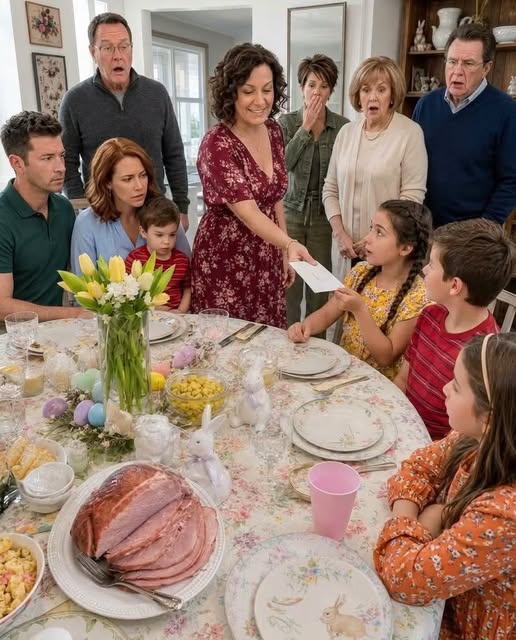
Carol made sure the entire family knew.
By Wednesday night, relatives who had ignored years of quiet cruelty suddenly became experts in loyalty, forgiveness, and “keeping things private.”
My phone filled with messages.
Don’t destroy the family over one mistake.
Carol has always been intense, but she means well.
Marianne should have let it go.
Think of your parents.
That last one made me stare at the screen until my eyes burned.
Think of your parents.
As if Carol had not threatened them first.
As if silence were a form of love.
At 7:30 Thursday morning, Marianne stood in front of the bathroom mirror buttoning a black blouse. Her face was pale but composed.
I watched from the doorway.
“You don’t have to come.”
She met my eyes in the mirror.
“Yes, I do.”
“The hearing may get ugly.”
“Ryan,” she said softly, “Easter dinner was ugly. This is just the part where people have to tell the truth under oath.”
The courthouse smelled like old wood and floor polish.
Carol arrived with Denise at her side and two attorneys behind her. She wore charcoal gray, simple pearls, and the expression of a woman attending someone else’s funeral.
When she saw Marianne, she smiled.
Not kindly.
Knowingly.
My father stiffened beside me.
My mother gripped his arm.
Harold Bennett sat at our table with Monica Reyes. Bethany sat two rows behind us, hands folded tightly.
The judge, a woman named Elaine Porter, entered at 9:02.
She wasted no time.
“I have reviewed the emergency petition, affidavits, and preliminary exhibits,” she said. “We are here to determine whether immediate protective action is warranted regarding the Whitmore Family Trust and affiliated property entities.”
Carol’s attorney stood first.
He spoke smoothly.
He called it a misunderstanding.
He called it a family disagreement.
He called my withdrawal of guarantor support impulsive.
Then he made his mistake.
He called Marianne’s children “unrelated minors.”
Judge Porter looked up.
“Counsel, are these children legally adopted by Mr. Whitmore?”
The attorney paused.
“Yes, Your Honor, but—”
“Then choose your wording carefully.”
Carol’s jaw tightened.
Monica stood.
She did not shout.
She did not dramatize.
She simply walked the judge through the documents.
The trust amendment.
The hidden letter.
The guarantor schedule.
The signature discrepancy.
The payments to C.H. Management Solutions.
Bethany’s sworn statement.
The voice memo.
When Carol heard her own recorded voice say, “Not Ryan’s charity project,” she closed her eyes.
Denise looked like someone had pulled the floor out from under her.
Then Carol’s attorney stood again.
“Your Honor, before this court entertains the removal of a long-serving trustee, we must address credibility. Mr. Whitmore and his father have obvious financial motives. There are also questions regarding the late Mr. Whitmore’s confidence in certain family members.”
Monica turned slightly.
Here it came.
Carol’s attorney lifted a document.
“We have a memorandum attached to the late patriarch’s estate planning file indicating concerns about Ryan’s father, Thomas Whitmore, and his ability to manage assets responsibly.”
My father went white.
My mother whispered, “No.”
Carol looked straight ahead.
The attorney continued.
“This document explains why Mrs. Halston was entrusted with administrative oversight.”
Judge Porter accepted the document.
The room was silent while she read.
My father stared at the table.
I had never seen him look ashamed like that.
Then Harold Bennett stood slowly.
“Your Honor, may I respond?”
Carol’s attorney frowned.
“Mr. Bennett is not counsel of record.”
Judge Porter looked at Monica.
Monica said, “We may call him as a witness.”
The judge nodded.
Harold walked to the witness stand with the careful dignity of an old man who had been waiting years to say something properly.
After he was sworn in, Monica approached.
“Mr. Bennett, do you recognize the memorandum presented by opposing counsel?”
“I do.”
“Did you draft it?”
“No.”
“Do you know who did?”
Harold looked at Carol.
“Carol Halston drafted it.”
A murmur ran through the room.
Carol’s attorney objected.
Judge Porter overruled.
Harold continued.
“Thomas Whitmore went through a difficult financial period in his thirties. He disclosed it to his father voluntarily. His father respected his honesty. He did not distrust him. In fact, he wanted Thomas included in oversight once his health recovered.”
My father slowly lifted his head.
Harold’s voice sharpened.
“The memorandum Carol presented was a selective internal note she created after a family meeting, not a testamentary instruction. It was never adopted into the trust.”
Monica handed Harold another page.
“Do you recognize this?”
“Yes.”
“What is it?”
“A letter from Henry Whitmore to Carol, rejecting her recommendation to exclude Thomas from oversight.”
Carol’s face drained.
Monica read a portion aloud.
Carol, stewardship does not belong to the loudest child. Thomas made mistakes and owned them. That makes him safer than someone who never admits fault.
My mother began to cry silently.
My father covered his face.
Carol stared at the judge, rigid.
But the worst was still coming.
Monica turned to the payments.
“Mr. Bennett, under the trust terms, was Mrs. Halston permitted to pay herself separate consulting fees through an undisclosed company?”
“No.”
“Was she permitted to exclude adopted children from youth beneficiary goodwill distributions after the amendment?”
“No.”
“Was she permitted to submit guarantor documents without verified authorization?”
“Absolutely not.”
Carol’s attorney stood.
“Your Honor, we dispute the characterization of these documents and request time for a full response.”
Judge Porter looked at Carol.
“Mrs. Halston, did you receive the executed amendment recognizing adopted children?”
Carol stood slowly.
Her attorney whispered, but she brushed him off.
“Yes.”
The courtroom went still.
Judge Porter’s pen stopped moving.
Carol continued, voice tight.
“I received it.”
Monica said, “And did you implement it?”
Carol looked toward Marianne.
“No.”
Judge Porter leaned forward.
“Why not?”
For once, Carol had no polished answer ready.
“Because my father was dying,” she said. “He was sentimental. He wasn’t thinking clearly.”
Harold said sharply, “He was clear enough to know exactly who you were.”
Carol snapped, “You don’t know what it was like!”
Her voice cracked through the courtroom.
“All of you came and went. I was the one he called. I was the one who handled the doctors, the attorneys, the properties, the tenants, the taxes. I held everything together while everyone else played family.”
Marianne whispered, “I sat with your mother every night.”
Carol turned on her.
“And I hated you for it.”
The confession landed like a slap.
Carol’s eyes filled with furious tears.
“I hated that she wanted you. I hated that my own mother asked for you when she was scared. I hated watching children who weren’t even ours crawl into her lap while my father talked about family like blood meant nothing.”
Lily was not in the courtroom.
Thank God.
But I heard her anyway.
Daddy… did she forget us?
Carol wiped her face.
“So yes. I buried the amendment. I made choices. I protected what was ours.”
Judge Porter’s expression hardened.
“No, Mrs. Halston. You protected what you wanted to control.”
By noon, the ruling came.
Carol was temporarily suspended as administrative trustee.
All trust-controlled accounts were frozen pending forensic review.
All records were ordered preserved.
C.H. Management Solutions was barred from receiving further payments.
The guarantor dispute was referred for investigation.
Carol stood motionless as the judge finished.
Then her phone rang.
Once.
Twice.
Then Denise’s phone rang.
Then her attorney’s.
First Atlantic.
The development partners.
The investors.
The world Carol had built on fear had finally begun calling her back.
As we left the courtroom, Carol stepped into my path.
Her mascara had smudged, but her voice was steady again.
“You think this makes them yours?” she said, looking at Marianne. “A judge’s order?”
Marianne looked at her for a long moment.
Then she said, “No, Carol. Love already did that.”
May you like


We walked past her.
This time, nobody followed.