Chapter 5 - The Recording in the RabbitThe trial began eight months later.
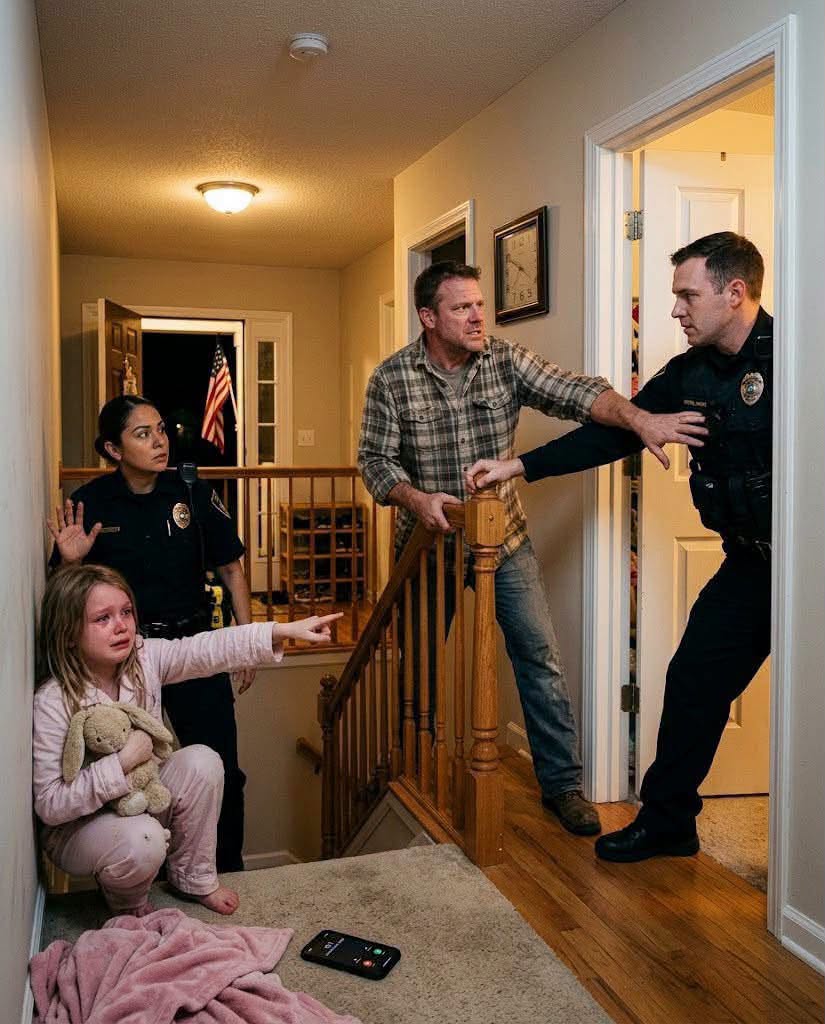
By then, Emily had grown two inches.
Her hair was longer.
She had lost a front tooth.
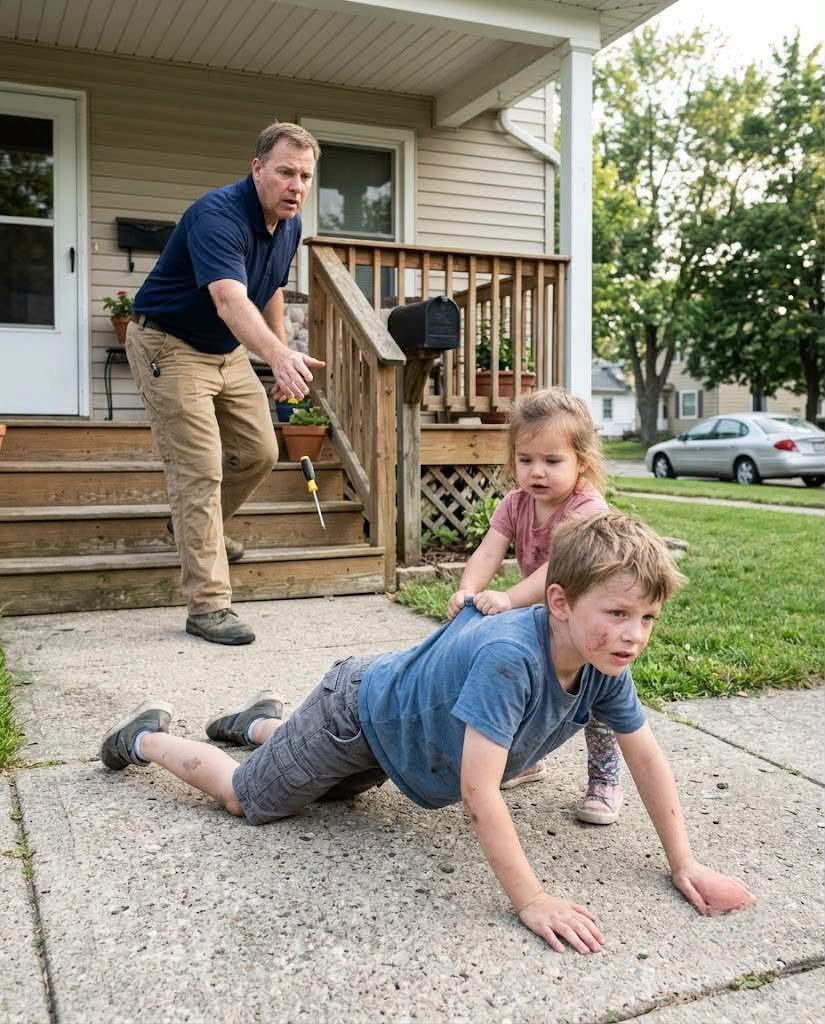
She liked strawberry pancakes, hated loud doors, and slept with a small lamp on. She had started drawing houses with doors again, though sometimes the doors were guarded by giant police officers with square heads and enormous shoes.
Daniel kept one drawing folded in his locker.
María had one taped inside her patrol notebook.
Claire Johnson had never asked for one, but Emily made her one anyway.
It showed a woman wearing a headset with angel wings.
Claire cried again when she saw it.
In court, however, there were no wings.
Only wooden benches, legal pads, microphones, and Thomas Miller sitting in a suit that made him look almost like the man from the porch again.
Almost.
His hair was trimmed. His tie was blue. His expression was wounded.
A father falsely accused.
A community man betrayed.
A performance built for people who still believed monsters announced themselves.
Melissa Grant saw through it before he even sat down.
So did Judge Price.
The jury took longer.
That was what scared everyone.
Trials were not truth machines. They were rooms where truth had to survive procedure, objection, memory, fear, and doubt.
The defense built its case around uncertainty.
Children misunderstand.
Grief distorts.
Recordings lack context.
Aunt Katherine hated Thomas.
Lydia had been unstable.
Police rushed to judgment.
Over and over, Martin Vale tried to turn every warning sign into fog.
Then the state called Claire Johnson.
She walked to the stand in her dispatch uniform because Melissa had asked if she wanted to wear regular clothes and Claire had said no.
“I was working the 911 console on the evening of April 14,” Claire testified.
Melissa nodded.
“Did you receive a call from a child?”
“Yes.”
“Can you describe her voice?”
Claire looked at the jury.
“She sounded like she was trying to disappear.”
No one objected.
Melissa played the call.
Not all of it.
Enough.
The jurors heard Emily whisper.
They heard Claire lower her voice.
They heard the pause when a door scraped in the background.
They heard the terror before the words.
Please hurry.
One juror wiped her cheek.
Thomas stared at the table.
Next came Daniel.
He described the porch, Thomas blocking the doorway, the whimper from the stairs, Emily’s condition, and Thomas’s reaction to the stuffed rabbit.
Martin Vale tried to shake him.
“Officer Harris, isn’t it true that you entered that home already assuming my client was guilty?”
Daniel turned toward him.
“No. I entered that home assuming a child might be in danger.”
“And once you saw my client, you interpreted everything through that lens?”
“I interpreted him blocking access to a crying child as blocking access to a crying child.”
A few people in the courtroom shifted.
Vale moved on.
María testified after him.
She did not look at Thomas once.
She spoke about Emily flinching, Emily’s words, Emily asking whether apple juice was a trick.
Vale tried to suggest María had influenced the child.
María’s voice stayed calm.
“Emily called 911 before she met me.”
Then Grace testified.
Then the forensic interviewer.
Then the doctor, who spoke carefully, respectfully, and without graphic detail. The courtroom understood enough. Some truths did not need to be stripped bare to be believed.
Finally, Melissa called Katherine Reed.
The defense objected repeatedly during her testimony.
Overruled.
Overruled.
Sustained once.
Then overruled again.
Katherine told the jury about Lydia. About isolation. About court filings. About being cut off from Emily. About the final phone call.
“If anything happens to me, don’t let him keep Emily.”
Thomas’s face hardened.
For just a second, the jury saw the porch mask fall.
Melissa ended with one question.
“Why did you keep fighting?”
Katherine looked toward the sealed side room where Emily waited with a support advocate, far from the courtroom.
“Because my sister couldn’t.”
Then came Bunny.
The stuffed rabbit was carried into court inside an evidence bag.
It looked smaller than anyone expected.
Worn fur. Bent ear. Loose stitching.
A toy.
A witness.
Melissa asked the audio specialist to explain the recorder. The jury learned how it worked, how files were recovered, how timestamps were verified, how the device had captured multiple short recordings over time.
The defense argued the recordings were prejudicial.
Judge Price allowed selected portions.
The first voice the jury heard was Lydia’s.
“Secrets are only good for birthday presents, not for things that hurt.”
Katherine bowed her head.
Emily, in the other room, held Grace’s hand and whispered along with the words she knew by heart.
Then came Thomas.
Not in rumor.
Not in accusation.
In his own voice.
Telling Emily not to talk.
Telling her nobody would believe her.
Telling her she would lose everyone if she made trouble.
The courtroom changed as the audio played.
Not loudly.
No shouting.
No gasps.
Just a collective stiffening, as if every person there had been forced to stand inside Emily’s bedroom for a few seconds and understand the size of her fear.
When it ended, Melissa did not speak immediately.
She let the silence work.
Then she said, “The state rests.”
The defense called three witnesses.
Lorraine Miller was one.
She wore pearls again.
She testified that Thomas was a devoted father, Lydia was “dramatic,” and Emily had always been “difficult.”
Melissa’s cross-examination lasted twelve minutes.
“Mrs. Miller, when Emily was taken to the hospital, did you visit her?”
Lorraine blinked.
“No. I was advised—”
“Yes or no.”
“No.”
“Did you ask how she was?”
“My concern was that false allegations—”
“Did you ask how she was?”
Lorraine’s mouth tightened.
“No.”
“Did you call her?”
“No.”
“Send a card?”
“No.”
“Request visitation?”
“No.”
Melissa let the jury sit with that.
Then she asked, “But you gave a television interview defending your son?”
Lorraine said nothing.
Melissa stepped closer.
“Mrs. Miller, is it fair to say your concern was not for Emily, but for Thomas?”
Vale objected.
Judge Price sustained it.
But the question had already landed.
The defense rested the next day.
Thomas did not testify.
On closing arguments, Martin Vale told the jury the state had built a story out of emotion.
Melissa stood and told them emotion had nothing to do with it.
“This case is not about whether Thomas Miller looked like a monster,” she said. “He did not. He looked like a father. A neighbor. A business owner. A man people trusted. That is how he survived.”
She walked to the evidence table and rested one hand near Bunny.
“Emily Miller did what adults tell children to do. She called for help. She used her words. She told the truth. And when she was afraid no one would believe her, her mother’s final act of love helped make sure the truth had a voice.”
Thomas stared straight ahead.
Melissa turned to the jury.
“Do not make this child ask twice.”
The jury deliberated for nine hours.
At 7:16 p.m., they returned.
Emily was not in the courtroom.
Katherine was.
Daniel stood at the back.
María beside him.
Claire behind them both.
Judge Price read the verdict forms one by one.
Guilty.
Guilty.
Guilty.
Thomas Miller gripped the table.
Lorraine cried out.
Katherine did not move.
Not until the final count.
Guilty.
Then she covered her face and sobbed so hard Grace had to hold her upright.
Outside the courthouse, rain fell just like it had the night Lydia’s journals were found.
May you like
But this rain felt different.
Like the sky was finally washing something clean.