Chapter 10 - The House Robert Hale Left BehindThree months later, I turned the key to the front door of the Kingsley mansion and walked inside alone.
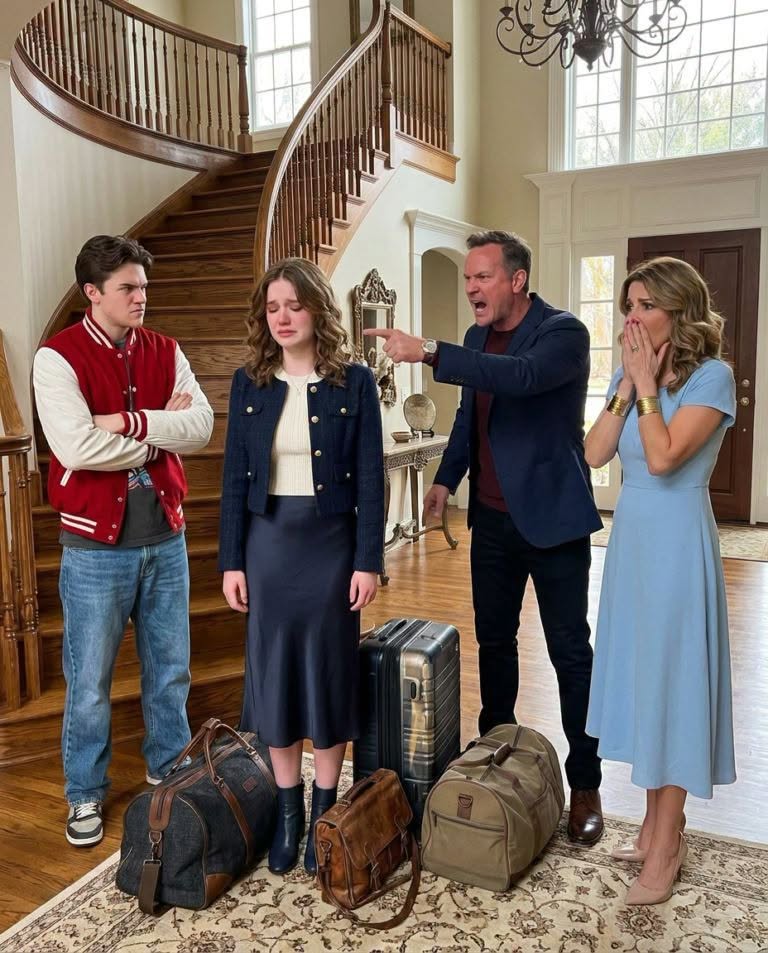
Not as a daughter begging permission.
Not as a girl being photographed for Christmas cards.
Not as someone who had to smile while adults discussed her future in rooms she was not allowed to enter.
I walked in as trustee beneficiary representative under the Hale property provisions, with Nora beside me and a clipboard in my hand.
The mansion was quiet now.
Not dead.
Quiet.
There was a difference.
The chandeliers had been cleaned. The floors polished. The portraits removed from the walls and placed in storage until ownership could be sorted properly. My mother’s decorators would have called it empty.
I called it honest.
My parents had moved into a rented townhouse in Lake Forest. Smaller than the mansion, larger than most homes, and according to three dramatic emails from distant relatives, “humiliating.”
Grant had entered a cooperation agreement. He was not forgiven by the law, and he was not forgiven by me, at least not fully. But he was telling the truth, and for the first time in his life, he had a job that did not come from our father.
Paige moved out of state to stay with her aunt. She mailed me my grandmother’s bracelet after investigators released it.
I did not wear it.
Not yet.
Some heirlooms need time before they stop feeling like evidence.
Victor Sloane was under investigation for predatory lending practices, intimidation, and financial misconduct connected to multiple families, not just ours. My grandfather’s old report had become useful again. Nora said Robert would have enjoyed that.
I thought so too.
My father sent one letter.
Not an apology.
A defense.
He wrote that pressure makes men desperate. That legacy is heavier than children understand. That I would someday realize he had been trying to preserve the family name.
I read it once.
Then I placed it in a file labeled Things That Are Not My Burden.
My mother sent nothing.
That hurt more than I expected.
But grief, I had learned, does not always mean you want someone back. Sometimes it means you are mourning the version of them you kept trying to earn.
The trust paid my tuition deposit.
Northwestern.
Not because my family expected it.
Because I chose it.
The trust paid for a modest apartment near campus, therapy twice a week, and a financial literacy course Nora insisted I take before approving larger investment conversations.
“You have three million dollars,” she told me. “You should understand every person who smiles near it.”
That sounded exactly like my grandfather, so I listened.
As for the mansion, the court eventually confirmed what Nora had known all along.
My parents had violated occupancy conditions.
The Hale property trust could remove them permanently.
Which left one question.
What would I do with the house?
At first, everyone assumed I would sell it.
A mansion like that could bring millions, even after debt complications and repairs. Realtors appeared like birds after rain. Developers called Nora. One offered to turn the property into a private club and keep the Kingsley name on the gates.
I laughed for a full minute when she told me.
No.
The Kingsley name had been on enough locked gates.
I walked through the rooms slowly that March morning, deciding what deserved to remain.
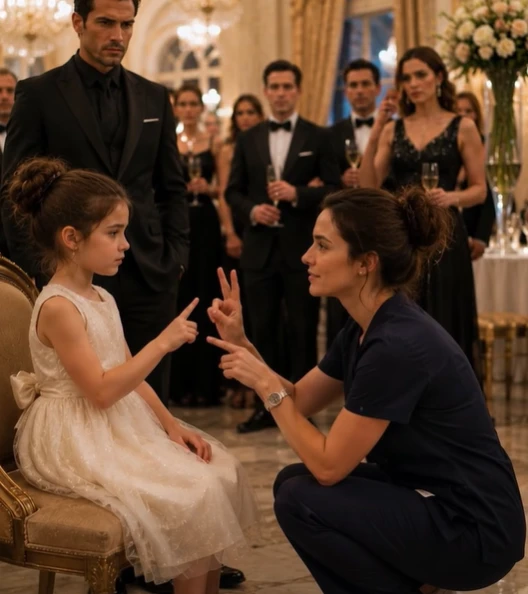
The ballroom where my father had announced I was “finally ready to become a woman” would become a scholarship event space.
Not for society galas.
For students aging out of foster care.
Young women leaving unsafe homes.
Kids with inheritance battles, custody fights, or no family safety net at all.
The library where my grandfather had taught me chess would remain a library, but open twice a month for financial literacy workshops.
The east wing would be renovated into temporary housing suites for legal clients in crisis, managed by a nonprofit Nora helped me form.
The kitchen, once ruled by caterers and silence, would serve actual meals to actual people who needed them.
Nora listened as I explained all this.
When I finished, she removed her glasses and wiped her eyes.
“What?” I asked.
She shook her head. “Robert hoped you would sell it and leave.”
“Would he be disappointed?”
“No,” she said softly. “He would be terrified for the contractors. You sound very determined.”
I smiled.
“Good.”
We ended in my grandfather’s study.
It still smelled faintly like cedar and old paper.
His desk remained by the window. On it sat a sealed box Nora had found in storage after the court inventory.
My name was on it.
Evie.
Not Evelyn.
Evie.
I opened it with shaking hands.
Inside was his watch box, a stack of letters, and a small brass key.
At the bottom lay one final note.
My brave girl,
If this house is in your hands, then the truth came out, and I am sorry for what it cost you.
You owe this family nothing.
Not repair.
Not revenge.
Not performance.
But if you choose to build something better from what they misused, then let the walls learn a new language.
Let them hear laughter that is not fake.
Let them shelter people without demanding obedience.
Let them become proof that inheritance is not what you keep.
It is what you refuse to repeat.
I sat in his chair and cried.
Not the frantic tears of the day I was thrown out.
Not the angry tears of court.
These were different.
Clean.
The kind of tears that come when someone loved you well enough to protect you even after death, but trusted you enough not to decide who you would become.
Nora waited by the door.
When I finally looked up, she said, “There’s someone here to see you.”
I wiped my face. “Who?”
She hesitated.
“Grant.”
My body stiffened.
“He asked politely,” she added. “And he said he would leave if you said no.”
That mattered.
A little.
I nodded.
Grant entered the study like a man walking into a church after breaking its windows.
He looked thinner. Less polished. More real.
For a long moment, neither of us spoke.
Then he saw the note in my hand.
“Grandpa?” he asked.
I nodded.
Grant looked toward the window. “He always knew.”
“Yes.”
He gave a sad smile. “I used to think he hated me.”
“Did he?”
Grant swallowed. “Maybe he hated what I was becoming.”
That was probably true.
He reached into his coat and pulled out a small envelope.
“I found this in my old room.”
He placed it on the desk.
My name was on it.
Not my father’s handwriting.
Not my mother’s.
His.
Evie.
I opened it.
Inside was a photo of us as children in the mansion driveway. I was missing a front tooth. Grant was holding the back of my bicycle seat.
On the back, he had written years ago:
I won’t let you fall.
My throat tightened.
Grant looked at the floor.
“I did,” he said.
I closed my eyes.
There it was.
No excuses.
No “but.”
No speech about pressure or family or legacy.
Just truth.
“You did,” I said.
He nodded.
“I can’t fix that.”
“No.”
“I don’t know if you’ll ever forgive me.”
“I don’t either.”
He accepted that.
For the first time, he did not push.
That made me believe change might be possible.
Not guaranteed.
Possible.
“I’m working with the investigators,” he said. “And I’m paying back what I can. It’ll take years.”
“It should.”
“I know.”
He looked around the study.
“What are you doing with the house?”
I told him.
As I spoke, his face changed.
At first, surprise.
Then shame.
Then something like hope.
When I finished, he said quietly, “Grandpa would like that.”
“I think so.”
Grant turned to leave.
At the door, he stopped. “Evie?”
I looked up.
“I’m glad you moved the money.”
The sentence hit me harder than any apology.
Because three months earlier, my brother had looked at me like I had locked a door he wanted to walk through.
Now he was admitting the door had needed to be locked.
After he left, I walked out to the front steps.
The gates were open.
For the first time in my memory, they were not keeping people out to protect appearances.
They were open because soon people would come in needing safety, advice, shelter, or simply one room where no one could use love as a weapon.
A black car slowed near the curb.
For half a second, my body remembered fear.
Then the window rolled down.
Marisol.
The rideshare driver from the day I left.
She smiled. “You okay, honey?”
This time, I did not almost break.
I smiled back.
“I’m getting there.”
She looked at the mansion behind me. “Looks different.”
“It is.”
“Good different?”
I looked through the open doors, past the foyer where my mother had watched me leave, past the staircase where Grant had whispered about being finished, past the rooms that had once held every rule I thought I had to obey.
Then I thought of my grandfather’s letter.
Let the walls learn a new language.
“Yes,” I said.
“Good different.”
That summer, the first Hale Independence House scholarship dinner was held in the ballroom.
No champagne tower.
No photographers shouting my name.
No speeches about loyalty from people who meant obedience.
Just folding tables covered in white cloth, flowers from a local market, students laughing too loudly, attorneys answering questions for free, and Nora standing near the back pretending not to cry.
I wore my grandmother’s bracelet for the first time.
Not because it made me look wealthy.
Because I had survived the people who tried to turn it into proof that I belonged to them.
During the dinner, a seventeen-year-old girl named Maya approached me. She had been living with a friend after leaving an unsafe home. She held a scholarship packet in both hands like it might disappear.
“Are you Evelyn?” she asked.
“Yes.”
She looked around the ballroom. “This was your family’s house?”
“For a while.”
“And now it helps people?”
“That’s the plan.”
Maya nodded slowly.
Then she said, “Must feel good.”
I looked up at the ceiling, at the chandelier that once made every lie sparkle.
Then I looked at the open doors.
At Nora.
At the students.
At the room no longer built for performance.
“It feels better than good,” I said.
“It feels mine.”
And it was.
Not because my name was on a trust.
Not because a judge had signed an order.
Not because my grandfather left me money.
It was mine because I had chosen what the Kingsley family never could.
Truth over image.
Freedom over comfort.
Control over fear.
And when the night ended, I stood alone in the ballroom where my father had once told two hundred guests I was finally ready to become a woman.
He had been wrong about almost everything.
But not that.
Because the next morning, when he told me to leave by noon, I did become one.
Not the woman he wanted.
Not the daughter my mother could display.
Not the sister Grant could use.
I became the woman my grandfather had believed I could be.
The one who knew that money did not make her safe.
May you like

Control did.
And this time, no one could take it from me.