Chapter 10 - The Fields That RememberedThe trial ended in October.
By then, the wheat had been harvested, the evenings had cooled, and the cottonwoods along the creek had turned gold.
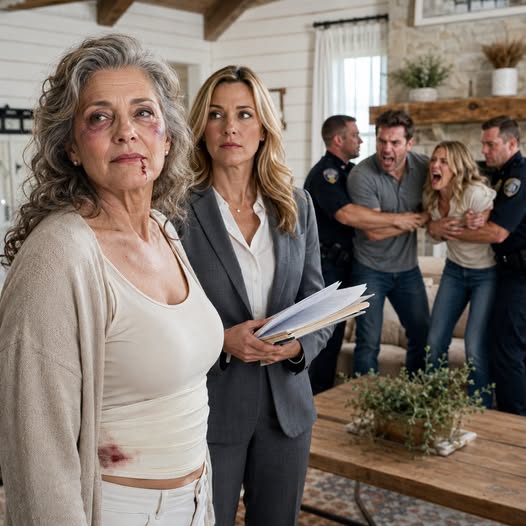
Daniel received prison time, though less than many people wanted because he cooperated with investigators. Melissa received more. Her messages, the break-in, the hired investigator, and her connection to Warren Pike painted a picture even her expensive attorney could not soften.
Warren Pike’s fall was slower and uglier.
Men like him never collapse all at once. They leak excuses first. Then denials. Then statements about family privacy and political enemies. But documents do not care about speeches, and eventually the evidence stacked too high.
Dr. Harlan lost his license pending criminal proceedings.
Margaret Bell’s case was reopened.
Two farms were returned to their rightful owners after fraudulent transfers were exposed. Three more entered legal battles with strong evidence behind them.
Not everything was fixed.
The world rarely repairs itself cleanly.
But it had begun.
On the day Melissa was sentenced, she turned in the courtroom and looked directly at me.
For once, she wore no perfect smile.
“You ruined my life,” she said.
Judge Callahan had not yet left the bench.
“Mrs. Hart,” the judge said sharply, “you will face forward.”
But I answered anyway.
“No, Melissa. I interrupted what you were doing to mine.”
That was the last thing I ever said to her.
After sentencing, reporters waited outside, but I did not give them tears.
I gave them truth.
“No one should have to be nearly destroyed before people believe they are being exploited,” I said. “Listen to older people before the bruises show. Listen to widows before signatures vanish. Listen when someone says their family is pressuring them. Greed sounds respectable when it uses words like legacy, planning, and concern.”
That quote ran everywhere.
Claire teased me later that I had become impossible to take to grocery stores because strangers kept stopping me near the tomatoes.
But life, mercifully, became ordinary again.
Ordinary meant morning coffee on the porch.
Ordinary meant cattle pushing against fences they knew perfectly well would hold.
Ordinary meant Lily coming by after school, dropping her backpack inside the door, and saying, “Grandma, the internet is being weird about you again.”
She helped me set up a small office in the restored barn for the Samuel Hart Rural Legacy Fund. We kept the old beams, the hayloft, and the smell of cedar. Claire came every Saturday. Sometimes three people arrived. Sometimes thirty.
Margaret Bell became our unofficial greeter.
She had moved out of the facility and into a small cottage owned by her niece while her farm case continued. The first day she came to Hartwell, she sat behind the registration table and told a pushy nephew from another county, “If you came to pressure your aunt into signing something, wrong barn.”
The aunt stayed.
The nephew left.
We considered that our first victory of the day.
Rebecca began handling scheduling for the fund. She had a gift for making frightened people feel less foolish for being frightened. I watched her sit with women who whispered, “Maybe I’m overreacting,” and answer, “Then let’s find out safely.”
Henry Ward kept finding excuses to repair things around the farm.
A loose hinge.
A sagging shelf.
A gate that had worked perfectly fine for fifteen years until he declared it “temperamental.”
One chilly evening, I found him on the porch fixing a step Samuel had built.
“You know,” I said, “that step has been crooked since 1987.”
Henry smiled without looking up.
“Then it’s about time someone showed some initiative.”
I sat beside him with two mugs of coffee.
For a while, we watched the sunset over the eastern fields.
The land Daniel had tried to sell glowed copper under the fading light.
Henry nodded toward it.
“Samuel would be proud.”
My throat tightened.
“Yes,” I said. “But he would also say the south fence needs work.”
Henry laughed.
“That too.”
Healing did not mean forgetting.
Some mornings, I still woke from dreams where Daniel stood over me in the kitchen. Some nights, I imagined Melissa’s voice on the phone. I kept the panic button. I kept the cameras. I kept Claire on speed dial.
But fear no longer owned the house.
Lily painted the repaired kitchen table leg with a tiny blue heart where the crack had been filled. At first, I thought it was silly. Then I found myself touching that little heart every morning.
A scar does not have to be hidden to be healed.
Daniel wrote letters from prison.
For months, I left them unopened in a drawer.
Then one winter afternoon, with snow softening the fields, I opened the first.
He did not ask for money.
He did not ask for forgiveness.
He wrote about a counseling group. About realizing he had mistaken entitlement for pain. About remembering Samuel teaching him how to mend fence and feeling ashamed that he had learned nothing from the lesson except how to expect land.
At the end, he wrote:
I don’t know if I deserve to be your son anymore, but I am trying to become a man who would not scare you if he walked through your door.
I folded the letter and sat very still.
Then I placed it in a new box.
Not the cedar chest.
That one was for Samuel.
This box was for things not yet decided.
Spring returned slowly.
The creek thawed. The fields softened. Calves came wobbling into the world on unsteady legs, as they always had, stubborn with life.
On the first anniversary of the day Daniel broke my ribs, I held a gathering at Hartwell Farm.
Not a memorial.
Not a celebration of pain.
A planting.
Neighbors came with shovels. Survivors came with stories. Margaret arrived wearing bright red lipstick and declared she had not dressed up for dirt in years. Claire brought folders, because Claire considered legal documents appropriate for every occasion.
We planted fifty oak saplings along the eastern boundary where developers had once imagined pavement.
Each tree bore a small marker with a family name.
Bell.
Hart.
Doyle.
Kellan.
Names of people who had kept land, lost land, fought for land, or finally told the truth about what had been done to them.
Lily planted the last sapling beside me.
Its marker read: Samuel Hart Legacy Oak.
She pressed soil around the roots with both hands.
“Grandpa would like this,” she said.
“He would pretend not to cry,” I replied.
She smiled.
Then her face grew serious.
“Grandma?”
“Yes?”
“When Dad gets out someday… what happens?”
I looked across the fields.
The honest answer was not simple.
Maybe Daniel would change. Maybe he would not. Maybe one day he would stand at the gate and I would decide whether to open it. Maybe motherhood would ache forever in that undecided place.
But I knew one thing.
“He does not get to return by inheritance,” I said. “Only by repentance.”
Lily nodded as if that made sense.
The sun lowered. People drifted toward the barn where Rebecca had set out lemonade and sandwiches. Henry waved from the porch. Claire stood near Margaret, laughing at something I wished I could hear.
I remained by the young oak.
Wind moved through the blue ribbons still tied to the fence.
Most had faded now, weathered pale by sun and rain.
I had left them there.
Not because I needed the town to remember.
Because I did.
I remembered the floor.
The pain.
The whisper: Mother, you should have listened to me.
And I remembered what came after.
The police lights.
Claire’s black folder.
Samuel’s letter.
Margaret’s notebook.
Lily’s courage.
The courtroom.
The women who stopped whispering and started bringing proof.
My son thought breaking my ribs would make me surrender.
Instead, he broke the last piece of me that still believed love required silence.
Hartwell Farm remained.
Not untouched.
Nothing loved ever is.
But alive.
Protected.
Rooted.
Mine.
As the first stars appeared over the fields, I placed my hand on the young oak and whispered to Samuel, “We saved it.”
The wind moved gently through the grass.
And for a moment, I could almost hear him answer.
May you like
No, Evie.
You did.