Chapter 10 - AVA’S BIRTHDAY PROMISE
Ava turned five on a warm Saturday in June.
Two years had passed since my father’s birthday party.
Two years since the belt.
The fall.
The ambulance.
The brass key in my palm.
For weeks, Ava planned every detail of her celebration.
Strawberry cake.
Blue balloons.
A backyard treasure hunt.
A bubble machine.
A rule that nobody was allowed to shout.
She invited twelve children from preschool, three neighbors, Aunt Melissa, Aunt Lauren, and Detective Torres, who had somehow become “Aunt Maria” after showing Ava how to use a police-car siren during a community event.
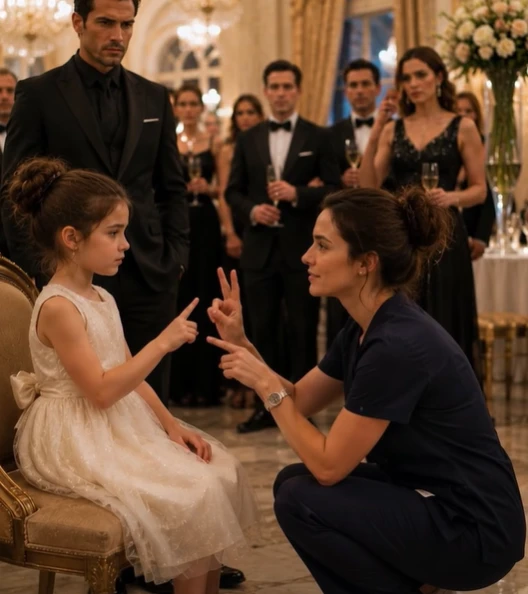
The morning of the party, I found Ava standing in front of her bedroom mirror.
She wore a yellow dress and silver shoes.
Her fingers touched the faint scar behind her ear.
“Can people see it?” she asked.
“Only when you move your hair.”
“Is it ugly?”
“No.”
“What is it?”
I knelt beside her.
“It’s a place where your body healed.”
She considered that.
“Like when trees have marks?”
“Exactly.”
“Our teacher said trees grow around broken places.”
“She’s right.”
Ava smiled at her reflection.
“Then my brain grew around it.”
I kissed her forehead.
“Yes, sweetheart. It did.”
The party began at noon.
Children ran through the yard wearing paper crowns. Music played softly. Ethan stood beside the grill while Lauren arranged fruit trays beneath the patio tent.
For the first half hour, I watched everything too closely.
Every running child.
Every sharp corner.
Every adult hand.
Trauma turns vigilance into a reflex.
My therapist had taught me to recognize the difference between protection and control.
Ava needed sensible safety.
She did not need to inherit my fear.
So when she climbed onto the small wooden play structure, I resisted the urge to stand directly beneath her.
She reached the top.
Looked toward me.
Then jumped onto the grass.
“I did it!”
“You did!”
Her laughter filled the yard.
Later, while the children searched for plastic coins hidden near the flower beds, a delivery van stopped outside.
The driver carried a rectangular package to the porch.
There was no return address.
My body reacted before my mind did.
Heart racing.
Hands cold.
Ethan noticed.
“I’ll check it.”
“No,” I said. “We’ll check it together.”
Inside was a wooden box.
Lauren joined us near the kitchen counter.
The box contained no threat.
Only a handmade blue music box and a letter from my mother.
Prison officials had inspected both.
The music box played “You Are My Sunshine.”
My mother used to sing it when we were children.
The letter was addressed to Ava.
I did not open it.
“What are you going to do?” Lauren asked.
“I don’t know.”
“You could throw it away.”
“I could.”
“Do you want to?”
I looked through the window.
Ava was helping a younger child find a hidden coin.
“No.”
Lauren nodded.
“Neither would I.”
We placed the letter in my office.
Later, when Ava was older, she could decide whether to read it.
That was another lesson our parents had never learned.
Love did not mean controlling someone else’s access to the truth.
It meant giving them safety, context, and choice.
After lunch, Ethan carried out the strawberry cake.
Five candles stood in the center.
Everyone gathered around.
Ava climbed onto her chair.
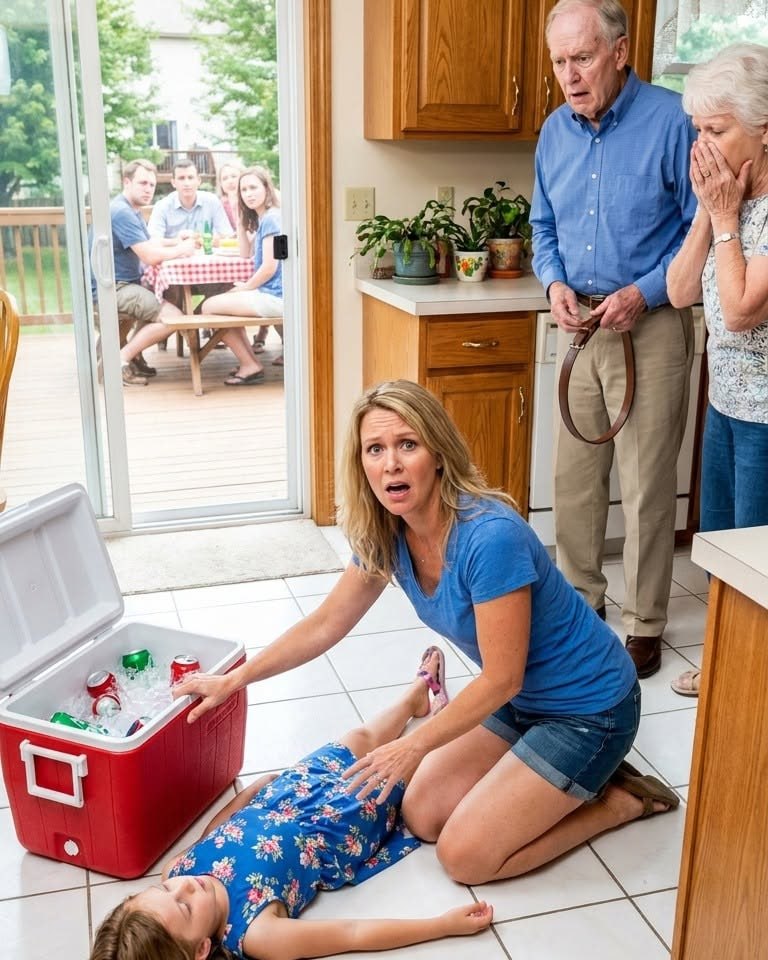
For one second, the scene overlapped with another birthday party.
Gold balloons.
Tile floors.
My father’s angry face.
Ava unconscious in my arms.
Then she looked at me and smiled.
The memory loosened its grip.
This was not that kitchen.
This was not his celebration.
This day belonged to her.
We sang.
Ava closed her eyes and made a wish.
Then she blew out all five candles at once.
The children cheered.
“What did you wish for?” I asked.
“I can’t tell you.”
“Of course.”
She leaned close anyway.
“I wished everybody’s house could be safe.”
My eyes filled with tears.
A five-year-old should have wished for a pony.
A castle.
A mountain of toys.
Instead, my daughter wished for safety because she already understood that some children did not have it.
The Open Door Project had grown faster than anyone expected.
During our first year, we helped more than two hundred families seek protective orders, emergency custody arrangements, counseling referrals, and safe housing.
We partnered with pediatricians, teachers, churches, and community centers.
We trained professionals to recognize family systems where powerful relatives used money or reputation to silence victims.
Our motto appeared above the clinic entrance:
FEAR IS NOT RESPECT.
The words came from a lesson I had learned too late for my childhood but soon enough to change Ava’s.
One week after her birthday, I was invited to speak before a state committee considering expanded child-protection laws.
I told them about the gaps that had allowed my father’s behavior to continue.
A teacher who noticed bruises but accepted an explanation.
A nurse whose report disappeared.
Police officers influenced by community connections.
Family members who believed staying neutral protected them.
“Neutrality does not protect children,” I said. “It protects the person with the most power.”
The legislation passed the following spring.
It strengthened evidence-retention requirements, expanded protections for reporting witnesses, and created additional review procedures when influential community members were accused of harming children.
Reporters called it Ava’s Law.
I resisted the name at first.
Ava deserved to be more than the worst thing that happened to her.
But when she was old enough to understand the basics, I explained that the law might help adults listen faster when children were afraid.
“Then they can use my name,” she said.
“Are you sure?”
“Yes. But they should use my whole name.”
So they did.
The Ava Grace Walker Child Safety Act.
My father learned about the law from prison television.
He sent me a letter claiming I was exploiting the family.
I returned it unopened.
My mother wrote less frequently.
Her letters changed over time.
Early ones contained explanations.
Later ones contained admissions.
She joined a prison program for women who had enabled or participated in family violence. She began helping other inmates prepare statements for their children that did not demand forgiveness.
Lauren visited her once.
I did not.
Not yet.
Maybe never.
Healing gave me the right to choose distance without explaining it.
Caleb sent Ava birthday cards through his attorney.
We did not give them to her.
He had started therapy in prison and joined a restorative-justice program, but progress did not create entitlement.
He was responsible for repairing himself.
Ava was not responsible for witnessing the repair.
Three years after the trial, Andrew Price’s mother died peacefully at home.
Her daughter mailed me a small package afterward.
Inside was Andrew’s restored silver wristwatch.
The family had decided it should be displayed at the Open Door Project.
A note accompanied it.
Let people see that buried truth can still return.
We placed the watch inside a glass case beside a photograph of Andrew smiling with his fishing pole.
The display did not focus on how he died.
It told visitors who he had been.
He loved blueberry pancakes.
He wanted to become a park ranger.
He collected coins.
He hated thunderstorms but loved rain.
That was how we defeated men like my father.
Not merely by exposing their crimes.
By restoring the humanity of the people they had tried to reduce to secrets.
On the fifth anniversary of the party, I returned to my parents’ old house.
It had been sold after the trial to cover legal judgments and restitution.
A young couple lived there with two children.
They had renovated the kitchen.
The tile was gone.
Warm oak flooring stretched beneath white cabinets.
The brass hook that once held my father’s belt had been removed.
I did not enter.
I stood across the street beside Lauren.
“Do you miss it?” she asked.
“No.”
“Me neither.”
But she was crying.
So was I.
We were not grieving the house.
We were grieving the childhoods we should have had inside it.
Lauren took my hand.
“We survived.”
“Yes.”
“Sometimes I hate that people say that like it’s the happy ending.”
I understood.
Survival was only the beginning.
The happy ending was learning to live without organizing every choice around the person who hurt you.
It was laughter that did not stop when a door opened.
It was disagreement without terror.
It was children making mistakes without believing love would disappear.
It was a birthday party where the loudest sound was joy.
That evening, we returned home.
Ava, now eight, sat at the dining table writing a school essay.
The assignment asked students to describe someone brave.
I expected her to write about Detective Torres or Ethan.
Instead, she wrote about herself.
I waited until she finished before asking why.
“Because I used to think brave meant you weren’t scared,” she said.
“What do you think it means now?”
“It means you tell someone when you are scared.”
I sat beside her.
“That’s a very good definition.”
She studied my face.
“Were you brave at Grandpa’s party?”
“I was scared.”
“That’s not what I asked.”
I smiled.
“Yes. Eventually, I was brave.”
“What did you do?”
“I stopped protecting the wrong people.”
She nodded as though that made perfect sense.
Then she returned to her essay.
Outside, Ethan was hanging lights along the fence for a neighborhood dinner.
Lauren stood in the yard arguing cheerfully with Melissa about where the tables should go.
The house was noisy.
Messy.
Alive.
No one was performing perfection.
No one needed to.
Before bed, Ava found the old drawing she had made after we moved.
Our family beneath a blue circle.
A fence around us.
She placed it beside a newer drawing.
In the new one, there was no fence.
Only a wide green field, a yellow sun, and an open door standing by itself beneath the sky.
“Why is there a door without a house?” I asked.
“It’s for people who need somewhere safe to go.”
I looked at my daughter.
The little girl my father believed he could frighten into obedience.
The child my mother blamed for her own injury.
The toddler whose fall had finally broken decades of silence.
“What happens when they walk through it?” I asked.
Ava smiled.
“They find people who believe them.”
That night, after everyone was asleep, I placed both drawings inside the same frame.
The fence and the open door.
Fear and freedom.
The life we survived and the life we chose afterward.
For years, I believed the most important moment of my story was the second my father removed his belt.
It wasn’t.
It was the moment I stood up from the kitchen floor.
The moment I stopped asking my family for permission to tell the truth.
The moment I understood that blood did not create loyalty, and silence did not create peace.
My father’s birthday party ended with sirens.
But our real story began after the ambulance doors closed.
It began with evidence.
With witnesses.
With two damaged sisters choosing honesty.
With a husband who stayed steady when the world became unbearable.
With a child who healed without being taught to hide her scars.
Harold Bennett once believed fear would keep our family together forever.
He was wrong.
Fear kept us trapped.
Truth set us free.
And every year, when Ava blows out her birthday candles, she makes the same wish.
That every frightened child finds an open door.
That someone listens.
That someone believes them.
That someone finally stands up.
May you like

Just as I did.
Just in time.