Chapter 8 - Natalie CrossNatalie Cross became the ghost who pulled the final wall down.
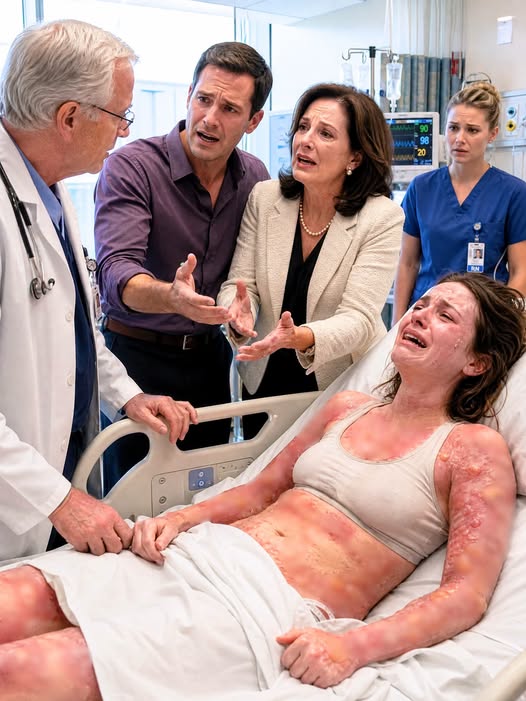
The next morning, her photograph appeared everywhere.
A smiling woman with auburn hair, standing beside Samuel at a charity event nine years earlier. The headlines called her his former fiancée. They called her death suspicious. They called her family’s silence “newly questioned.”
I stared at the photo for a long time.
She looked like me.
Not exactly.
But enough.
Same age when Samuel met her. Same kind of career. Same careful posture beside him, as if already learning not to take up too much space.
Margaret stood by the window, reading the article on her tablet.
“Her parents settled a civil dispute with Samuel after her death,” she said. “Sealed records.”
“Can we open them?”
“We can try.”
Detective Reyes did more than try.
By the end of the week, Natalie’s older brother, Daniel Cross, flew in from Denver.
He came to see me at the hospital.
I expected anger. Blame. Maybe resentment that I had survived when Natalie had not.
Instead, he brought a small envelope.
“My sister wrote this before she died,” he said.
His voice was rough.
“She mailed it to me. I got it two days after the funeral.”
I looked at the envelope but did not take it.
“You don’t have to show me.”
“I think I do.”
Inside was a copy of a letter, folded along old creases.
Daniel read it aloud because my hands were shaking too badly.
Danny, if Samuel ever tells you I was unstable, don’t believe him. If he says I drank, don’t believe him. If something happens, look at the money. Always look at the money.
Look at the money.
That was exactly what I used to tell juries when I prosecuted fraud cases.
Money tells the truth people try to bury.
Natalie had found Samuel’s debts.
I found his theft.
Both of us became problems.
Daniel sat beside my bed, his eyes red.
“For years, I thought maybe she was scared and exaggerating,” he said. “That’s the part that eats me alive. He was so convincing.”
I understood that guilt too well.
Samuel did not only abuse trust.
He recruited doubt.
He made people question victims before they questioned him.
“You’re here now,” I said.
Daniel nodded slowly. “And I’m not leaving.”
With Natalie’s case reopened, Samuel’s attorney changed strategy.
They offered a plea.
Twenty years.
No trial.
No testimony from me.
No public airing of Natalie’s death.
Margaret brought the offer to my room with the prosecutor.
I listened quietly.
Twenty years was not nothing.
It was more than many survivors ever saw.
But the offer required dropping several financial charges and limiting public findings about the conspiracy.
Samuel wanted prison over exposure.
That told me everything.
“No,” I said.
The prosecutor studied me. “A trial will be hard.”
“I know.”
“They will attack you.”
“They already have.”
“They will use your medical records, your marriage, your decision to stay—”
“My decision to survive,” I corrected.
The room went still.
Margaret’s eyes softened.
“I am tired,” I said. “I am in pain. I am scared every morning when I wake up. But I spent three years being edited by Samuel Sanders. I will not let his final version of this story be a sealed plea agreement.”
So we went to trial.
The trial lasted twenty-six days.
Samuel’s defense tried everything.
They painted Joyce as the sole attacker.
Then they painted me as the mastermind.
Then they suggested Margaret wanted control of my assets.
Then they implied Cynthia exaggerated her findings for friendship.
Then they attacked Natalie’s family for wanting attention.
Each version contradicted the last.
The jury noticed.
I testified on day eighteen.
Walking into court took more strength than I expected. My shoulder was bandaged beneath a soft blouse. My steps were slow. The scars were not visible, but I felt them with every breath.
Samuel watched me enter.
For once, I did not look away.
The prosecutor asked me to describe the marriage.
Not just the night of the attack.
All of it.
So I told them.
The isolation.
The control.
The humiliation disguised as concern.
The way Samuel corrected my memories until I stopped trusting them.
The way Joyce turned my home into a workplace where I was the unpaid servant.
The way people asked why I changed, but nobody asked who changed me.
Samuel’s attorney rose for cross-examination.
He smiled gently, like he was sorry for me.
“Mrs. Sanders, you are an attorney, correct?”
“Yes.”
“A successful one?”
“Yes.”
“Educated? Financially literate? Experienced with high-pressure conflict?”
“Yes.”
“Yet you expect this jury to believe you were helpless?”
I looked at him.
“No,” I said. “I expect them to believe abuse does not require a victim to be stupid. It requires an abuser willing to study what she loves and use it against her.”
The courtroom went silent.
May you like

Samuel’s attorney blinked.
For the first time, he had no next question ready.