Chapter 9 - The VerdictThe jury deliberated for eleven hours.
Those eleven hours felt longer than the entire trial.
I waited in a private room with Margaret, Cynthia, Rosa, Daniel Cross, and Detective Reyes. None of us spoke much.
What was there to say?
Everything had already been said under oath.
Joyce had testified for the prosecution in exchange for a reduced sentence recommendation. She cried through most of it, but not for me. She cried when she described Samuel turning away from her after the arrest.
“He was my son,” she said on the stand. “I thought I was helping him.”
The prosecutor asked, “Helping him do what?”
Joyce whispered, “Get free of her.”
I almost laughed when she said it.
Get free of me.
I had been the prisoner.
But in Joyce’s mind, my ownership of my own life was captivity for Samuel.
The jury returned just after sunset.
We entered the courtroom slowly.
Samuel stood when the jury came in. He had lost weight. His face looked sharper, his eyes darker, but he still held his chin high.
He believed in last-minute miracles.
Men like Samuel always do.
The clerk read the verdicts one by one.
Aggravated assault.
Guilty.
Conspiracy.
Guilty.
Insurance fraud.
Guilty.
Forgery.
Guilty.
Coercive control.
Guilty.
Witness intimidation.
Guilty.
Attempted destruction of evidence.
Guilty.
The reopened matter involving Natalie Cross would continue separately, but by the time the final guilty verdict landed, Samuel’s future had already narrowed to concrete walls.
Joyce sobbed behind him.
Samuel did not move.
Only his eyes found mine.
For years, his stare had been a command.
Look down.
Apologize.
Fix this.
Now it was only a stare.
The judge revoked any remaining bond and ordered Samuel into custody pending sentencing.
As deputies approached, Samuel finally spoke.
“This isn’t over.”
The judge looked at him over her glasses.
“Mr. Sanders, for once, you are correct. Sentencing is next month.”
A ripple moved through the courtroom.
Samuel’s face twisted.
Then he turned toward me.
“You’ll never be free of me.”
My answer surprised even me.
“I already am.”
The sentencing hearing drew more people than the trial.
By then, women had begun writing to the prosecutor’s office. Former employees. Former girlfriends. A former assistant who said Samuel had locked her in an office until she signed a nondisclosure agreement. A contractor who claimed Samuel threatened his family after a payment dispute.
Samuel had been leaving wreckage for years.
I was simply the first piece that refused to stay buried.
At sentencing, Daniel Cross spoke for Natalie.
Rosa spoke for the staff he had threatened.
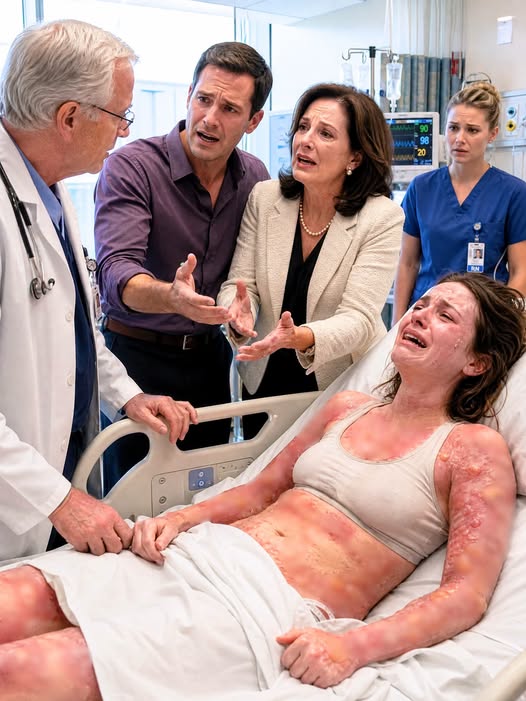
Cynthia spoke about injuries that went beyond skin.
Margaret spoke about financial predation and calculated control.
Then it was my turn.
I stood at the podium.
My voice did not shake.
“Samuel once told me nobody would believe me because I had become too quiet,” I said. “He was wrong. Quiet women remember. Quiet women document. Quiet women survive long enough to speak in rooms men like him cannot control.”
Samuel stared at the table.
“I used to think justice meant getting back what he took from me,” I continued. “My home. My career. My name. But now I know justice is also making sure he cannot take those things from someone else.”
The judge sentenced Samuel to forty-two years.
Joyce received twelve, with the possibility of reduced time due to cooperation, but the judge made clear cooperation did not erase cruelty.
When the hearing ended, reporters crowded the courthouse steps.
I did not want to speak.
But Margaret squeezed my arm.
“You don’t owe them anything,” she said.
“I know.”
That was why I did speak.
Not for the cameras.
For every woman watching from a kitchen, a bedroom, a bathroom floor, wondering whether evidence mattered, whether anyone would care, whether silence could ever become a weapon.
I faced the microphones.
“My name is Amelia Grace Whitmore,” I said. “Not Mrs. Samuel Sanders. Not unstable. Not careless. Not difficult. My name is Amelia. And I survived.”
For a moment, nobody asked a question.
Then the flashes began.
But I was already turning away.
Because the most important audience was not outside the courthouse.
May you like
It was inside me.
And she had finally heard the truth.