Chapter 9 - Valeria Finally Chose HerselfValeria refused to return to the apartment.
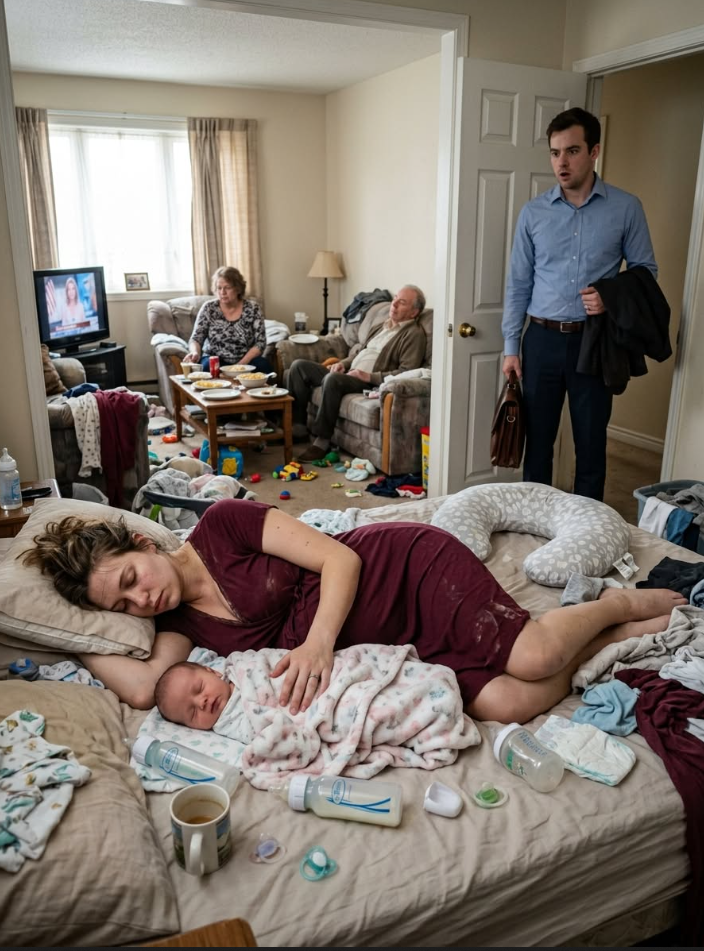
She said it gently.
Almost apologetically.
Then she caught herself and said it again with her shoulders straighter.
“I am not going back there.”
I nodded.
“Okay.”
She watched me as if waiting for the argument.
Waiting for me to say rent was expensive.
Waiting for me to say we could change the locks.
Waiting for me to say memories fade.
Waiting for the old Mateo, the one who negotiated her safety against everyone else’s comfort.
But that man had died somewhere between Santiago’s fever and my mother’s notebook.
So I said, “We’ll find somewhere else.”
Valeria cried then.
Not because she was sad.
Because being believed can hurt when you spent too long preparing to be dismissed.
Angela helped us arrange temporary housing through a program connected with the hospital and victim advocacy center. It was a small furnished apartment twenty minutes away, in a building with secure entry and a manager who did not know my family. The first night there, Valeria stood in the living room holding Santiago and simply stared at the thermostat.
“Seventy-two,” she whispered.
I looked at the number.
“What?”
She touched the wall like it was proof of something.
“It’s warm.”
I had to turn away.
Because in that moment, warmth was not a temperature.
It was an apology I could never fully finish giving.
The next weeks were not cinematic.
Healing rarely is.
There were no dramatic speeches every morning. No sudden transformation where Valeria woke up fearless and I woke up forgiven. There were doctor appointments, police interviews, legal consultations, Santiago’s weight checks, nights where he cried and Valeria froze because crying still carried memory in its sound.
Sometimes she handed him to me and walked into the bathroom, locking the door.
The first time, panic hit me before reason did.
“Val?”
“I just need a minute,” she said from inside.
I stood outside that door feeling the old terror.
Not because I thought she would hurt herself.
Because I understood suddenly what privacy meant to someone who had been denied it.
So I stepped back.
“Take ten,” I said. “I have him.”
She came out six minutes later with wet eyes and guilt on her face.
“I’m sorry.”
“Don’t apologize for needing air.”
“He’s my baby. I should—”
“No,” I said gently. “He’s our baby. You don’t have to earn motherhood by suffering.”
She stared at me.
“That sounds like something Dr. Patel would say.”
“She’s smarter than me.”
That almost made her smile.
Almost.
We took Santiago to his pediatrician twice a week at first. He gained weight. His color improved. His cry grew stronger, which terrified and relieved us at the same time. Dr. Hensley, a calm woman with silver glasses, looked Valeria in the eye every visit and said, “You are doing well.”
The first time, Valeria nodded without believing it.
The third time, she whispered, “Thank you.”
The fifth time, she cried.
Dr. Hensley handed her tissues and said, “A baby who is loved can recover. So can a mother.”
Meanwhile, the case moved forward.
Doña Carmen and Brenda were formally charged with offenses related to unlawful restraint, child neglect, assault, harassment, and evidence-backed false reporting. Their attorney tried to paint everything as a “family misunderstanding during a stressful postpartum adjustment.”
Then prosecutors played the baby monitor footage.
The plea offers changed.
My mother refused hers at first.
According to Rafael, she believed no jury would punish a grandmother. She believed people would see her tears and understand she was only trying to protect her son.
Brenda wanted a deal immediately.
That surprised no one.
Their unity cracked the second consequences arrived.
Brenda claimed Mom made the decisions.
Mom claimed Brenda exaggerated.
Brenda said Mom hated Valeria from the beginning.
Mom said Brenda was unstable and jealous.
For years, they had fed on the same cruelty.
Now they turned their teeth on each other.
Valeria watched this from a distance.
She did not obsess over every update, but she wanted to know enough to feel safe. Our attorney, Dana Whitfield, explained each step in plain language. Dana was sharp, direct, and had the kind of calm that made people sit up straighter.
“Your job,” Dana told Valeria, “is not to prove you are a good mother to people committed to lying about you. Your job is to tell the truth.”
Valeria nodded.
“I can do that.”
But the night before her formal testimony, she broke down.
I found her in the nursery corner of the temporary apartment, sitting beside Santiago’s crib. He was asleep, one tiny fist beside his face.
Valeria held the blue scarf.
The police had returned it after processing because Dana requested it for court preparation. I hated seeing it in our home. I hated that Valeria wanted it.
But she said, “I need to decide what it means now.”
That night, she ran the fabric through her fingers.
“I wore this when you told me you loved me,” she said.
“I remember.”
“You were nervous.”
“I was terrified.”
She smiled faintly.
“You said, ‘I know my family is complicated, but I’ll protect us.’”
I closed my eyes.
“I failed.”
“Yes,” she said softly.
I opened my eyes.
She looked at me with tears in hers.
“But you’re here now.”
I sat on the floor beside her.
“I don’t know if that’s enough.”
“I don’t either.”
The honesty between us was painful, but it was clean.
For years, my family had survived on dirty peace — unspoken resentment, fake apologies, smiles over poison. With Valeria, truth hurt, but it did not rot.
She looked down at the scarf.
“When they tied me with this, I kept thinking about that night. About who I was before I became afraid of your family. I was not weak then.”
“You’re not weak now.”
“I know,” she said.
And this time, she sounded like she meant it.
The next morning, Valeria testified for three hours.
Not in open trial yet — a deposition connected to the criminal and protective proceedings. Dana sat beside her. I sat behind, close enough that she could see me but not so close that anyone could say she was coached.
My mother’s attorney asked questions designed to cut.
“Isn’t it true you suffered anxiety after birth?”
“Yes,” Valeria said.
“Isn’t it true you cried often?”
“Yes.”
“Isn’t it true you felt overwhelmed caring for Santiago?”
Valeria looked at him calmly.
“Yes. I was a new mother recovering from birth. Being overwhelmed did not give anyone permission to take my phone, hide my baby’s food, deny medical care, or tie me to a bed.”
Dana’s mouth twitched.
The attorney tried again.
“Did Doña Carmen ever say she wanted you dead?”
Valeria’s face changed.
“She said if I died, Mateo would come back to his real family.”
The room went still.
My mother stared at the table.
For the first time, she looked smaller.
Not sorry.
Just exposed.
Then Brenda’s attorney asked, “Did Brenda personally harm your son?”
Valeria’s voice sharpened.
“She listened to him cry and laughed. You tell me what kind of harm that is.”
No one asked that question again.
After the deposition, Valeria walked out without the wheelchair.
Slowly.
Carefully.
But on her own feet.
In the hallway, my mother stood with her attorney. She looked at Valeria with pure venom.
“You destroyed my family,” she said.
Valeria stopped.
For one second, fear crossed her face.
Then it passed.
“No,” Valeria said. “I survived it.”
My mother’s mouth opened.
Nothing came out.
Valeria took my hand and kept walking.
That evening, we moved into our new apartment.
It was not big. It did not have fancy floors or a perfect kitchen. The second bedroom was barely large enough for Santiago’s crib and a rocking chair. But it had sunlight. It had a working heater. It had new locks. It had no memories of my mother’s voice.
Valeria stood in the doorway while I carried Santiago inside.
“Welcome home,” I said.
She looked around.
Then she took Santiago from my arms and stepped across the threshold.
Not as a guest.
Not as a woman asking permission.
As the heart of the home.
Weeks passed.
Then months.
Valeria started therapy. I did too. Separately first, then together. I learned words for things I had normalized: enmeshment, emotional abuse, coercive control, trauma bonding. None of the words excused me. They gave me tools to stop repeating what I inherited.
One night, Valeria found me assembling a bookshelf for Santiago.
“You’re doing it wrong,” she said from the doorway.
I froze.
Then she smiled.
Actually smiled.
It was small, tired, beautiful.
I handed her the instructions.
“Then save me.”
She sat on the floor beside me, Santiago sleeping in a wrap against her chest, and together we built the crookedest bookshelf in the state.
It leaned slightly left.
We kept it anyway.
Because it was ours.
Because nothing about healing was perfectly straight.
Because for the first time, our home was not built on fear of who might get offended.
It was built on choosing each other.
And when the final court date arrived, Valeria did not ask whether I was ready to face my mother.
She asked, “Are you ready to stand with me?”
I looked at our son.
Then at my wife.
May you like
“Yes,” I said.
And I was.