Chapter 6 - My Mother Told Me to Forgive ThemMy parents came together on Saturday morning.
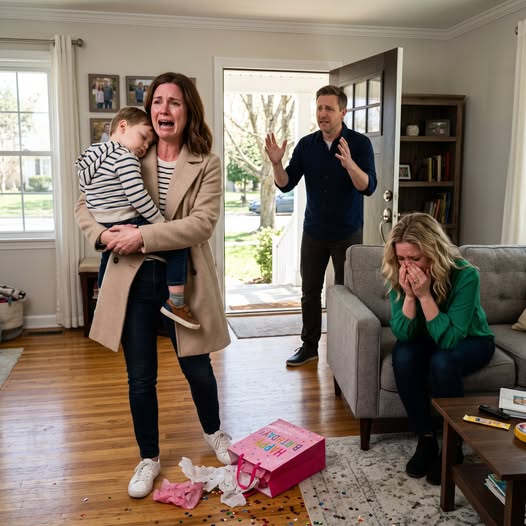
That alone told me they had planned it.
My father never arrived unannounced. He always called first, even when I was twenty and living in a dorm room. My mother believed family gave her the right to enter any space she had once helped create.
So when I saw their sedan pull into my driveway at 10:03 a.m., I already knew which one was driving the mission.
Noah was in the backyard wearing rain boots and stomping through puddles. I watched him through the kitchen window as my parents approached the porch.
Mom carried a casserole.
That made me angrier than yelling would have.
In my family, casseroles were used the way other people used bandages. They covered wounds no one planned to clean.
I opened the door before they could knock.
“Claire,” Mom said gently.
Dad stood behind her, pale and quiet.
I looked at the foil-covered dish. “No.”
Mom blinked. “What?”
“You’re not bringing comfort food into my house like this is a misunderstanding.”
Her lips pressed together. “We came to talk.”
“I know.”
“Then let us in.”
I looked past her to my father. His eyes met mine, then dropped. Shame sat heavily on his shoulders.
I stepped aside.
But I did not hug them.
Mom noticed.
Of course she did.
She placed the casserole on the counter anyway and looked around the kitchen as if searching for evidence of collapse. Maybe she expected dirty dishes, broken glass, proof that I was becoming the unstable woman their version of the story required.
Instead, the counters were clean. Noah’s drawings were clipped neatly to the refrigerator. Coffee brewed. A stack of legal folders sat on the table like quiet weapons.
Her gaze caught on the folders.
“Is that necessary?” she asked.
“Yes.”
Dad finally spoke. “Where’s Noah?”
“Backyard.”
He walked to the window. I watched his face soften as Noah jumped into a puddle and laughed.
That laugh was the only beautiful thing left in the house that week.
Mom lowered her voice. “Claire, your sister is not eating.”
I poured coffee into a mug. “That’s unfortunate.”
“She hasn’t slept.”
“Neither have I.”
“She says you blocked her.”
“She’s correct.”
Mom sighed in that exhausted, disappointed way that used to make me apologize before I knew what I had done wrong.
“You can’t handle this by shutting everyone out.”
“I’m not shutting everyone out. I’m shutting out people who harmed me and people trying to manage my response to being harmed.”
She glanced at Dad as if asking him to help.
He did not.
So she continued alone.
“I am not defending what Emily did.”
“You started with her appetite.”
“She’s my daughter too.”
“And I’m what?”
Mom looked startled.
I set my mug down.
“No, really. In this conversation, what am I? Because Emily is your daughter. Mark is apparently a man who made a mistake. Noah is a child who needs stability. But what am I?”
Her eyes shone. “You’re my daughter.”
“Then act like it.”
The room went silent.
Outside, Noah shouted, “Grandpa! Look!”
Dad lifted one hand weakly through the glass.
Mom’s face hardened—not with rage, but with fear. Fear of losing control. Fear of consequences spreading beyond what she could smooth over at Sunday dinner.
“Claire, divorce is serious.”
“So is adultery.”
“Marriage survives worse.”
“Mine won’t.”
“You don’t know that yet.”
“Yes,” I said. “I do.”
She leaned forward. “You are making decisions in pain.”
“I am making decisions with evidence.”
Her eyes moved to the folders again.
“What evidence?”
I smiled sadly. “Enough.”
Mom lowered her voice. “Don’t weaponize private family matters.”
There it was.
Private.
Family.
Matters.
Three words that had protected generations of bad behavior.
“Mom,” I said, “Mark took Noah to Emily’s house and told him to keep secrets from me.”
Dad turned from the window.
My mother froze.
“What?” Dad asked.
I looked at him. “Mark took Noah there while pretending they were going other places. Noah told his teacher that Daddy said some secrets are for grown-ups and not to tell Mommy.”
Dad’s face changed completely.
Not anger first.
Grief.
Deep, stunned grief.
Mom whispered, “Maybe Noah misunderstood.”
I stared at her.
Even Dad turned.
“Linda,” he said quietly.
She looked at him. “He’s four.”
“He’s four,” Dad repeated, and now anger entered his voice. “That is exactly why it matters.”
My mother swallowed.
For the first time since this began, she looked uncertain.
Dad came to the table and sat down heavily. “How many times?”
“I don’t know. Noah suggested several. Phone records and location history support it.”
“Jesus,” Dad whispered.
Mom reached for the chair but did not sit. “Emily told me Noah was never there.”
I laughed softly. “Emily also told you it was emotional.”
Dad’s jaw tightened.
He had not known that part either.
Pieces were landing now. The pretty lie my mother carried in here was cracking under the weight of facts.
“Claire,” Dad said, “show me.”
Mom snapped, “Richard.”
He looked at her. “No. I want to see.”
I hesitated.
Then I opened the folder.
Not everything. I did not need to humiliate myself by displaying every receipt, every message, every hotel charge. But I showed enough.
The voicemail.
The Richmond badge photo.
The screenshot of Emily’s post with Mark’s watch.
The Christmas Eve footage still from Dana’s camera.
The email where Mark wrote, You don’t want Noah dragged into things he doesn’t understand.
By the time I finished, my father’s hands were shaking.
My mother was crying silently.
But her tears were complicated. Some were for me, maybe. Some were for Emily. Some were for the family image collapsing. I had known my mother long enough to tell the difference.
Dad stood abruptly.
“I need air.”
He walked onto the back deck.
Noah ran toward him immediately.
“Grandpa! Splash with me!”
Dad crouched in the wet grass without caring about his pants and pulled Noah into his arms.
Through the window, I watched his shoulders shake.
My mother came to stand beside me.
For several minutes, neither of us spoke.
Then she said, “I didn’t know.”
“I know.”
“Emily didn’t tell me any of that.”
“I know.”
“She said you walked in and misunderstood a vulnerable moment.”
I looked at her. “And you believed her.”
Mom wiped her cheek. “I wanted to.”
That was the first honest thing she had said.
I let it sit between us.
Wanting to believe Emily had been easier than facing the truth about her. Easier than admitting my sister was not just wounded, not just insecure, not just unlucky in love.
She was capable of cruelty.
And Mark had chosen that cruelty with her.
Mom turned toward me. “What do you want me to do?”
It was such a strange question.
For years, I had wanted my mother to choose me without instructions.
Now that she was asking, the answer felt both simple and impossible.
“Stop asking me to forgive people who are still lying.”
Her mouth trembled.
“And stop calling this a family tragedy,” I added. “It’s a betrayal. Name it correctly.”
She nodded slowly.
But I could see she was not ready to hold that name for long.
Dad came back inside carrying Noah, both of them damp and muddy. Noah was laughing. Dad’s eyes were red.
“Grandma brought food,” Noah said cheerfully.
Mom tried to smile. “I did.”
Noah looked at me. “Can I eat it?”
I looked at the casserole on the counter.
Then at my mother.
Then at my son.
“Yes,” I said. “Food isn’t guilty.”
Dad almost smiled.
It was the first breath of normal in days.
But normal did not last.
At 1:17 p.m., Mark arrived.
He did not knock.
He stood on the porch holding a stuffed dinosaur and a bag of Noah’s favorite snacks, looking every inch like a wounded father denied his child.
My mother gasped. “Did you know he was coming?”
“No.”
Dad moved before I did.
He opened the door but stepped outside, blocking Mark’s view into the house.
I could not hear the first words, but I saw Mark’s face shift from practiced sadness to surprise.
Dad pointed toward the driveway.
Mark shook his head.
Dad pointed again.
My mother whispered, “Richard, don’t make a scene.”
I turned to her. “The scene started on Emily’s couch.”
Outside, Mark raised his voice.
“He’s my son too!”
Noah froze in the kitchen.
His spoon clattered into his bowl.
Dad’s voice came through the glass, low and cold.
“Then start acting like a father instead of a man looking for leverage.”
Mark looked past him and saw me.
For one second, our eyes met.
And I saw it again.
Not remorse.
Not love.
A threat.
Then he smiled.
It was small, bitter, meant only for me.
He lifted his phone and began recording.
“Claire,” he called loudly, “why won’t you let me see my child?”
My mother covered her mouth.
Dad turned red with fury.
And I realized Mark had not come to visit Noah.
He had come to create evidence.
So I opened the door, stepped onto the porch, and spoke clearly enough for his phone to capture every word.
“Mark, as my attorney notified you yesterday, all visitation arrangements need to go through counsel because you stated in a recorded voicemail that you intended to use Noah against me.”
His smile vanished.
Dad turned to look at me.
Mark lowered the phone.
I continued.
“You are not being denied access to your son. You are being denied the right to use him as a weapon on my porch.”
The silence afterward was perfect.
Even the rain seemed to pause.
Then Noah appeared behind my mother and whispered, “Daddy?”
Mark’s face crumpled.
This time, I almost believed it.
Almost.
Noah stepped halfway behind my leg.
“Hi, buddy,” Mark said softly.
Noah did not move closer.
That hurt Mark more than anything I had said.
He left the dinosaur on the porch and walked back to his car.
When he drove away, my father picked up the stuffed toy and looked at it like it was evidence from a crime scene.
My mother began crying again.
But this time, she did not ask me to forgive them.
She only whispered, “What have they done?”
I looked at Noah, who had gone back to his cereal but was no longer smiling.
May you like
“They taught me who needs protecting,” I said.
And for the first time, no one argued.
Related Stories