Chapter 10 — The House Helen Built
Chapter 10 — The House Helen Built
Melissa was arrested three days later at a motel outside Abilene.
Clayton Mercer was arrested the same afternoon while trying to board a flight under a different name.
I learned both things from Detective Harris, who called me at 6:40 p.m. while I was fixing the porch railing Brian had ignored for four years.
“She had your wife’s jewelry,” Harris said.
My hand tightened around the screwdriver.
“What?”
“In her bag. A pearl necklace. Wedding ring set. A bracelet engraved H.M.B.”
For a moment, the world narrowed to a single point.
Helen’s jewelry had gone missing six months after Melissa moved in. Brian told me I must have misplaced it during a bad week. I believed him. I searched drawers, boxes, closets. I apologized to Helen’s photograph because I thought grief had made me careless.
Melissa had stolen it.
“She says Brian gave it to her,” Harris added.
Of course she did.
Maybe he had.
Maybe he had not.
Some truths arrive too late to matter.
The jewelry came home two weeks later in a sealed evidence bag.
I placed Helen’s wedding ring on the kitchen table and cried harder than I had cried in years.
Not elegant tears.
Old man tears.
Noisy.
Ugly.
Necessary.
Elaine found me that way when she came by with lemon bread.
She did not say a word. She just sat beside me and held my hand until the storm passed.
After that, life did not become magically happy.
That is not how real endings work.
The house still had a broken office window to replace.
There were court dates.
Statements.
Insurance calls.
Awkward apologies from relatives who had mistaken cruelty for comedy.
Brian pled guilty to reduced charges months later in exchange for testimony against Melissa and Clayton. He admitted to financial exploitation, attempted coercion, and participating in the guardianship scheme. He avoided the worst sentence, but not consequences.
Restitution.
Probation.
Mandatory counseling.
A no-contact order unless I chose otherwise.
I did not choose otherwise.
Not then.
Melissa and Clayton faced heavier charges after other victims came forward. Kara from the hotel testified. The notary testified. Brian testified. So did I.
In court, Melissa looked smaller without my money dressing her up.
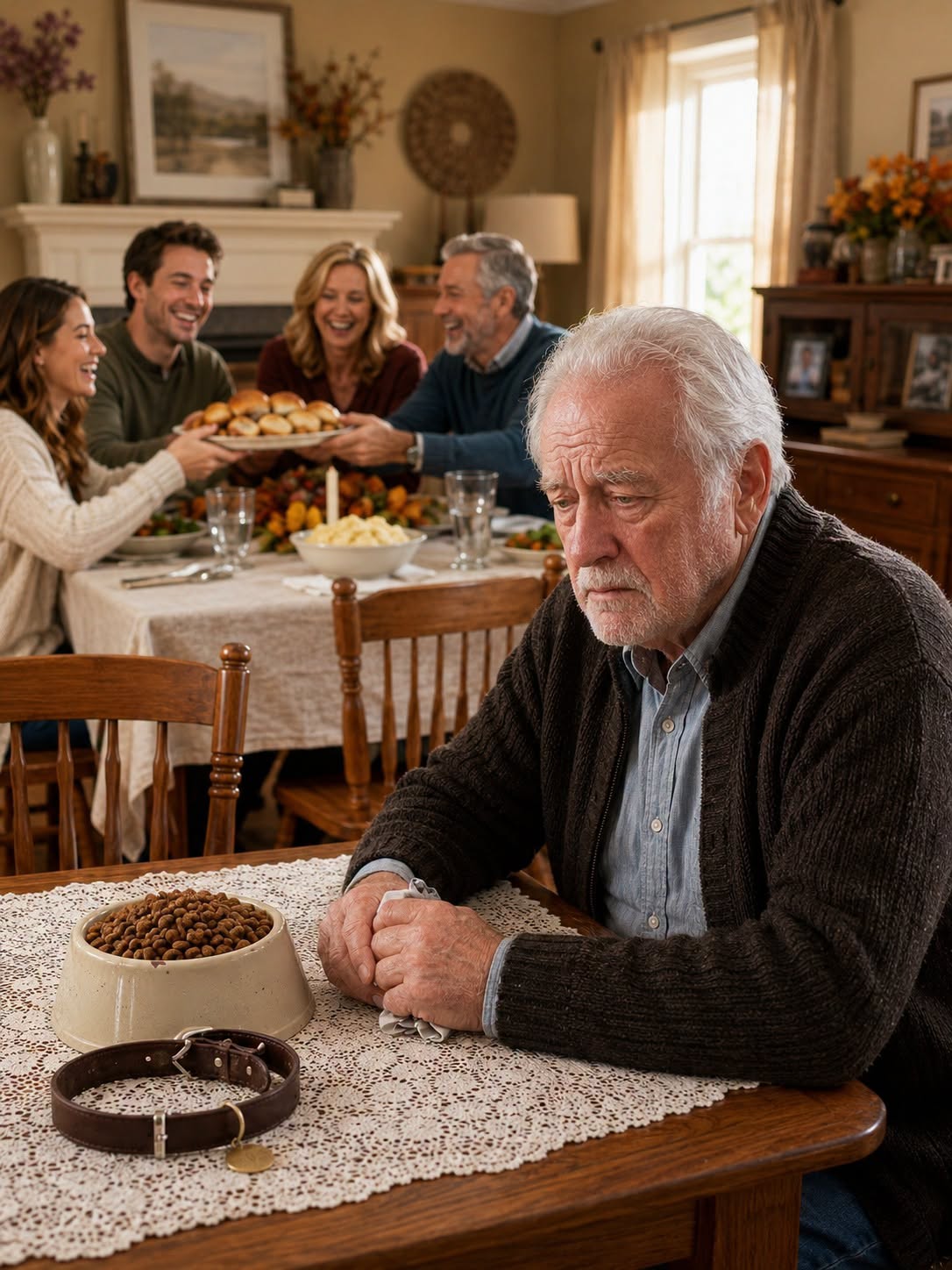
When the prosecutor played the dog bowl video, she stared straight ahead.
Brian looked down and cried.
I watched the screen once.
Only once.
Then I looked away.
I did not need to see my humiliation again to know it had happened.
The judge called the scheme “calculated exploitation of an elderly homeowner by people who confused trust with weakness.”
Elderly.
I still disliked that word.
But I accepted homeowner.
After the sentencing, Brian approached me in the courthouse hallway with his lawyer nearby.
He stopped six feet away.
Following the order.
Good.
“Dad,” he said.
I waited.
“I’m sorry.”
There were a thousand things I could have said.
Too late.
Not enough.
You broke your mother’s heart.
You broke mine.
Instead, I said, “I hope one day you become someone who understands what those words cost.”
He cried then.
Quietly.
For the first time, he did not ask me for anything.
That was the only reason I believed the apology might someday become real.
But someday was not today.
I went home alone.
And for the first time in years, alone did not feel like punishment.
It felt like space.
Spring arrived slowly.
I cleaned the guest room.
I donated Melissa’s abandoned clothes.
I repainted the dining room a warm cream Helen had wanted years ago but we never got around to choosing.
I replaced the old curtains.
I repaired the porch railing.
I hired a young man from Elaine’s church to help with the garden, and when he tried to undercharge me, I paid him double because honest work deserved honest money.
Then, on a Saturday evening nearly one year after the dog bowl birthday, I hosted dinner.
Not a big party.
Six people.
Elaine.
Samuel.
Kara from the hotel and her grandmother.
Detective Harris, who arrived out of uniform with a pie his wife made.
And me.
I cooked roasted chicken.
Rice.
Salad.
Potatoes.
Tres leches cake from Helen’s bakery.
This time, no one started without me.
This time, no one sat in my chair.
Helen’s chair remained empty until dessert.
Then Elaine stood, walked to the living room, and returned with Helen’s framed photograph.
She placed it gently on the chair.
“I think she should be at the table,” Elaine said.
My throat closed.
No one laughed.
No one looked away.
We ate slowly. We talked about ordinary things. Weather. Gardens. Books. Kara’s grandmother’s new apartment. Samuel’s terrible golf game. Harris’s daughter getting into college.
Ordinary conversation can feel like music after years of chaos.
When it was time for cake, Elaine lit one candle.
“Only one?” Samuel asked.
Elaine smiled. “At seventy-one, Walter gets to decide how much fire he wants near dessert.”
Everyone laughed.
So did I.
A real laugh.
When they sang, I did not feel forgotten.
I did not feel foolish.
I did not feel like a burden taking up space in my own home.
I felt alive.
After dinner, when everyone had gone, I carried the dishes to the sink and looked through the window at the dark backyard.
For years, I thought losing Helen was the end of my family.
Then I thought losing Brian was.
But standing there in the quiet house, I understood something Helen had known before me.
A home is not protected by blood.
It is protected by love.
By respect.
By truth.
I walked to the dining room and touched the back of Helen’s chair.
“Happy birthday, old man,” I whispered to myself.
Then I turned off the lights.
Upstairs, in the bedroom we once shared, Helen’s cedar box sat on the dresser. Her letter was inside, folded carefully along its original lines.
Live.
So I did.
Not loudly.
Not perfectly.
May you like

But freely.
And in the house Helen built with me, that was enough.