Chapter 4 — My Son’s Secret Was Worse Than Theft
Chapter 4 — My Son’s Secret Was Worse Than Theft
Clayton Mercer was not hard to find.
Men like that never hide because they never believe anyone beneath them is dangerous.
Samuel found his business listing in less than twenty minutes.
Mercer Family Asset Planning.
The website showed Clayton in a blue suit, smiling beside words like compassion, legacy, protection, and dignity.
I had spent enough years reading invoices to know expensive lies when I saw them.
His office sat above a dental clinic in a strip mall forty minutes away. Samuel advised me not to go there yet. He said we needed law enforcement, subpoenas, proper steps.
He was right.
But being right does not always calm a man whose life has been forged on paper.
So instead of going to Clayton, I went home.
The house was quiet when I returned.
Too quiet.
Brian’s truck was gone. Melissa’s car was gone. The kitchen had not been cleaned. Of course it had not. The people who treated a house like theirs rarely acted like it was their responsibility.
I walked room by room.
In the living room, one of Melissa’s friends had left a wineglass on Helen’s piano.
I moved it.
In the dining room, Brian’s chair—my chair—was pushed back crookedly.
I straightened it.
Then I stood before Helen’s chair.
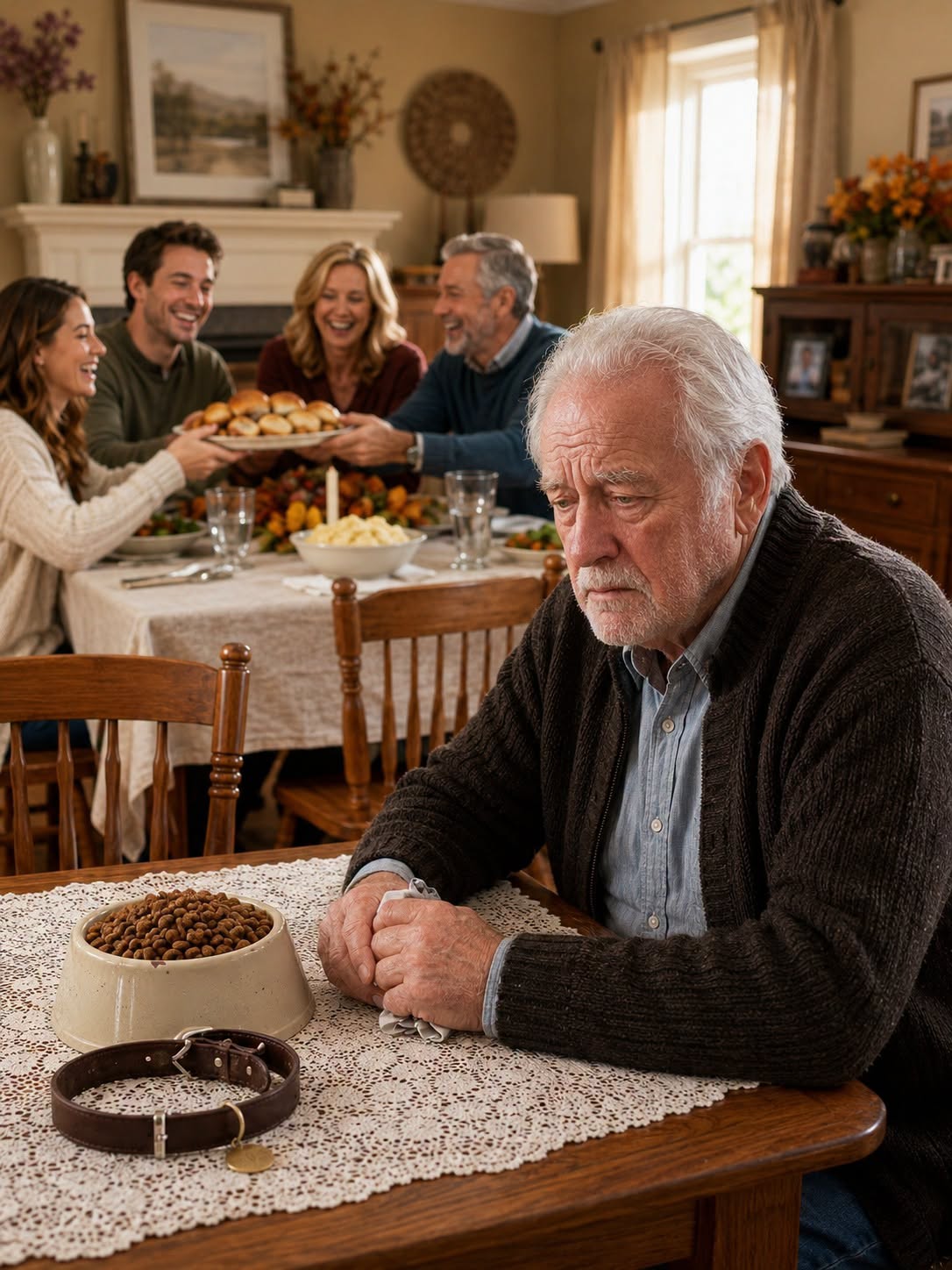
For nine years, I had kept it there like a small altar. I had never let anyone sit in it during Christmas, Thanksgiving, birthdays. People knew. They respected it.
Melissa had sat there the night before.
On purpose.
That was when my sadness hardened.
I went upstairs to Brian and Melissa’s room.
Technically, it was the guest room.
That was another lie I had allowed to grow roots.
The door was unlocked.
Their bed was unmade. Clothes spilled from drawers. Shopping bags lined the wall. On the dresser sat three perfume bottles, two watches, and a framed photo of Brian and Melissa on a beach vacation I did not know they had taken.
I checked the closet.
Shoeboxes.
Suitcases.
A locked file box.
I did not touch it.
Not yet.
I had learned from Samuel: evidence mattered only if collected correctly.
But then I saw the shredder.
It sat beside Melissa’s vanity, full.
Not empty.
Full.
I knelt slowly and removed the bin.
Thin strips of paper curled together like dead worms.
Most people think shredded paper is destroyed.
Accountants know better.
I carried the bin to my office, spread the strips across the desk, and began separating them by color, texture, font. It was tedious work. It was patient work.
It was my kind of work.
By sunset, three words had emerged from one page.
Bennett Residential Transfer.
Another strip showed my home address.
Another showed Brian’s name.
Another showed a line that made my hands shake.
Primary caregiver has expressed concern that subject may become hostile if informed before filing.
Hostile.
They were creating a story before I even knew I was a character in it.
At 6:12 p.m., Brian came home.
I heard the front door slam.
“Dad!”
I stayed in my office.
His footsteps pounded up the stairs.
He tried the door.
Locked.
“You went through our room?”
I said, “Your room is in my house.”
“You had no right!”
I opened the door.
Brian stood there red-faced, breathing hard. Melissa hovered behind him, pale but furious.
I held up one reconstructed strip.
“Bennett Residential Transfer.”
Brian’s eyes flickered.
Melissa spoke first. “You’re insane.”
“No,” I said. “That word will not work on me anymore.”
Brian pointed at me.
“You need help.”
“I called Samuel.”
Brian laughed, but it cracked in the middle.
“That washed-up old lawyer? He can’t do anything.”
“He can preserve hotel footage.”
Melissa went still.
“He can request notary logs,” I continued. “He can identify Clayton Mercer. He can compare signatures. He can contact the district attorney’s elder fraud unit.”
Brian’s face changed completely.
Not anger now.
Fear.
“What did you say?”
I stepped closer.
“I said elder fraud.”
Melissa grabbed Brian’s arm.
“Don’t talk. Not another word.”
That told me everything.
Brian yanked his arm away.
“No, I want to know what he thinks he knows.”
“I know about the hotel,” I said. “The notary. Dr. Hargrove. The traced signature.”
Brian looked at Melissa.
It was quick, but I saw it.
He had not known about the traced signature.
Melissa whispered, “Brian, don’t.”
He turned on her.
“What signature?”
She did not answer.
“What signature, Melissa?”
She lifted her chin.
“The one you were too scared to get.”
The hallway went silent.
Brian stared at her.
I stared at both of them.
Melissa’s mask finally slipped.
“Oh, please,” she snapped. “You were never going to do it. All you did was whine about how unfair your life was. How the house should be yours. How your father treated you like a child. I found people who could help.”
“By forging my father’s name?” Brian said.
“You wanted the house.”
“I didn’t want prison!”
There it was.
The truth was uglier than I expected.
Not because Brian was innocent.
He was not.
He wanted my house. He wanted control. He wanted my money.
But Melissa had pushed the plan from greed into crime.
I felt no relief.
A son who lets a snake into your home is still the one who opened the door.
Brian turned back to me.
“Dad…”
That word nearly broke me.
Not because it was tender.
Because it was late.
I raised a hand.
“No.”
His face crumpled into something rehearsed.
“You have to understand. I’m drowning. I can’t get ahead. You don’t know what it’s like.”
“I know exactly what drowning feels like,” I said. “I buried your mother and still paid the mortgage.”
His eyes filled with rage again.
“You always do that. You always make it about Mom.”
“No, Brian. You did. When you let Melissa sit in her chair.”
He flinched as if I had slapped him.
Good.
Some truths should hurt.
Behind him, Melissa’s phone buzzed. She looked down, and panic crossed her face.
Brian saw it.
“Who is it?”
“No one.”
He grabbed for the phone.
She pulled away.
He caught her wrist.
The screen lit between them.
Clayton Mercer.
The message preview read:
Did the old man sign yet?
Brian let go as if the phone had burned him.
I looked at my son.
Then at Melissa.
May you like

Then at Helen’s photograph on the hallway wall.
“No,” I said quietly. “But the old man is about to file.”