Chapter 1 - The Name They RemovedWhen I woke up, the world sounded like machines.
Slow beeping. Soft hissing. Wheels rolling somewhere beyond a curtain. A nurse whispering my name like she wasn’t sure I was still connected to it.
“Mrs. Holloway?”
My eyelids felt stitched shut. My throat burned. My body felt like it belonged to someone else—someone broken, cut open, emptied out, then barely put back together.
I tried to speak, but only air came out.
A woman leaned over me. Dark hair. Tired eyes. A badge that read DR. RAMIREZ.
“Don’t try to talk,” she said gently. “You’re safe. You’re in the ICU. You had a very difficult delivery, but you’re alive.”
Alive.
The word moved through me slowly.
Then everything came back in flashes.
The operating room lights.
Someone saying the babies were coming too fast.
Pressure. Pain. Panic.
A cry.
Then another.
Then a third.
Triplets.
My babies.
My chest tightened so violently the monitor beside me screamed.
“My babies,” I rasped.
Dr. Ramirez placed her hand on my shoulder. “They’re alive. They’re in the NICU. They’re small, but they’re fighting.”
Tears slid down the sides of my face before I even understood I was crying.
Three babies.
Alive.
I almost smiled.
Then I saw the look she was trying to hide.
“What?” I whispered.
The doctor looked toward the nurse. The nurse looked away.
That was when fear crawled up my spine.
“What happened?” I asked.
Dr. Ramirez sat beside my bed, lowering her voice. “There are some administrative issues being handled.”
Administrative issues.
In a hospital, those words never meant anything good.
I tried to lift my hand, but tubes held me down. “Where is Grant?”
The room went still.
Not silent. The machines kept beeping. The vent kept humming. But the human part of the room stopped breathing.
Dr. Ramirez’s expression changed. Not pity exactly. Something worse.
Anger restrained by professionalism.
“Your husband left the hospital three days ago.”
Three days.
I had been unconscious for three days.
“He left?” I asked.
The nurse swallowed hard.
Dr. Ramirez hesitated, then said, “Before he left, he signed divorce papers.”
At first, I thought the medication was twisting her words.
Divorce papers.
Those two words didn’t belong in the same room as a woman who had just died giving birth to his children.
I blinked, waiting for the sentence to rearrange itself into something less monstrous.
It didn’t.
“He what?”
“He signed them in the hallway,” she said quietly. “While you were still critical.”
My heart monitor began to climb again.
“No,” I whispered. “That can’t be right.”
“I’m sorry.”
“No,” I repeated, stronger this time.
Because Grant Holloway could be cold. He could be ambitious. He could walk out of dinners to take calls. He could look at love like it was a negotiation he hadn’t meant to sign.
But this?
This was not cold.
This was cruelty wearing a designer suit.
“I need to see my babies,” I said.
Dr. Ramirez looked at the floor.
That was when I understood there was more.
“What else?”
The doctor’s jaw tightened. “Because of the divorce filing and the way your records were changed, the hospital’s legal department has placed a temporary restriction on access while they confirm guardianship and authorization.”
The words landed like stones.
Temporary restriction.
Guardianship.
Authorization.
I stared at her.
“I’m their mother.”
“I know.”
“I gave birth to them.”
“I know.”
“I died for them.”
Her eyes filled with tears she refused to let fall. “I know.”
A hospital administrator came in twenty minutes later.
She was polished, nervous, and terrified of looking directly at me.
Her name was Marjorie Bell. She carried a tablet against her chest like it was a shield.
“Mrs. Holloway—”
“Don’t call me that if you removed me from everything,” I said.
Her face paled.
“I didn’t personally—”
“Who did?”
She looked toward the door.
That tiny glance told me everything.
Grant.
Of course.
Marjorie opened the tablet. “Your insurance was tied to Mr. Holloway’s private employer-sponsored executive plan. After the legal filing, his office submitted an emergency dependent status update.”
I stared at her.
“He removed me?”
She said nothing.
“He removed me while I was unconscious?”
“I’m very sorry.”
People always say sorry when they are telling you something unforgivable.
“What about the babies?”
Marjorie took a breath. “Their coverage is under review.”
A sound came out of me that wasn’t quite a laugh and wasn’t quite a sob.
“My babies are in the NICU.”
“Yes.”
“They were born early.”
“Yes.”
“And my billionaire husband removed their medical coverage?”
Marjorie’s lips parted, but no answer came.
Because there was no answer that could make that sentence less evil.
Dr. Ramirez stepped forward. “We are not withholding care. Let me be clear about that. The babies are receiving treatment.”
“But legally?” I asked.
Marjorie’s eyes dropped.
That was the thing about money. It didn’t always kill you quickly. Sometimes it simply put a wall between you and the door you needed to open.
I closed my eyes.
For one second, I let myself feel it.
The betrayal.
The terror.
The humiliation of waking up not as a wife, not as a protected patient, not even as a mother with unquestioned rights.
Just a problem someone had tried to delete.
Then I opened my eyes.
“My phone,” I said.
The nurse looked surprised. “You’re very weak.”
“My phone.”
“It may not be charged.”
“Then charge it.”
Dr. Ramirez studied me for a moment, then nodded to the nurse.
They found my phone inside a sealed patient belongings bag. My wedding ring was there too, dropped into a small plastic cup like it was evidence from a crime scene.
When the nurse placed the phone in my hand, my fingers trembled so badly she had to unlock it using Face ID.
There were no missed calls from Grant.
Not one.
But there were messages from reporters. Friends. Former staff. Women from charity boards. People who never texted unless something had already become gossip.
Then I saw one message from an unknown number.
Mrs. Vale-Holloway, my name is Mara Beck. I represent the Lydia Vale Family Trust. I need you to call me immediately when you wake up. Do not sign anything. Do not speak to Grant Holloway alone. The clause has been triggered.
The clause.
A memory surfaced through the fog.
My grandmother Lydia sitting across from me years earlier, sliding documents over a mahogany desk.
“Men like Grant do not always marry women,” she had said. “Sometimes they marry access.”
I had laughed then. I was twenty-six, in love, and sure my grandmother’s bitterness came from another generation.
She had tapped the papers with one red fingernail.
“Love him all you want, Madeline. But protect yourself before you need protection.”
Madeline.
That was my name.
Madeline Vale Holloway.
Not Grant’s wife.
Not his abandoned patient.
Madeline.
I tapped the number with a shaking thumb.
Mara Beck answered on the first ring.
“Madeline?”
Her voice was sharp, controlled, awake.
“Yes,” I whispered.
She exhaled once. “Thank God.”
“What clause?”
There was a pause.
Then she said, “The abandonment and bad-faith dissolution clause in your grandmother’s trust.”
“I don’t understand.”
“Grant never read the full trust agreement. His lawyers reviewed the marriage provisions, but not the dormant protections tied to medical incapacity, pregnancy, and dependent children.”
My pulse quickened.
“Mara.”
“He signed divorce papers while you were incapacitated within seventy-two hours of delivering trust-protected heirs.”
Trust-protected heirs.
My babies.
“What does that mean?”
“It means the moment he tried to sever you legally, he activated an automatic review of every asset, loan, board seat, and controlling interest connected to Vale capital.”
My breathing changed.
“Vale capital?”
“Madeline,” Mara said carefully, “Grant Holloway did not build his empire alone. The seed financing, the bridge loans, the private guarantees, the early real estate acquisitions—most of them were backed by your grandmother’s trust. He was allowed to use the foundation as long as he honored the marriage protection provisions.”
I gripped the phone.
“And if he didn’t?”
Mara’s voice turned cold.
“Then the trust has the right to reclaim control.”
For the first time since waking up, I stopped feeling like I was falling.
“What happens now?”
“It already started.”
Outside my ICU room, footsteps rushed down the hall.
A nurse pulled back the curtain.
Dr. Ramirez turned toward the door.
Marjorie Bell, the administrator, stepped inside again—but this time, her face was white.
“Mrs. Holloway,” she said, then quickly corrected herself. “Ms. Vale. I’m sorry. There are men downstairs asking for you.”
Mara’s voice sharpened through the phone. “Who?”
Marjorie swallowed.
“Grant Holloway’s legal team. They’re demanding access to the triplets.”
My whole body went cold.
I looked at Dr. Ramirez.
She looked back at me.
Then my phone buzzed.
A message from Grant.
You’re awake. Good. Don’t make this uglier than it needs to be.
I stared at those words until they blurred.
Then another message appeared.
The babies are Holloways. Remember that.
Something inside me, something that had been weak and bleeding and buried beneath pain, opened its eyes.
I lifted the phone back to my ear.
“Mara?”
“Yes?”
“Stop him.”
There was a brief silence.
May you like
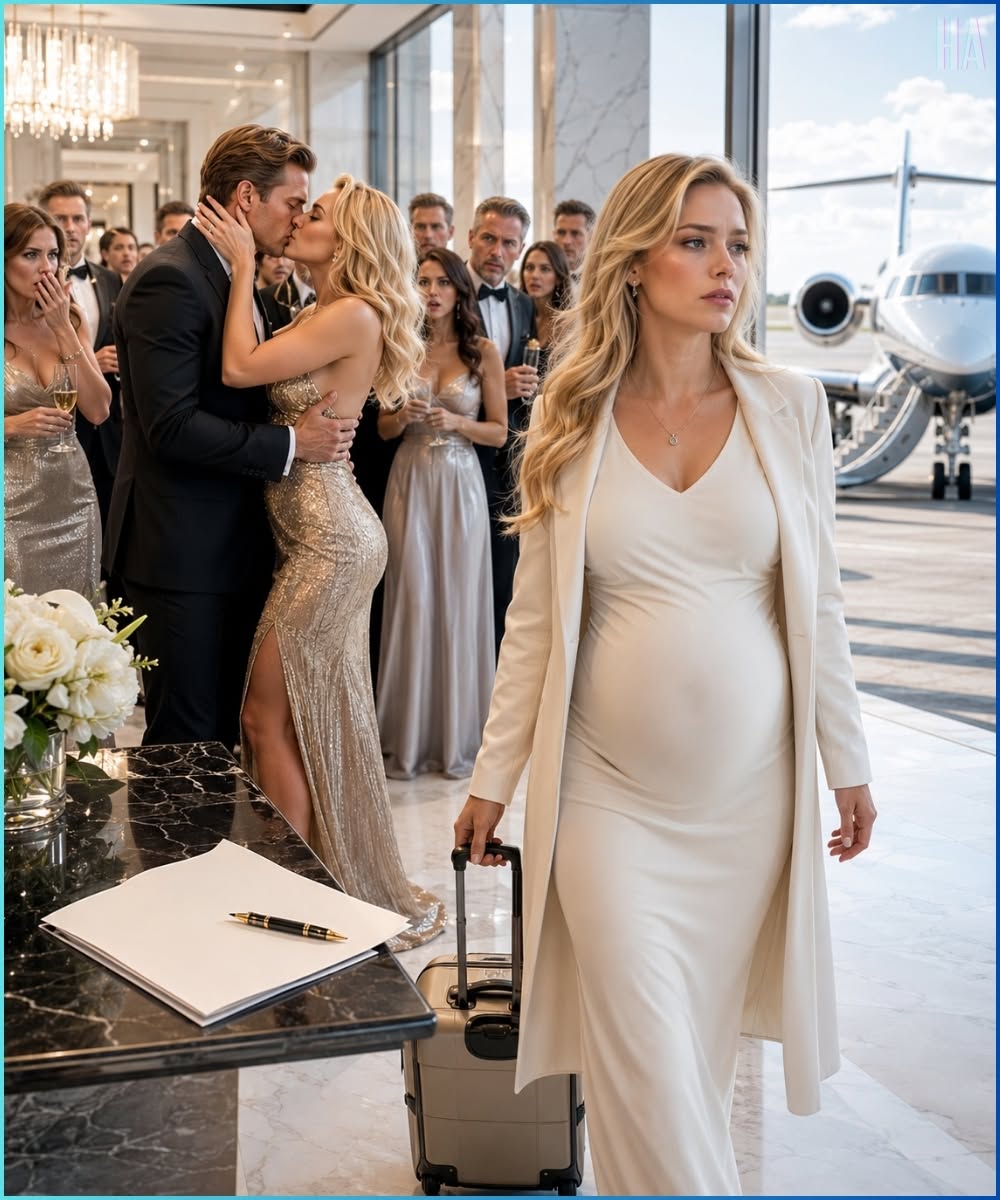
Then my attorney said the six words that saved my children.
“Already done. Check the news.”
Related Stories