Chapter 2 - The Billionaire Who Suddenly Couldn’t Buy TimeGrant Holloway did not believe in consequences.
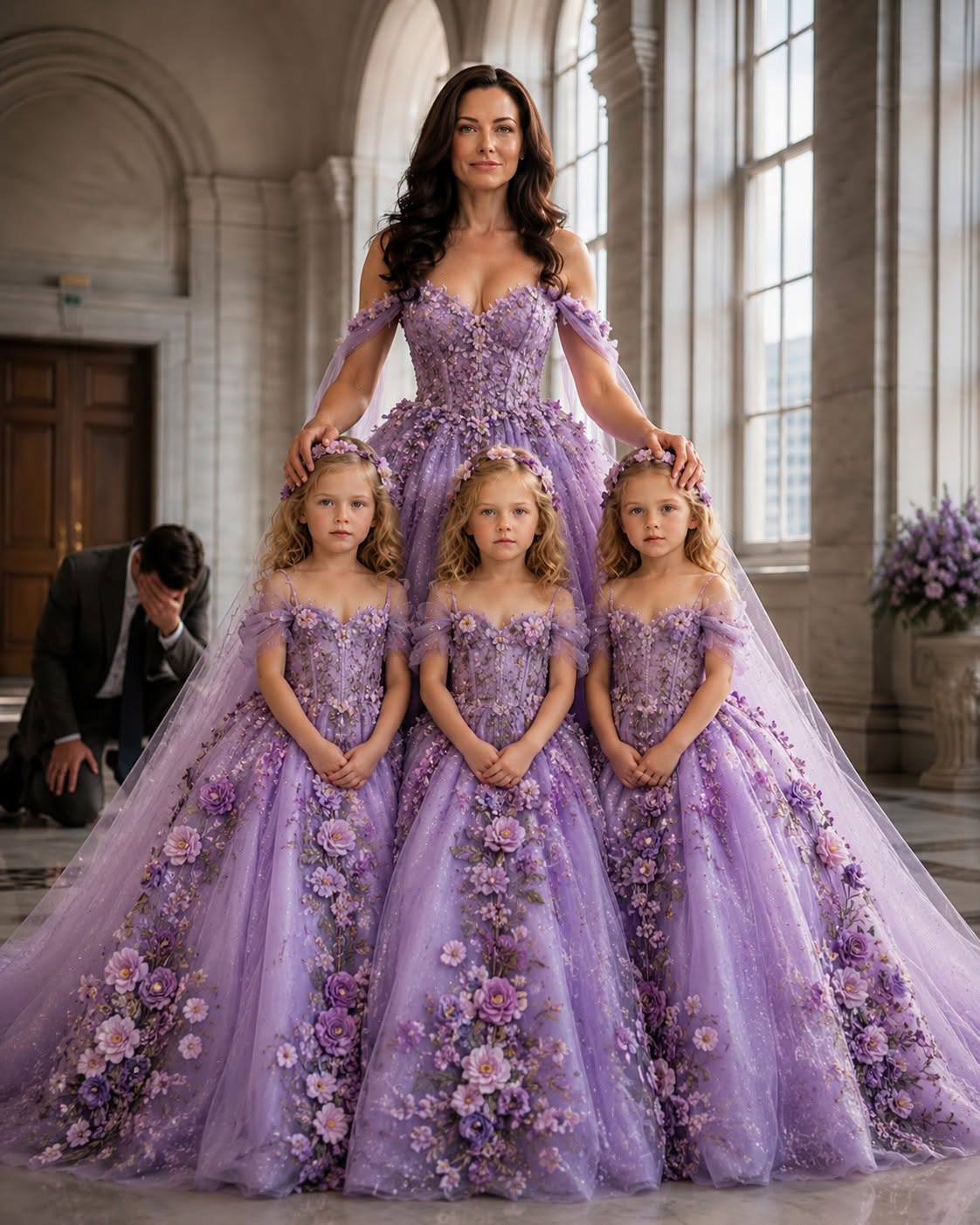
He believed in delays, settlements, private dinners, sealed records, and men in expensive suits who knew which judges played golf on Wednesdays.
Consequences were for people who couldn’t afford better options.
That was why, when his phone began ringing inside the backseat of his Bentley, he ignored it the first three times.
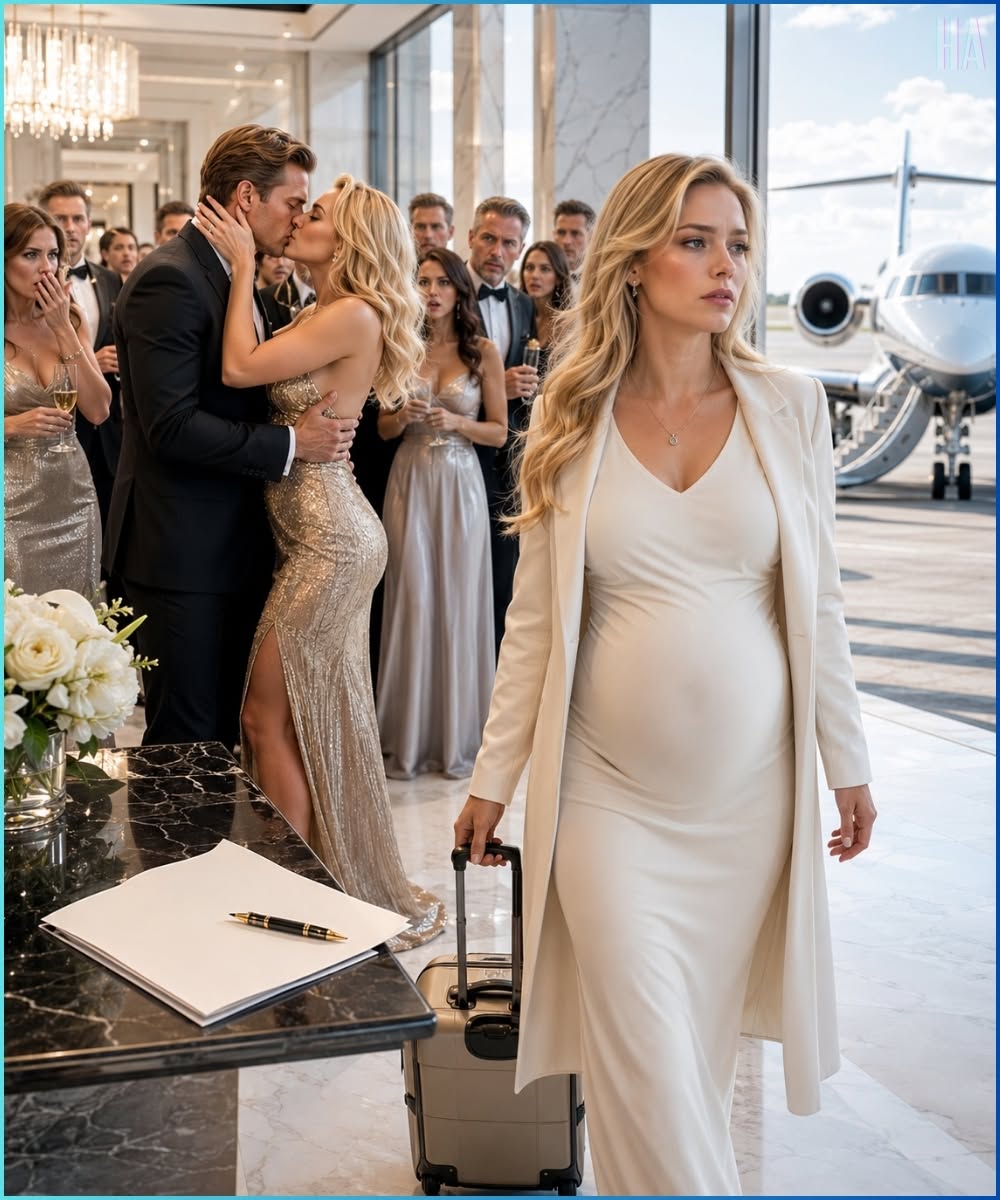
He was on his way to a private penthouse overlooking the river, where Celeste Monroe waited with champagne, bare feet, and the satisfied smile of a woman who thought she had just won a war without stepping onto the battlefield.
Grant had promised her freedom.
Freedom from a sick wife.
Freedom from medical complications.
Freedom from the image of a family man trapped beside a woman whose body had betrayed the schedule of his life.
The triplets were inconvenient, yes, but manageable. Children could be handled with nannies, trust funds, boarding schools, and carefully staged holiday photographs.
Madeline was the obstacle.
Madeline had been removed.
At least, that was what Grant believed when he stepped into the penthouse and Celeste crossed the marble floor toward him.
“Is it done?” she asked, though she already knew the answer.
He loosened his tie. “The filing is complete.”
Celeste smiled and wrapped her arms around his neck. “And the wife?”
Grant corrected her automatically. “Ex-wife.”
She laughed softly. “Even better.”
He kissed her, but his phone started ringing again.
This time it was not his personal line.
It was the emergency board line.
Grant stepped away.
“What?” he snapped.
On the other end, his CFO, Daniel Pierce, sounded like a man standing in a burning building.
“Grant, we have a problem.”
“We always have problems. Solve it.”
“No. You need to listen.”
Grant turned toward the windows. Below him, the city glittered like something he owned.
“Then speak.”
“We received notices from Vale Trust counsel. They’ve initiated a control review.”
Grant went still.
“What did you just say?”
“A control review. They’re claiming you triggered Section 14-C of the Lydia Vale Family Trust agreement.”
Grant’s jaw tightened. “That’s impossible.”
“I’m reading the notice right now.”
“Then read better.”
Daniel inhaled. “They’re asserting bad-faith abandonment during medical incapacity following the birth of trust-protected descendants.”
Celeste, watching from the kitchen island, lowered her champagne glass.
Grant’s eyes narrowed. “That clause is ceremonial.”
“It doesn’t read ceremonial.”
“I had attorneys review that agreement.”
“Apparently not this part.”
Grant felt the first flicker of irritation turn into something sharper.
Fear had always seemed vulgar to him. Something poor people felt because they lacked alternatives. But now, standing twenty-seven floors above the city, he felt a thin line of it slide beneath his ribs.
“What exactly are they trying to touch?” he asked.
Daniel did not answer fast enough.
Grant’s voice dropped. “Daniel.”
“The original Holloway Group seed capital. The trust-backed acquisition loans. Three commercial properties. Two voting share blocks. The hospital foundation donation route. And—”
“And what?”
“The emergency liquidity facility.”
Grant closed his eyes.
That facility was not public. It was the hidden spine of his empire. The money he used when deals moved faster than cash. The line of credit that allowed him to appear richer, stronger, more liquid than he actually was.
If the Vale Trust froze it, bankers would ask questions.
If bankers asked questions, reporters would follow.
If reporters followed, investors would panic.
And panic, Grant knew, cost more than truth.
“Do nothing,” he said. “I’ll call Leonard.”
“Leonard is already on another line with their attorney.”
Grant looked at the phone.
“What?”
“Vale counsel contacted him first.”
That was impossible.
Leonard Briggs was Grant’s personal attorney. Loyal. Expensive. Quiet. The kind of man who could make a scandal disappear before breakfast.
“What did Leonard say?” Grant asked.
Daniel hesitated.
“Say it.”
“He said you should not have signed anything at the hospital.”
Grant’s hand tightened around the phone.
Across the room, Celeste slowly stepped closer. “What’s happening?”
Grant ignored her.
“Send me the notice,” he ordered.
“It’s already in your inbox.”
The call ended.
For several seconds, Grant did not move.
Then he opened his email.
The subject line waited like a blade.
NOTICE OF TRUST PROTECTION TRIGGER AND CONTROL REVIEW
He opened the attachment.
The first sentence was enough to make his mouth go dry.
Pursuant to Section 14-C, any spouse who initiates marital dissolution, asset separation, dependent removal, medical abandonment, or guardianship interference while the beneficiary is incapacitated due to pregnancy, childbirth, or life-threatening medical emergency shall be deemed to have acted in bad faith unless cleared by independent trustee review.
Grant scrolled.
The words got worse.
Temporary freeze.
Board notification.
Insurance restoration demand.
Hospital access protection.
Dependent child safeguard.
Emergency injunction preparation.
Then, near the bottom, one line made his stomach turn.
Countdown period: 96 hours from triggering action.
“Grant?” Celeste asked.
He turned on her so suddenly she stopped.
“Did you know about this?”
Her eyebrows lifted. “About what?”
“The trust.”
She laughed nervously. “Madeline’s grandmother’s money? I knew she had old-family wealth, but you said it was irrelevant.”
“It was supposed to be.”
“Then fix it.”
He almost laughed.
Fix it.
People loved saying that to rich men. As if money were not a tool but magic.
Grant called Leonard Briggs.
The attorney answered with no greeting.
“Tell me this is manageable,” Grant said.
Leonard sighed. “It would have been manageable yesterday.”
Grant’s face darkened. “Careful.”
“No, Grant. You need to listen to me. Signing divorce papers outside the ICU was reckless. Removing her from insurance was worse. Trying to alter dependent records before she regained consciousness may be indefensible.”
“She was my wife.”
“She was unconscious.”
“She was going to drain resources for months.”
Leonard went silent.
Grant realized too late he had said the quiet part aloud.
“Do not repeat that sentence to anyone,” Leonard said.
Grant walked toward the bar. “I want an injunction blocking the trust.”
“On what grounds?”
“On the grounds that I said so.”
“That is not a legal theory.”
Grant slammed the glass down. Celeste flinched.
“I built Holloway Group.”
“With capital tied to the Vale Trust.”
“I multiplied it.”
“And now they are arguing you violated the conditions that allowed you to use it.”
Grant stared out over the city again, but it no longer looked like something he owned.
It looked like something watching him.
“What do they want?” he asked.
Leonard’s answer came softly.
“Control.”
Back in the ICU, I was too weak to sit up, but not too weak to listen.
Mara Beck stood beside my bed in a navy suit that looked like armor. She had arrived within an hour, carrying two phones, three folders, and the kind of calm that only comes from knowing exactly how badly the other side has miscalculated.
Dr. Ramirez stood near the door, arms crossed.
Hospital administrator Marjorie Bell hovered behind her, visibly regretting every form she had processed in the last seventy-two hours.
Mara placed a document on my blanket.
“This is the emergency restoration order we are requesting from the hospital voluntarily before filing with the court.”
Marjorie swallowed. “Our legal department is reviewing—”
“No,” Mara said. “Your legal department is deciding whether they want to explain to a judge why a postpartum ICU patient was removed from immediate family access because her husband filed papers while she was unconscious.”
Marjorie’s mouth closed.
I almost smiled.
Almost.
“My babies,” I said.
Mara turned to me, and her face softened. “We are demanding immediate maternal access as soon as your doctor allows transport.”
“I want to see them.”
“You will.”
“I want Grant kept away.”
Mara hesitated.
That hesitation told me something.
“What?”
“He has petitioned for temporary access as their father.”
My blood went cold.
“He didn’t ask if they were alive.”
“I know.”
“He removed their coverage.”
“I know.”
“He left.”
Mara leaned closer. “Madeline, listen to me. This is not about whether he deserves them. This is about what he will use them for.”
I understood then.
The babies were no longer just children to him.
They were leverage.
Proof of family. Proof of responsibility. Proof that the billionaire who abandoned his dying wife had not abandoned his newborns.
A public relations shield made of three tiny bodies.
“No,” I whispered.
Mara’s gaze hardened. “Then we fight.”
That night, I was wheeled to the NICU.
Every inch of my body screamed. My incision burned. My lungs felt too small. I could barely hold my head up.
But when the nurse rolled me between the rows of incubators, all pain became background noise.
There they were.
Three impossibly tiny lives beneath soft blue light.
Baby A.
Baby B.
Baby C.
My sons.
My daughter.
My whole world, breathing through tubes, wearing diapers smaller than my palm.
The nurse pointed gently.
“That’s Oliver. He’s the strongest right now.”
Oliver.
I had chosen that name months ago while Grant answered emails beside me in bed.
The nurse moved to the next incubator. “That’s Rose.”
Rose’s hand twitched, fingers opening like she was reaching for something.
Me.
“And this is Jude,” the nurse whispered.
Jude was the smallest.
His chest rose and fell so quickly I wanted to place my own heart inside him just to help.
I pressed my hand against the glass.
“Hi, baby,” I whispered. “Mommy’s here.”
Behind me, someone cleared his throat.
The entire NICU seemed to stiffen.
I turned my head.
Grant stood at the entrance in a charcoal suit, his hair perfect, his face arranged into concern.
But I had been married to him long enough to know the difference between emotion and performance.
Beside him stood a hospital security officer, two lawyers, and a woman in cream-colored heels.
Celeste.
She wore sunglasses on top of her head like she had wandered into the wrong brunch.
My stitches pulled as I tried to sit higher.
“What is she doing here?” I asked.
Grant’s expression barely changed.
“She’s part of my support system.”
The nurse beside me whispered, “Oh my God.”
Mara stepped forward from the corner.
“No,” she said.
Grant looked at her. “This is a family matter.”
Mara smiled without warmth.
“Funny. Three days ago you said you were no longer family.”
Grant’s mask flickered.
Celeste glanced at him.
I saw it then—the tiny fracture.
She had known I existed. She had known he was married. She had known he wanted out.
But maybe she had not known exactly what he had said outside the ICU.
Maybe she had not heard the words that made doctors stare at him like he had stopped being human.
Grant looked past Mara and fixed his eyes on me.
“You look better than expected.”
I felt the room go silent.
Not “thank God you’re alive.”
Not “how are you?”
Not “the babies are beautiful.”
You look better than expected.
Mara moved closer to my wheelchair.
Grant continued, “We need to be reasonable.”
I looked at Celeste.
Then at Grant.
Then at the three incubators behind me.
“You want reasonable?” I whispered.
Grant’s jaw tightened.
I lifted one shaking finger and pointed toward the door.
“Start by leaving my children’s room.”
For one second, Grant looked truly shocked.
Not hurt.
Not ashamed.
Shocked that I still had the nerve to tell him no.
Then Mara’s phone buzzed.
She checked the screen.
Her smile changed.
“Actually, Grant,” she said, “you may want to answer your phone.”
His eyes narrowed.
“Why?”
“Because Holloway Group’s board just called an emergency meeting.”
Grant’s phone began ringing in his hand.
May you like


Mara looked at him as if she had been waiting years for this moment.
“And they’ve locked you out of the executive account.”
Related Stories