Chapter 9 - THE BLUEPRINT UNDER THE FLOORBOARDSThe discovery of Emily Carter’s car transformed the investigation.
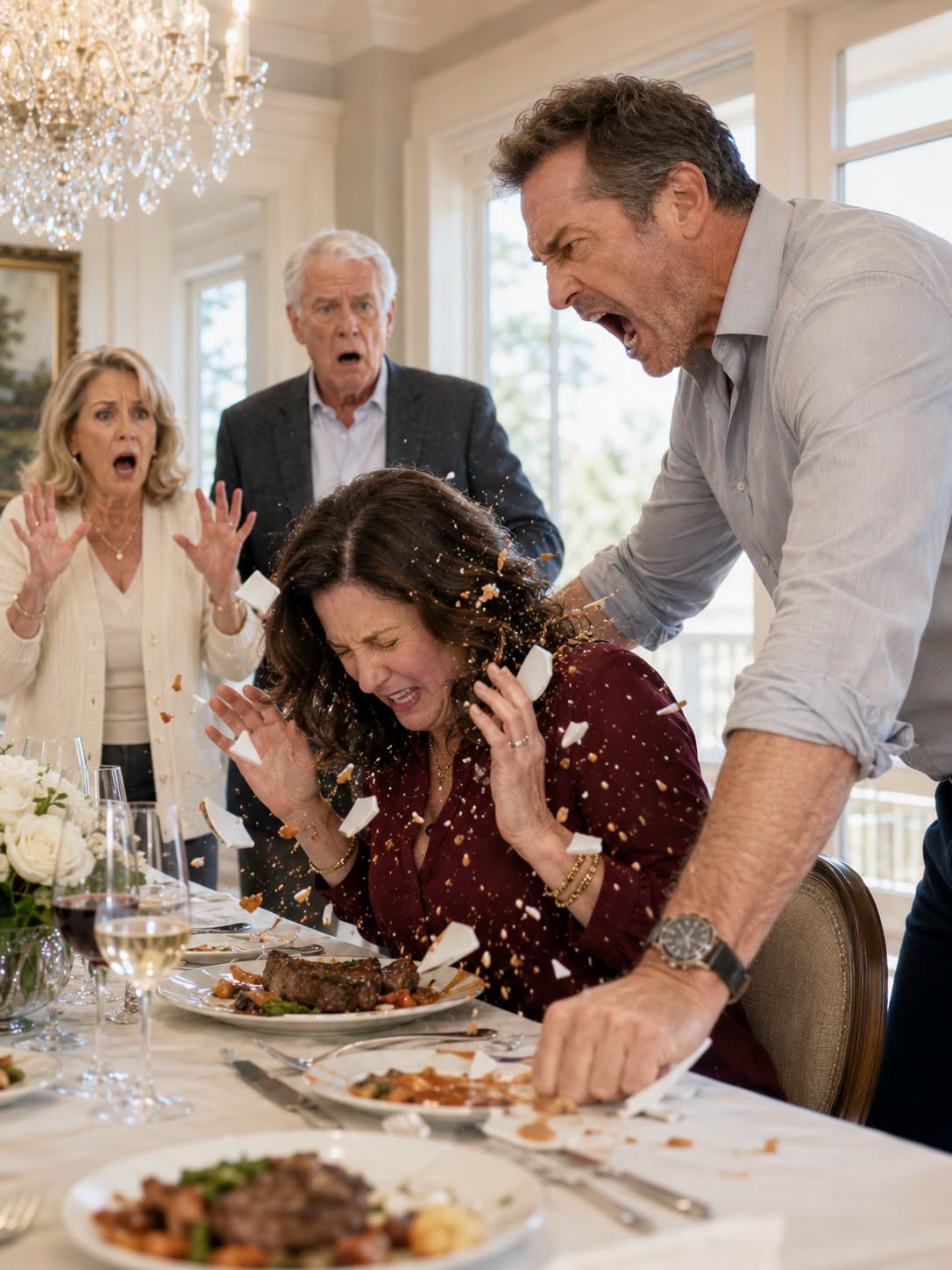
Federal agents joined local police.
Search teams examined Romero properties across Colorado.
News helicopters circled the Cherry Hills estate.
Gabriel’s attorneys insisted the cuff link had been planted. Victoria called Emily a “troubled former employee” who had stolen company money and fled.
It was the same script.
Discredit the woman.
Invent a financial crime.
Make her disappear from public sympathy before investigating what happened to her.
But Emily had left something behind.
Her younger sister, Rachel Carter, contacted Detective Mills after seeing the news.
Rachel had received a package from Emily eight years earlier.
At the time, she thought it contained ordinary work samples: fabric swatches, design sketches, and photographs of model apartments.
She placed the box in storage and forgot about it.
When investigators opened it, they found a handwritten letter hidden beneath a false cardboard bottom.
If something happens to me, Gabriel knows why.
Emily wrote that she discovered Romero Development was submitting fake invoices and unsafe materials under legitimate supplier names. She also claimed Gabriel forced her to sign property documents used to hide company assets.
When she refused to continue, Diego threatened her.
At the bottom of the letter, Emily wrote:
Victoria says women who fight this family lose everything. I think she has done this before.
Rachel had never seen the letter because the false bottom was glued shut.
The package also contained a small brass key.
The key opened a safe-deposit box in a Denver bank.
Inside were financial records, photographs, and a voice recorder.
Emily had documented meetings between Gabriel, Victoria, Richard Halston, and several officials.
Her recordings revealed that Victoria was not merely a mother protecting violent sons.
She directed much of the operation.
She selected vulnerable property owners.
She arranged private surveillance.
She tracked which officials could be bribed and which needed threats.
In one recording, Gabriel expressed concern about hurting a widowed condo owner.
Victoria replied:
Compassion is expensive. We are not in business to make strangers comfortable.
In another, Diego joked about frightening a woman until she signed.
Victoria told him:
Fear is useful only if you control what happens afterward.
The night Emily disappeared, she had attended a meeting at the Cherry Hills mansion.
The recording ended with Victoria saying:
You should have accepted the money.
Then a door slammed.
A man shouted.
Emily screamed.
The device stopped.
Police arrested Gabriel and Victoria on charges related to kidnapping, obstruction, and conspiracy while they investigated whether Emily had been killed.
Victoria left the mansion wearing pearls and handcuffs.
She looked directly into the cameras and said, “This is Valerie’s revenge.”
Even then, she believed naming me could redirect responsibility.
It did not work.
Meanwhile, the Aurora Heights investigation revealed deliberate material substitution across multiple Romero projects.
The company purchased cheaper support components from an unapproved supplier and falsified certificates to make them appear compliant.
The savings exceeded fourteen million dollars.
Richard Halston approved revised drawings.
Gabriel approved payments.
Diego coordinated the removal of internal objections.
My warning report had been the primary document threatening the scheme.
That was why they searched my condo.
But they made one mistake.
The missing folder was not the only copy.
Three years earlier, while renovating my condo, I built a hidden document compartment beneath the raised floor of my drafting area.
It was not created for dramatic secrets.
I used it for original deeds, insurance policies, and irreplaceable design sketches.
After reviewing Aurora Heights, I placed a sealed set of photographs and notes inside.
Diego never knew the compartment existed because the access panel was concealed beneath a cabinet he considered ugly and refused to touch.
Detective Mills, Maya, and a state engineer watched as I lifted the panel.
The sealed envelope remained exactly where I left it.
Inside were dated photographs of the substituted connections.
Material labels.
Measurements.
Emails.
A handwritten note from a site supervisor stating that Gabriel ordered workers to continue installation despite concerns.
The engineer reviewed the evidence.
“This proves they knew.”
It also proved my original report had been altered after I submitted it.
The version retained by Halston & Pierce removed my strongest warnings and replaced the word unsafe with unconventional.
Richard had changed my professional conclusions.
With the original evidence recovered, prosecutors prepared broader indictments.
Romero Development’s lenders moved to seize company assets.
Investors filed lawsuits.
The state licensing board suspended Richard.
The condo association unanimously rejected the construction easement and elected me president again.
But victory remained dangerous.
One evening, I returned from a meeting and noticed a faint chemical smell near my front door.
I did not enter.
The fire department discovered a gasoline-soaked cloth pushed through the mail slot and a small timing device beside it.
Someone had attempted to set my condo on fire.
The device failed because the battery had been inserted incorrectly.
Security footage showed a person wearing a maintenance uniform entering the building.
The person’s face was hidden.
But the uniform belonged to a contractor owned by Gabriel’s cousin Adrian.
Police arrested Adrian at the airport the next morning.
He was carrying cash, a one-way ticket to Belize, and a handwritten note containing my schedule.
Under questioning, Adrian claimed Victoria ordered him to destroy “the last copies.”
She had arranged it before her arrest.
Even from custody, the family continued following her commands.
Maya requested increased security.
Officers monitored the building.
I began varying my route to work, although I technically had no work to attend.
Then Charles Reed called.
The hospital administrator who once told me to contact him after the crisis.
“Our board is developing a new pediatric emergency center,” he said. “We need an architect who cares more about whether the building works than whether powerful people approve.”
“I was terminated.”
“I know.”
“My previous firm may sue if I accept related work.”
“Our attorneys reviewed your contract. They believe the noncompete clause is unenforceable.”
“I don’t have a firm.”
“Then start one.”
The idea frightened me more than I expected.
For years, I had believed professional security came from a respected company name above the door.
But that company had sacrificed me to protect a client.
“What would the project involve?” I asked.
“Three years of design and construction.”
“That is a significant commitment.”
“Yes.”
“Why offer it to me?”
“Because when everyone else was being paid to say a building was safe, you were willing to lose your career by saying it wasn’t.”
After the call, I stood in my drafting room.
The hidden compartment remained open.
The condo carried signs of everything that had happened: repaired locks, evidence labels, a small stain on the rug from the night I returned from the hospital.
For weeks, this home had felt like the object everyone was trying to take.
Now it felt like the place where I could begin again.
I registered a new company.
Bennett Safe Design.
Natalie offered to help with operations. Before marrying Mateo, she had worked in project management.
Sofia asked whether we needed an office coordinator.
“I thought you wanted to reopen a bakery,” I said.
“I do. But first I need income that doesn’t make me feel invisible.”
“You won’t be invisible here.”
Dr. Evelyn Shaw agreed to consult on structural safety.
Within two weeks, we were a team.
Small.
Underfunded.
Working from folding tables in my living room.
But ours.
The criminal trial against Diego approached.
Prosecutors offered him a plea agreement: twelve years in prison in exchange for admitting assault, fraud, intimidation, and conspiracy.
He rejected it.
“He believes the jury will blame you,” Maya told me.
“For being hit?”
“For challenging his family.”
Diego’s defense planned to argue that Victoria and Gabriel manipulated him.
He would portray himself as another victim.
Sofia laughed bitterly when she heard.
“He always becomes the victim when consequences arrive.”
Two days before the trial, I received permission to read a letter Diego had attempted to send through another inmate.
It was addressed to Victoria.
Mother,
Valerie was supposed to break at dinner. You said everyone would stay quiet. You promised the video would disappear. None of this would have happened if Natalie had followed instructions.
The letter continued with demands for money and better attorneys.
There was no remorse.
No concern about my injury.
No mention of the workers nearly killed at Aurora Heights.
Only anger that the plan had failed.
At the end, he wrote:
When I get out, I will finish what we started.
The threat guaranteed prosecutors would seek the maximum sentence.
But another line mattered even more.
Ask Father where he took Emily after the basement.
Investigators immediately obtained a new warrant for the mansion.
The estate had already been searched twice.
This time, they focused on the basement.
Behind a wine-storage wall, they discovered a sealed corridor not shown on the official blueprints.
At the end was a locked steel door.
Inside the hidden room were restraints, medical supplies, women’s jewelry, and boxes of documents.
May you like
On the concrete floor, beneath recently replaced tiles, forensic equipment detected human blood.
The mansion’s beautiful dining room had never been the darkest place in that house.