Chapter 3 – Beth’s Perfect White Dress
Chapter 3 – Beth’s Perfect White Dress
I expected my hands to shake.
They didn’t.
That frightened me more.
There is a strange calm that comes after betrayal becomes too large for panic. My mother had stolen from me, forged my name, sent someone to watch my house, and mailed me proof that she knew exactly what she was doing.
The terror was still there.
But beneath it, something steadier woke up.
Not courage.
Not yet.
Something older than courage.
Survival.
Jessica placed the photograph into a clear plastic sleeve without touching the surface.
“We’re turning this over to law enforcement,” she said.
I stared at the image.
My house looked small and vulnerable beneath the porch light. Through the front window, one lamp glowed in the living room. I could see the shadow of my moving boxes inside.
I had thought emptiness meant freedom.
Now it looked like exposure.
“Do you think she came here?” I asked.
“Your mother?”
I nodded.
Jessica examined the photo. “Maybe. But more likely she sent someone. We need to find out who.”
I thought of my father.
Quiet, avoidant, forever hiding behind newspapers and television volume.
Then I thought of Beth.
Beth, who never liked getting her hands dirty but always enjoyed watching someone else do it.
“What about Beth’s fiancé?” I asked.
Jessica looked up.
“I don’t even know him,” I admitted. “I barely know his last name. Mason. That’s all I got from the venue email.”
Jessica opened her laptop. “What’s his first name?”
“I don’t know.”
That sentence embarrassed me.
My own sister was getting married, and I did not know the groom’s full name. Not because I had been uninterested, but because Beth only called me when she needed something. Updates were reserved for people she considered important enough to impress.
Within minutes, Jessica found the wedding website.
Bethany Simpson & Connor Mason
October 18
Scottsdale, Arizona
Their engagement photo filled the screen.
Beth stood in a desert garden wearing a cream dress and a diamond ring large enough to look uncomfortable. Beside her stood Connor, tall, handsome in an accountant-at-a-country-club way, one arm around her waist.
He looked normal.
That made me sad.
Normal people do not always realize what family they are marrying into until the wedding cake is already ordered.
Jessica clicked through the site.
Registry.
Bridal party.
Travel.
Our Story.
Beth’s version of their love story was written like she had personally invented romance.
Then Jessica opened the RSVP page.
My name was listed under family.
Not as maid of honor.
Not as sister of the bride.
Under “Special Thanks,” a sentence read:
We are deeply grateful to Joanna Simpson for helping make our dream celebration possible.
The room blurred.
Helping.
That was one way to describe identity theft.
Jessica took screenshots.
By noon, we had contacted my bank, Phoenix police, Monterey police, the wedding venue, and a credit monitoring service. By one, Jessica had drafted a cease-and-desist letter to my mother, my sister, and the venue. By two, I felt like I had aged ten years inside my own skin.
Then Beth called.
Jessica nodded for me to answer, but not on speaker this time.
“Joanna,” Beth said before I could speak, “what the hell is wrong with you?”
I almost smiled.
There she was.
My little sister.
The bride.
The victim.
The princess standing beside the burning village, complaining about smoke.
“Hello to you too.”
“Mom is crying.”
“I doubt that.”
“She is. Dad says she hasn’t eaten.”
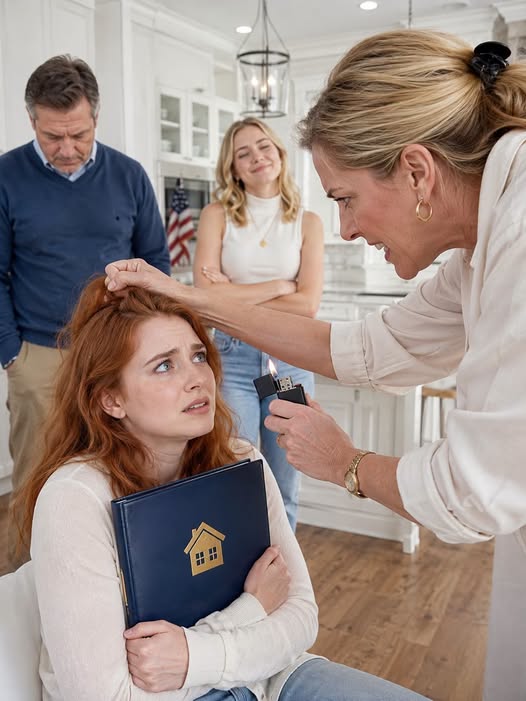
“Dad also watched her hold a lighter to my face, so forgive me if his reports don’t move me.”
Beth made a disgusted sound. “You’re still telling that story?”
“It happened.”
“It was a lighter, Joanna. She wasn’t going to burn you.”
“She grabbed my hair.”
“You provoked her.”
I looked at Jessica.
She was watching my face closely.
For years, conversations with Beth had followed the same path. She accused. I defended. She exaggerated. I apologized just to end it.
But that version of me had died somewhere between the porch lights and the police report.
“No,” I said.
Beth paused. “No what?”
“No, I’m not doing this.”
“You are ruining my wedding.”
“You put my name on your wedding contract.”
“I didn’t do anything,” she snapped.
“Then why does your wedding website thank me for paying?”
Silence.
I stood.
The kitchen suddenly felt too small.
“That was Mom,” Beth said finally. “She said you agreed.”
“Did you ask me?”
“You never answer family calls.”
“Because family calls cost money.”
“That is so unfair.”
I laughed once, quietly.
Beth hated unfairness when it touched her.
She had no trouble living off it when it fed her.
“Beth, did you know Mom had my bank information?”
“No.”
The answer came too fast.
“Did you know she was using my money for your vendors?”
“No.”
“Did you know she filed a police report accusing me of theft?”
Beth hesitated.
There it was.
A crack.
“You don’t understand the pressure she was under,” Beth said.
My eyes closed.
Not sadness.
Confirmation.
“She told you.”
“She was scared!” Beth cried. “Everything is due. The florist, the photographer, the venue. Connor’s family has money, Joanna. Do you know how humiliating it is that we can’t match that?”
“So you matched it with my savings.”
“I didn’t know it was illegal.”
That sentence hung between us.
Not I didn’t know.
Not I would never.
I didn’t know it was illegal.
Jessica’s eyebrows lifted slightly.
“Beth,” I said slowly, “what exactly did you think was happening?”
She started crying.
Beth had always cried beautifully. Soft, breathy, wounded. Even as children, she could make adults run to her side before anyone asked who had actually thrown the first slap.
“Mom said you had promised to help,” she whispered. “She said you got selfish after buying the house. She said you were punishing me because I’m getting married first.”
I stared at the floor.
There it was again.
Not envy.
Not money.
Ownership.
In my mother’s world, my independence was not neutral. It was an insult.
“You believed her?”
“You always act like you’re better than us.”
“I saved for ten years.”
“And now you think that makes you special?”
“No,” I said. “I think it makes the money mine.”
Beth’s crying stopped.
Just like that.
The switch flipped.
“You have no idea what Mom can do when she feels cornered.”
“I’m learning.”
“No,” Beth said, voice low now. “You’re not. Because you still think this is about money.”
The hair on my arms rose.
“What is it about?”
Beth breathed unevenly into the phone.
Then, for the first time in my life, my sister sounded afraid of someone other than losing attention.
“She told Connor’s parents you were paying for half the wedding,” Beth whispered. “She told them you begged to do it because you felt guilty for being distant. Connor’s mother put your name in the rehearsal dinner speech.”
I sank slowly onto the folding chair.
“What?”
“And now if this falls apart, everyone will know.”
“That your family lied?”
“That we’re poor,” Beth snapped.
Poor.
We were not poor.
My parents owned their house. My father had a pension. Beth had spent more on engagement photos than I spent on groceries in three months.
But Beth did not mean poor as in hungry.
She meant exposed.
She meant ordinary.
She meant not admired.
“Beth,” I said, “you need to tell Connor the truth.”
“No.”
“Then I will.”
She inhaled sharply.
“You wouldn’t.”
“I would.”
“You don’t even know him.”
“Exactly. He deserves to know before he marries into this.”
For one second, I thought she might beg.
Instead, she said, “Mom was right about you.”
The words were old.
But this time, they landed on armor.
“Maybe,” I said. “But she was wrong about one thing.”
“What?”
“I’m not coming home.”
Beth hung up.
Jessica had heard enough from my side to understand the shape of the conversation.
“She knew more than she’s admitting,” she said.
“Yes.”
“Do you want me to contact the fiancé?”
I looked at the wedding website still open on her laptop.
Beth and Connor smiled from the desert garden, golden light catching her ring.
I had no desire to destroy a wedding.
But I was beginning to understand something painful.
Sometimes telling the truth looks like destruction to people who built their lives out of lies.
Before I could answer, the doorbell rang.
Jessica and I both froze.
No one knew I was home except police, my attorney, and whoever had taken that photograph.
I moved toward the window.
A woman stood on my porch.
Blonde.
Elegant.
Expensive sunglasses pushed on top of her head.
She held a white garment bag over one arm.
When she turned slightly, I saw the gold lettering printed across it.
Camellia Bridal Scottsdale.
Jessica whispered, “Do you know her?”
I shook my head.
The woman rang again.
Then she lifted her phone and began recording my front door.
“Joanna Simpson?” she called brightly. “I’m Connor’s mother.”
May you like


My stomach dropped.
“And I think it’s time we talk about what you’ve done to my son.