CHAPTER 12 THE LAST WITNESS
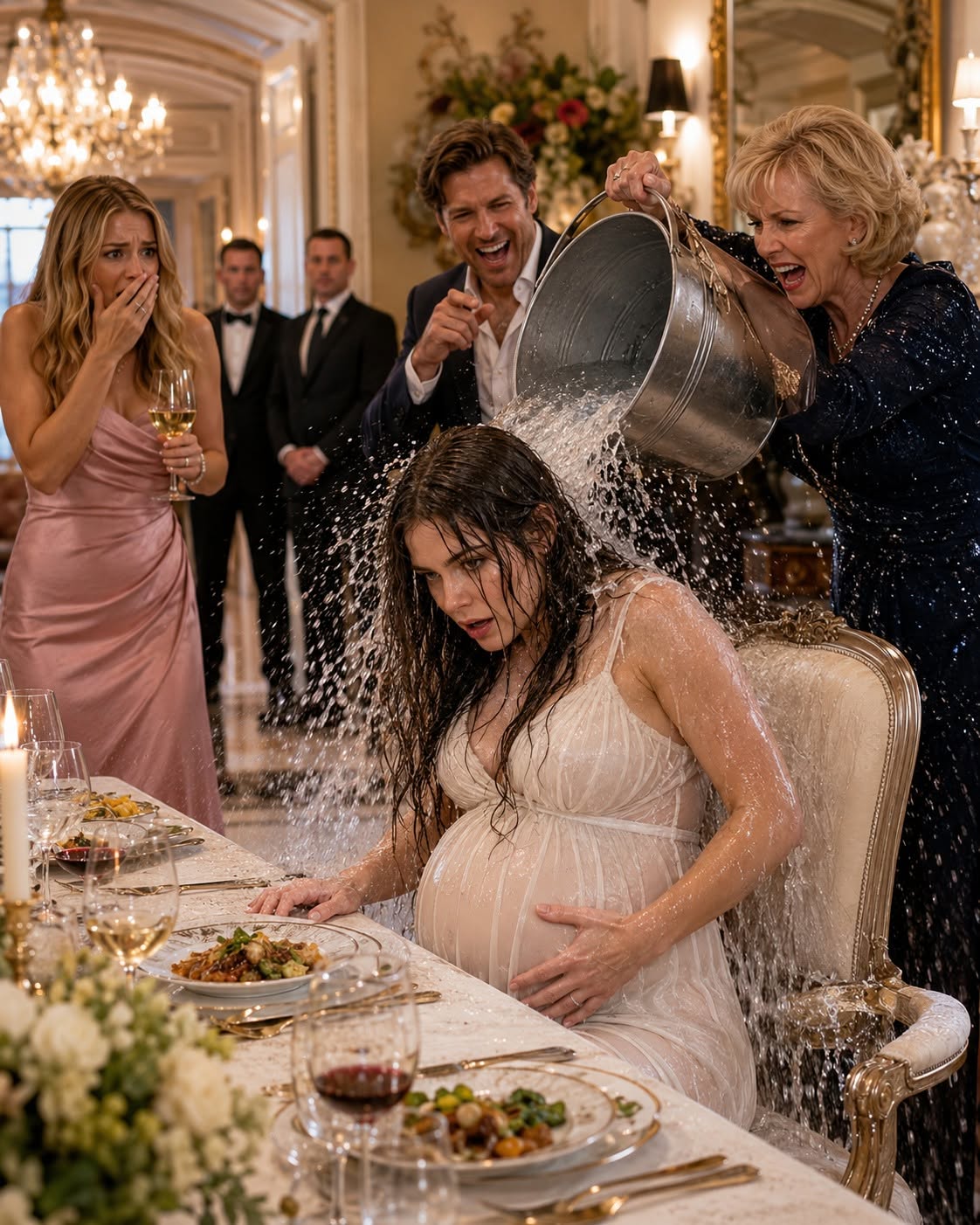
THE LAST WITNESS
Dr. Samuel Lorne refused to meet in a boardroom.
He refused the tower, the hospital, the federal building, and every safe house Marcus proposed.
“Come to Bellweather,” he said. “Truth should be spoken where it happened.”
Arthur advised against it.
Marcus called it a security nightmare.
Dr. Patel called it medically irresponsible.
I went anyway.
Not alone. Marcus drove. Arthur sat beside him. Celia and Elena followed in a second vehicle with federal agents. Priya remained in the city coordinating the audit. Brendan was under travel restriction, Diane was held pending arraignment, Jessica remained a cooperating witness, and Evelyn Shaw had vanished.
The highway north followed the Meridian River through green hills and old factory towns. Summer homes appeared along the water, then disappeared behind abandoned warehouses and rusting rail lines.
Bellweather announced itself with a faded sign and a church steeple.
Population 4,812.
My mother had been born there.
I had never visited.
That fact felt like an accusation.
Dr. Lorne waited at a closed elementary school near the river. He was sixty-two, thin, and walked with a brace on his left leg. His face carried the familiar exhaustion of someone who had spent decades explaining pain to people paid not to understand.
He looked at my stomach first.
“Your daughter healthy?”
“Yes.”
“Good.”
Then he looked at Arthur. “You took your time.”
Arthur accepted the insult. “I did.”
Inside the school gymnasium, folding tables displayed medical files, water maps, photographs, and hand-drawn family trees. Some faces were crossed out. Others had dates written beneath them.
“This was the Bellweather support group,” Dr. Lorne said. “Parents met here after the plant closed. They compared diagnoses and realized the company had been settling with them separately.”
He pointed to a photograph of children standing beside a riverbank.
A girl with dark braids sat in front.
“My sister, Anna. Born with a damaged heart. Died at twenty-six after giving birth.”
Beside her stood a small boy wearing a leg brace.
Samuel.
“The plant released thallium, solvents, and metal-processing waste into unlined ponds,” he said. “During floods, the ponds emptied into groundwater. Company doctors knew by 1984.”
My grandfather became chief executive in 1989.
“When did Elias learn?” I asked.
“1991. Miriam Hale brought him the internal studies.”
Celia stared at the photograph.
“What did he do?”
“He shut down the worst operations, sold the division, and created secret medical payments. He told himself public disclosure would bankrupt the company and end the health coverage of the same families he was trying to help.”
Arthur said, “That was his explanation.”
“It was his excuse,” Samuel replied. “But unlike the others, he kept collecting evidence. I think he planned to confess eventually.”
“What stopped him?”
“Fear. Then your mother.”
He led us into a classroom where my mother’s handwriting covered scanned letters.
Caroline had written to families under the name C. Hart.
My false surname.
I had chosen Hart because it was my mother’s private middle name.
Now I learned she had used it for twenty years while helping Bellweather families relocate.
“She came here every month,” Samuel said. “No cameras. No Vale car. She sat with parents, arranged treatment, and listened.”
“Did they know who she was?”
“Some did. Most didn’t.”
Like me, she had hidden the name.
Unlike me, she had hidden it among people her family harmed.
“Why didn’t she expose everything sooner?”
“Because each time she prepared to, someone threatened the families. Lost jobs. Canceled insurance. Immigration investigations. One child disappeared from foster care for three days and returned terrified.”
Celia’s jaw tightened.
“Me,” she said.
Samuel nodded.
Arthur closed his eyes.
Samuel explained that Miriam’s crash had been ordered by a three-person committee: Evelyn Shaw, Diane Morrison, and a third executive identified only by the initial V.
“Victor?” Arthur asked.
“No. Victor warned Miriam about the meeting. The third person used his initial to frame him.”
“Who was it?”
Samuel looked at me.
“Your mother never proved it.”
“But you know.”
“I heard the voice.”
He walked to an old cassette recorder and inserted a tape.
Static filled the classroom.
Then a man spoke.
“If Hale testifies, every settlement becomes evidence. Handle the vehicle before Thursday.”
Evelyn answered, “And the child?”
The man said, “Children forget.”
Celia’s hands began to shake.
Arthur stepped beside her. This time, she let him.
The male voice sounded familiar, but age and tape distortion blurred it.
Samuel stopped the recording.
“That was captured accidentally by the office dictation system. Miriam took the tape before the crash.”
“Why haven’t you released it?” I asked.
“Because a voice without a name creates lawsuits, not justice. Caroline wanted a complete case.”
“Who had a surname beginning with V?” Elena asked.
Samuel looked at me again.
“Not a surname. A title. Vice chairman.”
At the time, Vale Meridian’s vice chairman was Thomas Reed.
Marcus’s father.
Marcus did not react at first.
Then he said, “My father died fifteen years ago.”
Samuel nodded. “After running Sentinel Civic Solutions with Victor.”
Everyone turned toward Marcus.
His face became stone.
“I joined Vale security after he died. I knew he worked corporate protection. I did not know this.”
Celia watched him. “Did you know Ruth Mercer?”
“No.”
“Your father paid her for twelve years.”
Samuel handed us bank records.
Payments from Sentinel to Ruth under a witness-protection code.
Marcus read them twice.
“Then he protected Celia.”
“Perhaps,” Samuel said. “Or monitored her.”
The distinction cut deep.
We spent six hours reviewing evidence. The pattern was clear enough for criminal and civil action. It was not clean. My grandfather had concealed wrongdoing. My mother had participated in secret settlements. Arthur had accepted explanations he should have challenged. Victor had acted too late. Marcus’s father may have ordered violence and later protected a survivor.
No one was innocent.
Some were simply less guilty.
Before we left, Samuel took me to the riverbank behind the school.
The water looked peaceful.
“That is the danger,” he said. “Poison rarely looks like poison.”
“What do you want from me?”
“A public medical fund. Independent governance. Release of every record. No confidentiality demands. And no company lawyers deciding which family deserves belief.”
“You also want Northstar sold to Vale Meridian.”
“I wanted that once. Now I’m not sure.”
“Why?”
“Because ownership changes technology. Your board may turn a diagnostic tool into a profit center and bury the environmental research.”
“Then keep control.”
He studied me.
“Vale Meridian funds the acquisition, Northstar remains independently governed, and Bellweather families hold veto rights over research use.”
Arthur, standing several feet away, looked alarmed.
Samuel smiled. “Your counsel hates it.”
“He hates anything he did not draft first.”
Arthur almost smiled.
Samuel extended his hand. “Put it in writing.”
“I will.”
Before we left Bellweather, Samuel invited several families into the gym. They did not greet me as an owner or rescuer. They asked questions.
Would medical bills be paid before lawsuits ended? Would undocumented families be protected? Would the company test private wells without forcing residents to sign releases? Would children with uncertain diagnoses be believed?
I answered only what I could promise. Emergency treatment would begin immediately. Immigration status would not be collected. Independent doctors would make eligibility decisions. No one would waive legal rights for care.
An older man named Curtis Bell stood in the back with an oxygen tank. “Your grandfather sat where you’re sitting,” he said. “Promised he’d make it right.”
“I know.”
“He paid my wife’s hospital bills. Then his lawyers told us never to say why she was sick.”
“I won’t ask you for silence.”
“You might when the numbers get big.”
The room waited.
“I might be tempted,” I said. “That is why the fund cannot be controlled by me.”
Curtis studied me for a long time, then nodded once. Not forgiveness. Not trust. Only acknowledgment that I had answered the question he actually asked.
Outside, children played basketball on cracked pavement. One of them waved at my security convoy as though black SUVs belonged in Bellweather. I wondered how many powerful people had arrived there promising change, then driven away before the water cleared.
On the drive back, Marcus received a security alert from the city.
Someone had entered the Morrison residence using a retired executive master code.
The house was under federal seal.
Cameras showed a woman in a hood moving through the upstairs hall.
Evelyn.
She went directly to the nursery Brendan and Diane had secretly prepared for my baby.
There was a crib, a changing table, and a silver plaque on the wall.
BABY MORRISON.
Evelyn removed the plaque.
Behind it was a hidden safe.
She opened it without hesitation and took out a sealed envelope.
The camera captured the writing on the front before she burned it in the fireplace.
CUSTODY TRANSFER — UPON BIRTH.
Then she looked directly into the security camera.
“Come home, Cassidy,” she said.
May you like
She held up a second envelope.
“Your mother left one final instruction about your daughter.”