CHAPTER 15 THE MAN WHO DIED TWICE
THE MAN WHO DIED TWICE
My father’s name was Jonathan Hart Vale.
He died in a sailing accident off Cape Ann when I was six years old. The Coast Guard found wreckage, blood, and his wedding ring. His body was never recovered.
My mother wore black for a year.
My grandfather stopped sailing forever.
I grew up with three photographs, two stories, and a silence no one would explain.
Now Diane claimed he led Harrowgate Capital.
Arthur dismissed it as manipulation until Priya uncovered a restricted shareholder file. Harrowgate’s ultimate beneficial owner was hidden behind trusts in the Cayman Islands and Luxembourg, but one trustee authorization used the initials J.H.V.
Jonathan Hart Vale.
Celia sat beside my hospital bed while Arthur paced.
“You knew his body was never found,” she said.
“I also knew my mother identified the ring.”
“Rings can be removed.”
“So can children. So can records. Apparently everyone in my family disappears when a board meeting becomes inconvenient.”
The bitterness in my voice made Arthur stop.
“Cassidy,” he said, “I believed Jonathan died.”
“Did my grandfather?”
“I don’t know.”
“Did my mother?”
“I don’t know.”
I laughed, and it came out too close to a sob.
“That is becoming the family motto.”
Dr. Patel ordered everyone out for thirty minutes. My blood pressure had risen again. I lay in the quiet room listening to my daughter’s heartbeat through the monitor.
Strong.
Steady.
Unaware that half a century of secrets had begun circling her before birth.
When Arthur returned, he carried a photograph from the Bellweather archive.
It showed my parents standing beside Samuel Lorne and Miriam Hale near the river. My father looked younger than I remembered, sleeves rolled up, one hand shielding his eyes from the sun.
On the back, my mother had written:
Jonathan wants disclosure now. Father says wait. Evelyn says never.
Date: three months before the sailing accident.
“My father knew,” I said.
“He may have planned to expose the company,” Arthur replied.
“Or take it.”
Harrowgate had spent years quietly acquiring Vale Meridian shares through index funds and partner vehicles. It held just under nine percent—enough to create chaos, not enough to control the company.
Unless my founder shares were frozen.
The hostile meeting request alleged that I concealed material ownership, manipulated executives, triggered criminal investigations for personal reasons, and exposed shareholders to catastrophic Bellweather liability.
It demanded appointment of an emergency restructuring committee led by Harrowgate.
A video arrived with the filing.
The man on screen was older, leaner, and gray at the temples. A scar crossed his jaw. But I recognized his eyes because I saw them every morning in the mirror.
“Cassidy,” he said. “I had hoped we would meet privately.”
My hands went cold.
He continued.
“My name is Jonathan Hart. The world knew me once as Jonathan Vale. I am your father.”
No greeting.
No apology.
Just a declaration of identity like an asset claim.
“I left because Elias planned to sacrifice me when Bellweather surfaced. Your mother helped stage the accident. She believed separation would keep you safe. In return, I built the financial protection necessary to reclaim the company if the Custodians ever lost control.”
Reclaim.
Not rescue.
“Cassidy, withdraw Northstar, delay public disclosure, and appoint Harrowgate to oversee restructuring. Once the company is stable, we can discuss family.”
The video ended.
I watched it twice.
Then I asked Arthur, “Can we verify him?”
“Facial analysis strongly supports identity. DNA will be conclusive.”
“He has my stolen samples.”
“Possibly.”
Marcus entered. “Harrowgate’s aircraft landed at the private terminal forty minutes ago. Jonathan Hart is in the city.”
“Where?”
“He requested a meeting at the Morrison residence.”
The empty mansion.
Why there?
Federal agents had cleared the house after the nursery fire. Brendan’s family could no longer occupy it. The property belonged to Vale Meridian, but Harrowgate’s lawyers argued that the company’s executive housing subsidiary required shareholder oversight.
It was legal theater.
The location was personal.
I was discharged under strict conditions: wheelchair transport, continuous monitoring, and no more than one hour outside a medical facility. Dr. Patel threatened to have Marcus physically carry me back if I disobeyed.
“He would enjoy that,” I said.
Marcus did not deny it.
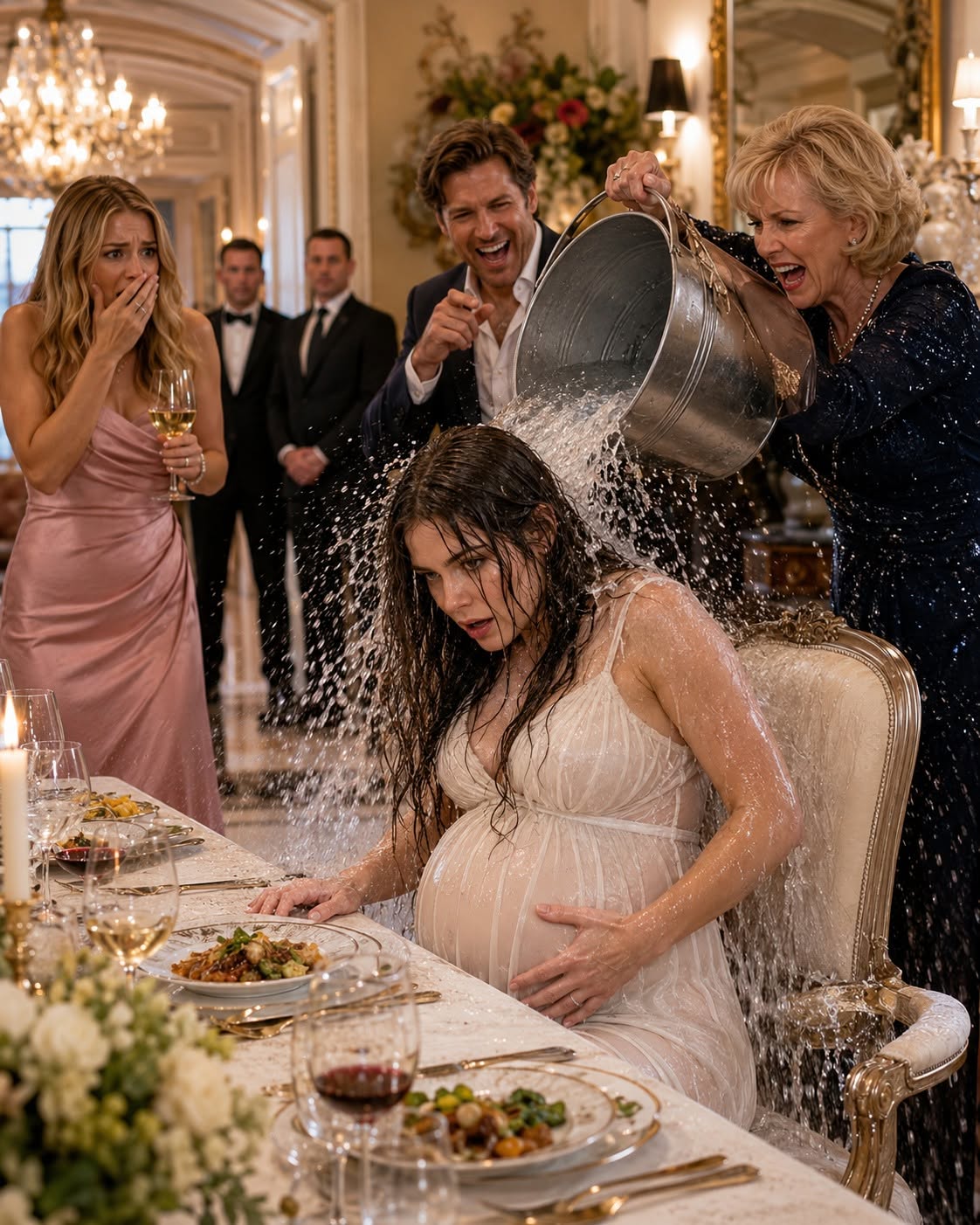
The mansion smelled of smoke and wet plaster. Workers had removed the burned nursery furniture. The dining room rug was gone, leaving a pale rectangle on the floor where Diane had poured the bucket over me less than two days earlier.
Jonathan waited in the study.
He stood when I entered.
For a moment, neither of us spoke.
Memory is cruel. It rebuilds the dead from fragments: a hand lifting you onto a horse, a voice reading beside a fireplace, the smell of cedar after rain.
The man before me carried all those fragments and none of the warmth.
“You look like Caroline,” he said.
“You look alive.”
Pain crossed his face. “I deserve that.”
“You deserve much worse.”
Arthur remained near the door. Marcus swept the room. Celia and Samuel Lorne joined by video as independent witnesses.
Jonathan gestured toward a chair.
I stayed in the wheelchair.
“Why did you leave me?”
“To keep you alive.”
“People keep using that sentence after abandoning children.”
“Evelyn had already ordered Miriam’s crash. Your mother was being watched. Elias refused public disclosure because he believed the company would collapse. We staged my death so I could build an external defense.”
“For thirty years?”
“I could not return without exposing you.”
“You just exposed yourself because the stock fell.”
His expression hardened. “Because you activated Protocol Seven without understanding the consequences.”
“There it is.”
“What?”
“The company before the daughter.”
“I built Harrowgate for you.”
“You built it to take control.”
“To preserve what is yours.”
“What is mine includes the harm.”
He walked to the window. “Bellweather claims could exceed twenty billion dollars. Credit facilities will collapse. Competitors will poach employees. Pension funds will sue. You cannot repair the past by destroying the present.”
“Then help me restructure openly.”
“Openly is a word used by people who do not understand markets.”
I studied him.
My father had survived, but whatever returned from the sea had become another Custodian.
Perhaps a kinder one.
Perhaps that was the family curse: each generation believed secrecy was kinder than truth.
“Did you poison my mother?” I asked.
He turned sharply. “No.”
“Did you know she was being poisoned?”
“Not until after she died.”
“Did you know Diane’s daughter was alive?”
“Yes.”
The answer came too quickly.
“Where is Hope?”
“In Vermont.”
“Why keep her hidden?”
“Caroline believed Hope’s condition and parentage could prove the River exposure and connect Diane directly to the settlements. Evelyn would have killed her.”
“You could have protected her publicly.”
“Public protection is a contradiction.”
Celia made a bitter sound through the screen.
Jonathan looked toward her image. “Ruth kept you alive because I funded her after Thomas Reed died.”
Marcus went still.
“You funded Ruth?”
“Yes. Thomas began the payments. I continued them.”
“Why didn’t you return Celia to Arthur?”
“Because Arthur’s loyalty to Elias made him unsafe.”
Arthur stepped forward. “You stole my daughter’s life based on your judgment of my loyalty.”
“I kept her breathing.”
“You kept her father grieving over an empty grave.”
Jonathan’s face remained controlled. “Some costs cannot be avoided.”
“Only assigned to other people,” I said.
Jonathan opened a leather portfolio and showed me a restructuring plan. It divided Vale Meridian into profitable and “legacy” businesses. The profitable divisions would move under Harrowgate management. Bellweather liabilities, pensions, and old manufacturing sites would remain in a weakened public company likely to enter bankruptcy.
“You call this preservation?” I asked.
“It saves the viable core.”
“It saves the valuable assets and leaves workers and sick families in the wreckage.”
“Bankruptcy courts exist to allocate loss.”
“People are not allocations.”
“Every balance sheet is a record of choices about people.”
He said it without cruelty, which made it colder. He truly believed morality was a luxury applied after capital survived.
I turned pages. Executive compensation for Harrowgate managers remained protected. Jonathan would receive a control fee even if the legacy company failed.
“You built a rescue that pays you if everyone else drowns.”
“I built incentives for competent management.”
“No. You built another boat with only your name on the passenger list.”
For the first time, anger broke through his calm. “You have never had to build anything under threat.”
“I am building a daughter while people threaten both of us.”
He looked at my stomach and then away. The gesture was small, almost ashamed. But shame without change is only discomfort.
A sound came from behind the study wall.
Marcus turned.
The house plans showed no room there.
He found a concealed latch behind a bookcase and opened a narrow door.
Inside was a surveillance chamber.
Dozens of monitors displayed old recordings from the house: dinners, bedrooms, the nursery, Brendan’s office.
Diane had recorded everyone.
On one monitor, a paused image showed Jonathan meeting Diane six months earlier.
Not thirty years ago.
Six months.
Jonathan stared at the screen.
I looked at him. “You said you hoped to meet privately.”
I pressed play.
Diane’s recorded voice filled the room.
“Once Brendan gets Cassidy pregnant, the heir solves the founder-share problem.”
Jonathan replied, “Only if he controls custody.”
May you like
My father looked at me.
And the last fragile possibility that he had returned to save me died in the silence between us.