CHAPTER 6 THE CHILDREN OF BELLWEATHER
THE CHILDREN OF BELLWEATHER
The recording of my mother’s voice changed the air in the founder’s office.
Until that moment, the crisis had still belonged to the present: Brendan’s fraud, Diane’s countermand, Jessica’s surveillance contract, Celia’s break-in.
Now the dead had entered the room.
And the dead, unlike shareholders, could not be negotiated with.
“What children?” I asked.
Celia stood beside the old factory sign, her face pale beneath the emergency lights. “Children born near the Meridian River plant. Some had heart defects. Some had neurological damage. Others developed cancers before they reached high school.”
“How many?”
“Ruth estimated more than sixty families over fifteen years.”
Arthur’s voice was measured. “An estimate is not proof.”
“No,” Celia said. “But payments are.”
She told us that after my grandfather sold the chemical division, a private charitable trust began paying relocation expenses, medical bills, and college funds for families in Bellweather and two neighboring towns. The trust used layers of law firms and religious nonprofits so the recipients would never know Vale money was involved.
“My mother called it mercy without confession,” Celia said. “Elias called it restitution.”
“And my mother?” I asked.
“She administered the trust.”
I sat down because my knees no longer felt reliable.
My mother, Caroline Vale, had been elegant, private, and so careful with emotion that even her laughter seemed selected in advance. After my father died when I was six, she devoted herself to philanthropy. I grew up believing her quietness was grief.
Maybe it was guilt.
“Why hide the children?” Arthur asked.
“Not hide them physically,” Celia replied. “Hide the pattern. Families were offered help if they signed confidentiality agreements and allowed their medical records to be sealed through private settlements.”
“That would require lawyers, doctors, trustees,” Elena said.
“And board approval,” I added.
“Not if the payments came from Second Foundation Holdings,” Arthur said.
The one-dollar trust.
A placeholder for a shadow system.
Priya rejoined the secure call. Her team had found no direct records under Second Foundation, but they uncovered a network of dormant entities sharing the same registered agent. One still issued monthly checks.
“To whom?” I asked.
“A long-term care facility in Vermont,” she said. “Patient name is protected, but the authorization code begins with CV.”
Caroline Vale.
My mother’s initials.
“She died in Boston,” I said.
Arthur looked at me carefully. “You saw her body?”
“I held her hand when the monitor stopped.”
“Then the patient may be someone she protected.”
Celia’s eyes narrowed. “Or someone everyone believes is dead.”
The sentence landed between her and Arthur.
He looked away.
Marcus entered with an update. The university restored Elena’s account, but her cloud folder had been emptied eleven minutes earlier. Fortunately, the deletion was recoverable. Priya’s forensic team began pulling the files from backup.
“We also traced the listening device,” Marcus said. “It uses a government-grade transmitter sold through a defense contractor.”
“Who purchased it?”
“A security subsidiary called Sentinel Civic Solutions.”
Arthur swore under his breath.
“What is it?” I asked.
“Victor Morrison founded Sentinel after leaving active management,” he said. “Officially, it handles infrastructure security.”
Victor had warned me not to trust Arthur. Now his company’s equipment had been found on the founder’s floor.
“Call him again.”
The number went straight to voicemail.
At 3:14 a.m., we held the first emergency strategy meeting around my grandfather’s scarred oak table. No catered breakfast. No assistants. No polished presentations. Only secure laptops, paper files, and the kind of coffee that tasted like punishment.
We divided the crisis into four questions.
First: Could Diane’s countermand be invalidated before the board meeting?
Arthur believed yes, if we proved she obtained the phrase through illegal surveillance or used the authority to obstruct an active investigation. But challenging it required either a court order or a board majority.
Second: Could Northstar still close?
Only if the seller trusted us. Dr. Samuel Lorne had stopped responding after the leak.
Third: Could we prove Brendan and Diane diverted money?
Elena’s backups might establish the foundation fraud. The Northstar file in Brendan’s possession established unauthorized access, but not who gave it to him.
Fourth: What did my mother’s recording mean?
No one had an answer.
At 4:02, Jessica called me.
Marcus traced and recorded the line before connecting her.
Her voice was low. “I need protection.”
“From whom?”
“Diane.”
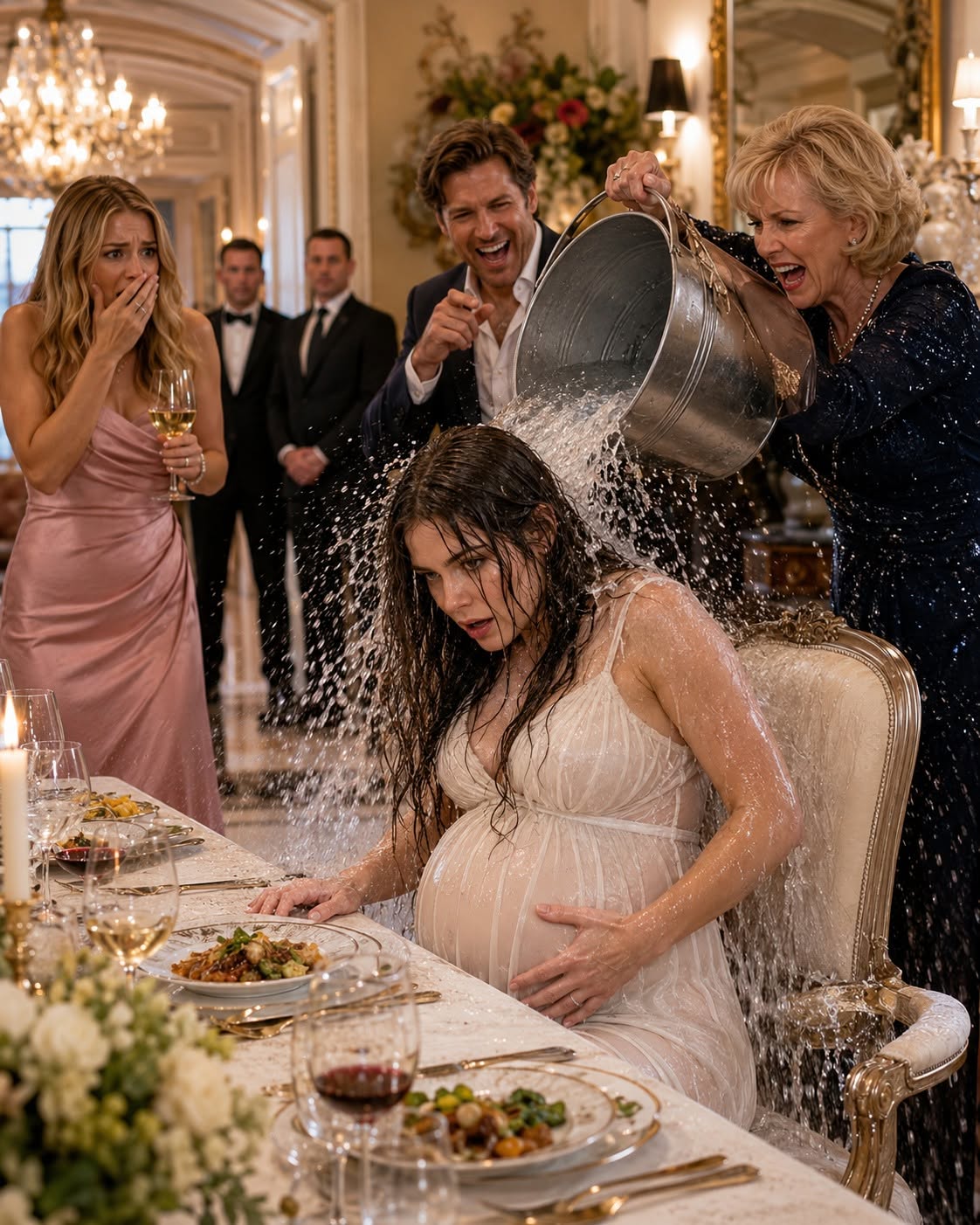
“You laughed while she dumped filthy water on me.”
“I know.”
“You followed me to my doctor.”
“She said you were planning to claim Brendan endangered the baby. I thought we needed evidence.”
“You thought stalking a pregnant woman would make you look innocent?”
Jessica began to cry. I did not feel sorry for her. Not yet.
“I was stupid,” she said. “I wanted what he promised me.”
“What did he promise?”
“Your life.”
The answer surprised me.
She continued before I could speak. “He said after the divorce he would become chief operating officer. Diane would control the foundation. We would move into the house and take over the Vale social calendar. He said you had no family, no influence, and no money to fight custody.”
My daughter kicked beneath my ribs.
“Did he ever tell you I owned the company?”
“No. When Marcus called you Ms. Vale, I thought it was a mistake.”
“What are you afraid of now?”
Jessica inhaled shakily. “Diane made me sign the surveillance contract. But the investigator sent more than photographs.”
“What else?”
“Medical records.”
Dr. Patel’s records.
My hand tightened around the phone.
“How?”
“I don’t know. The report included your blood type, medications, ultrasound notes, everything.”
“Where is it?”
“On a drive in Diane’s safe.”
“Why are you telling me?”
“Because after you left, I heard her talking to one of the attorneys. She said the prenatal file could ‘solve the heir problem’ if the board vote failed.”
Every person at the table went still.
“What does that mean?”
“I don’t know.”
“Are you still at the house?”
“Yes.”
“Go to the downstairs powder room. Lock the door. Marcus will send a team.”
“No.” Panic sharpened her voice. “They’ll see.”
“Then walk outside.”
“The gates are locked.”
Marcus was already issuing orders.
Jessica whispered, “Cassidy, there’s something else. Brendan has been meeting with a woman from the board.”
“Who?”
“I never saw her face. He called her ‘Aunt Evelyn.’”
Evelyn Shaw.
Lead independent director.
My mother’s closest friend.
One of the four votes I believed were loyal to the founder’s trust.
The line crackled.
Then Jessica gasped.
A door opened on her end.
Diane’s voice came softly through the speaker.
“Who are you calling, dear?”
The call ended.
Marcus sent two teams, but Diane’s temporary authority complicated entry into the company-owned residence. Her attorneys threatened trespass charges. Local police arrived, saw no visible emergency, and refused to force access without a warrant.
At 5:20, Priya recovered Elena’s deleted files.
The vendor network was worse than we imagined.
Over four years, thirty-two million dollars had moved through six shell companies. Foundation grants, communications retainers, consumer research fees, executive housing renovations, and private security contracts all fed the same accounts.
One beneficiary appeared repeatedly under initials only: E.S.
Evelyn Shaw.
Arthur stared at the screen. “She chairs the audit committee.”
“She also certified the foundation reports,” Priya said.
Celia leaned over the table. “That’s how the Custodians survived. They didn’t hide outside the company. They became the people responsible for oversight.”
I thought of Evelyn holding me at my grandfather’s funeral. She had called me her brave girl. She had urged me to step away from corporate life and heal.
Perhaps she had not been protecting me.
Perhaps she had been removing me.
At 6:03, an email arrived from Diane to the entire board.
Subject: EMERGENCY GOVERNANCE CONCERNS REGARDING CASSIDY VALE.
Attached were photographs from the Morrison dining room: me drenched in dirty water, standing over Diane, Marcus restraining Brendan. Without context, they looked chaotic and violent.
Diane’s message accused me of suffering an emotional breakdown, using armed security to terrorize family members, and inventing financial allegations after a humiliating divorce.
She included a statement from Brendan claiming I had hidden “serious prenatal complications” and become unstable under stress.
The prenatal file.
“They’re building an incapacity case,” Arthur said.
“Can they?” Elena asked.
“The second key exists specifically for an incapacitated heir,” Celia said.
I read Brendan’s statement again.
He knew my pregnancy was healthy.
He had attended the twenty-week scan. He had cried when he heard our daughter’s heartbeat.
Now he was using that child to take control from me.
Pain moved through my abdomen—not a contraction, Dr. Patel later assured me, but muscle tension. I placed both palms on the table and waited for it to pass.
Arthur watched me. “You cannot appear weak at the meeting.”
“I am pregnant, not made of stone.”
“I know. But they will turn every breath into evidence.”
Celia’s face hardened. “Then stop playing their game.”
“What do you suggest?”
“Tell the truth before they weaponize it.”
“All of it?”
“All you know. The hidden ownership. The fraud. Bellweather. Your mother. The threat to the baby.”
Arthur shook his head. “Public disclosure could destroy the company before we verify the historical claims.”
“The company may deserve to be destroyed,” Celia said.
“My forty thousand employees do not deserve to lose their livelihoods because executives buried crimes before many of them were born.”
“Then save the people, not the name.”
That sentence stayed with me.
At 6:45, Marcus received a message from his team outside the Morrison residence.
A woman had climbed through an upstairs bathroom window onto the roof.
Jessica.
Security officers caught her when she slipped from the gutter. She had a broken wrist, a cut on her forehead, and a flash drive taped beneath her blouse.
On it was my stolen prenatal file.
And a twelve-minute audio recording of Diane speaking to Evelyn Shaw.
We played it in silence.
Evelyn’s voice was unmistakable.
“Once Cassidy is declared medically compromised, the trusteeship transfers. Brendan keeps the heir under Morrison supervision, and the founder shares remain nonvoting until the child turns twenty-five.”
Diane replied, “And if the baby doesn’t survive?”
A long pause followed.
Then Evelyn said, “That would simplify everything.”
I did not cry.
I did not speak.
I listened until the recording ended.
Then I looked at the clock.
The board meeting began in seventy minutes.
“Arthur,” I said, “prepare the criminal referrals.”
“For the financial fraud?”
“For all of it.”
Marcus’s phone rang.
He answered, listened, and slowly turned toward me.
“Dr. Patel’s office was broken into twenty minutes ago.”
My chest tightened.
May you like
“What was taken?”
“Your stored blood samples.”