CHAPTER 17 THE HEIR ARRIVES
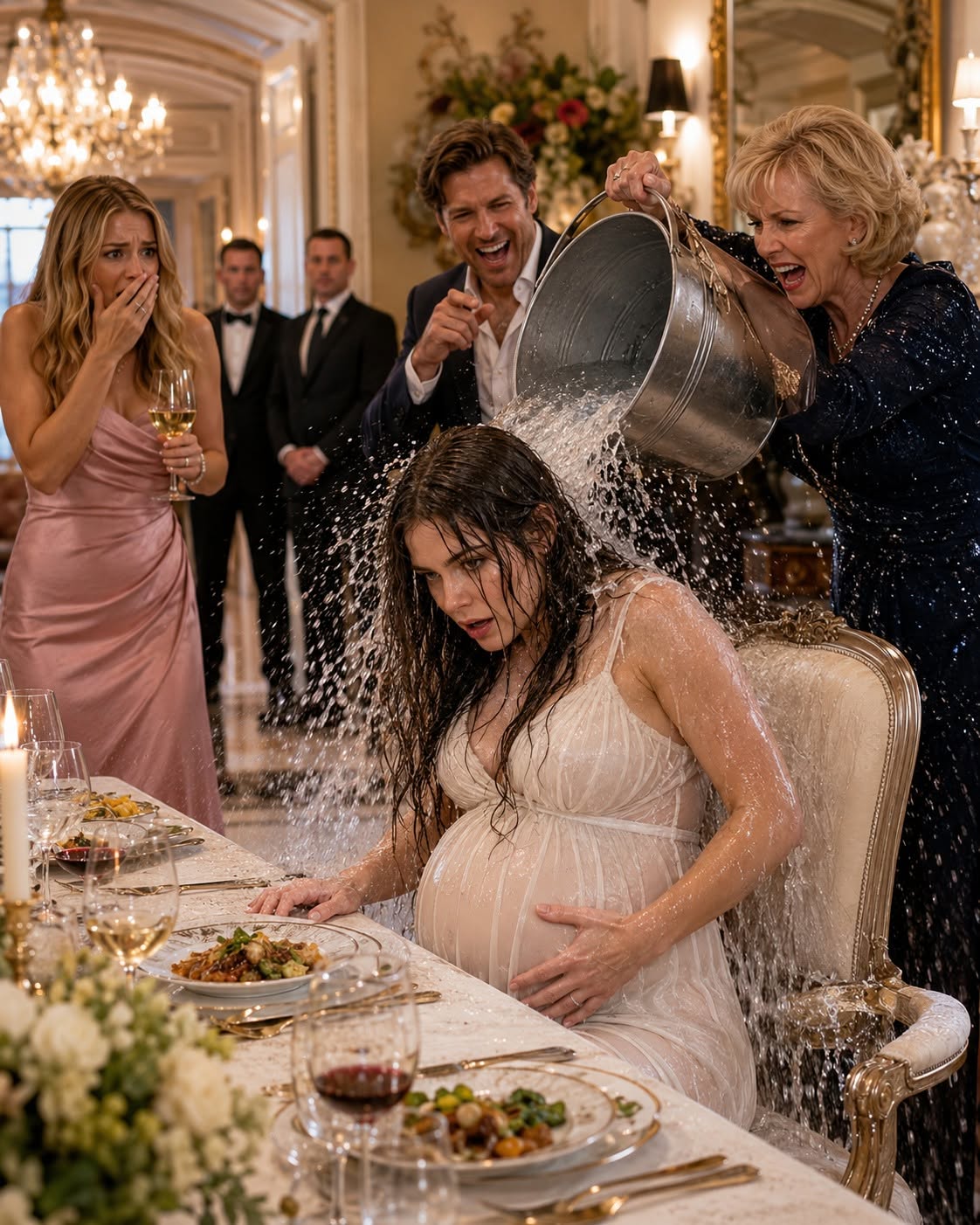
THE HEIR ARRIVES
The ambulance doors closed on the mansion, the surveillance room, and every person still arguing about control.
Inside, none of it mattered.
My daughter was coming too soon.
The paramedic secured monitors across my abdomen while Dr. Patel coordinated by video from the hospital. Contractions came four minutes apart. The baby’s heart rate remained stable, but premature labor carried risks I understood just well enough to fear.
Marcus rode in front. Arthur followed in another vehicle. Brendan stood in the driveway as we left, his face white beneath the flashing lights.
He did not ask to come.
That restraint was the first kindness he had shown me in months.
At the hospital, a maternal-fetal team moved with controlled speed. Steroid injections. Blood tests. Ultrasound. Neonatal specialists explaining possible breathing support, feeding tubes, temperature control.
I signed forms with a shaking hand.
“Can you stop labor?” I asked.
Dr. Patel studied the monitor. “We may be able to slow it, but the baby is tolerating contractions and you have signs that delivery may be safer than prolonging stress. We will decide hour by hour.”
Outside my room, the corporate war accelerated.
Priya sent me a one-page briefing every thirty minutes despite Arthur’s objection. Vale Meridian had disclosed the Bellweather investigation, announced a ten-billion-dollar reserve for medical and environmental claims, and halted executive bonuses and share buybacks.
The stock dropped twenty-eight percent.
Jonathan appeared on financial television accusing me of “unilateral destruction of shareholder value during a medical crisis.” Harrowgate launched its takeover campaign and claimed I lacked capacity to lead.
Social media split into armies.
Some called me brave.
Some called me a criminal heiress confessing only because she was caught.
Some mocked the paternity scandal even after the correction.
Thousands of Vale Meridian employees posted photographs from factories, labs, call centers, and delivery hubs holding signs that read:
TELL US THE TRUTH. KEEP OUR JOBS. DO BOTH.
I stared at those words longer than any stock chart.
Arthur entered wearing the same smoke-stained shirt from the night before.
“The board wants to appoint an interim chief executive while you are in labor,” he said.
“Reasonable.”
“They propose Priya.”
“Also reasonable.”
“Harrowgate proposes Jonathan.”
“Not reasonable.”
A contraction began. Arthur stopped talking and counted breaths with me until it passed.
“You have done that before,” I said.
“With my wife.”
I knew she died years ago, but we had rarely discussed her.
“Celia’s mother?”
“No. Miriam and I were divorced by then. My second wife, Lillian. We lost the baby.”
I looked at him.
“So many things no one says.”
“Yes.”
“Are you going to tell Celia?”
“If she asks.”
“Tell her before she has to.”
He nodded.
The board voted Priya interim chief executive by nine to two. Jonathan’s faction challenged the vote but failed. Founder control remained legally mine, yet I signed a temporary delegation limiting my authority to protective actions while hospitalized.
Not because Diane or Harrowgate demanded it.
Because responsible power includes knowing when not to use it.
At 4:17 p.m., federal agents confirmed Diane’s first daughter through DNA. Hope Mercer was alive in Vermont. She had limited speech, needed assisted care, and loved music.
Diane received a supervised video call.
Agent Ellis later described it to me.
Hope sat beside a window wearing a yellow sweater. When Diane said her name, Hope began humming. The melody was an old lullaby Diane had sung in the hospital thirty-eight years earlier.
Diane collapsed against the table and sobbed.
Then she signed a complete cooperation agreement without asking what she would receive.
Maybe people change.
Maybe they simply reach the one consequence they cannot bargain with.
Her testimony identified judges, consultants, doctors, and former executives who participated in the Bellweather concealment. It also revealed Evelyn’s escape plan: a private medical flight arranged through Harrowgate.
Jonathan denied knowledge.
His signature authorized the plane.
At 6:40 p.m., Celia visited my room.
She stood awkwardly near the door.
“Arthur told me about Lillian,” she said.
“Good.”
“He also told me he kept my room unchanged for fifteen years.”
“What did you say?”
“That it was creepy.”
I laughed, then regretted it when another contraction began.
Celia came to the bedside and let me grip her hand.
When it passed, she said, “You squeeze like Elias.”
“You knew him?”
“Ruth took me to see him once when he was dying. He did not know who I was at first. Then he cried.”
“He told me to trust the lost child.”
“He gave Ruth the second key and told her I would know when to use it.”
“You used it to break into my office.”
“I did not inherit his sense of ceremony.”
For a moment, we smiled.
Then she became serious. “Jonathan contacted me.”
My body went cold despite the blankets.
“What did he want?”
“He offered proof that Thomas Reed tried to stop my mother’s crash. In exchange, he wants me to testify that Arthur and you manipulated the Bellweather evidence.”
“Will you?”
“No.”
“Why tell me?”
“Because he included a photograph of Ruth taken yesterday.”
Ruth Mercer was alive.
We had assumed she died five years earlier based on records Celia received from a care facility in Canada.
Another false death.
The photograph showed an elderly woman in a wheelchair beside a window. A newspaper on her lap displayed yesterday’s date.
Jonathan’s message read:
WITHDRAW THE DISCLOSURE OR SHE STOPS RECEIVING CARE.
Celia’s face was white with rage.
“He controls the facility,” she said. “Harrowgate owns the chain.”
Arthur entered as she spoke. When he saw the photograph, he gripped the bed rail.
“Where?”
“Quebec, maybe. The window shows a river and a red church.”
Marcus’s analysts began geolocating landmarks. Canadian authorities were contacted.
Jonathan called me directly.
Dr. Patel tried to stop the conversation. I answered anyway.
“You are busy,” he said.
“My daughter is coming.”
“Then you understand urgency.”
“You are threatening an old woman’s medical care.”
“I am demonstrating the fragility of systems. Harrowgate keeps thousands of vulnerable people alive. Markets are not abstractions.”
“Neither is Ruth.”
“Withdraw the Bellweather release, restore confidentiality, and nominate me as executive chairman. Her care continues.”
“The records are already public.”
“Then issue a statement questioning their completeness.”
“No.”
“Cassidy, do not confuse stubbornness with courage.”
“Do not confuse money with ownership of people.”
He sighed. “Your grandfather would have understood.”
“My grandfather built Protocol Seven because he stopped trusting people like you.”
“I am people like him.”
“That is not the defense you think it is.”
Marcus held up a tablet. Location identified: Saint-Claire Residence outside Quebec City. Police were en route.
I kept Jonathan talking.
“Did my mother help stage your death?”
“Yes.”
“Did she know you were building Harrowgate?”
“Not at first.”
“Did she ask you to come back?”
A pause.
“Many times.”
“And you refused.”
“The risk remained.”
“She was dying.”
“She chose to remain visible.”
“So you punished her for courage too.”
His voice hardened. “I survived to preserve your future.”
“No. You survived because disappearing let you have power without responsibility.”
Marcus signaled that police had entered the facility.
I said, “Ruth is safe.”
Silence.
Then Jonathan disconnected.
Twenty minutes later, Harrowgate’s general partner removed him pending investigation. Without control of the fund, his takeover campaign fractured.
But he still held something more dangerous than voting agreements.
Diane told investigators that Jonathan had obtained a copy of the founder trust’s biological succession clause. If I died before my daughter’s legal birth was registered, control could pass temporarily to the nearest living Vale descendant.
Jonathan.
I read the clause twice.
It had been drafted in 1979, before modern neonatal law, and never updated.
Arthur said a court would likely reject its application.
Likely was not enough.
By evening, messages from employees reached the hospital through a secure portal. A plant supervisor in Ohio wrote that his team supported disclosure but feared layoffs. A software engineer in Austin offered to donate a week of salary to Bellweather. A retired machinist sent a photograph of my grandfather eating lunch on an overturned crate in 1982.
Not every message was kind. One shareholder called me a reckless princess. Another employee said executives always discovered ethics after collecting dividends. Both criticisms contained enough truth to hurt.
I recorded a brief internal message from the hospital bed. I did not promise there would be no layoffs or losses. I promised that executive protection would not come first, that financial plans would be published, and that employee representatives would sit on the restructuring committee.
Afterward, Dr. Patel adjusted the monitor. “You realize normal patients watch television during labor.”
“I am watching a hostile takeover.”
“That is not better.”
Hope’s heartbeat filled the room, quick and insistent. I placed my palm over the sound. For all the legal language surrounding her, her only demand was biological: oxygen, time, safety.
At 11:03 p.m., the fetal monitor alarm sounded.
My daughter’s heart rate dropped.
The room filled with people.
Dr. Patel examined me and made the decision.
“We are delivering now.”
As they rushed me toward surgery, Agent Ellis called Marcus.
May you like
Jonathan had vanished from federal surveillance.
His abandoned car was found in the hospital parking garage.