CHAPTER 14 DIANE’S FIRST CHILD
DIANE’S FIRST CHILD
Diane Morrison had built her life around one story.
She was the perfect wife who guided a difficult husband.
The devoted mother who raised a brilliant son.
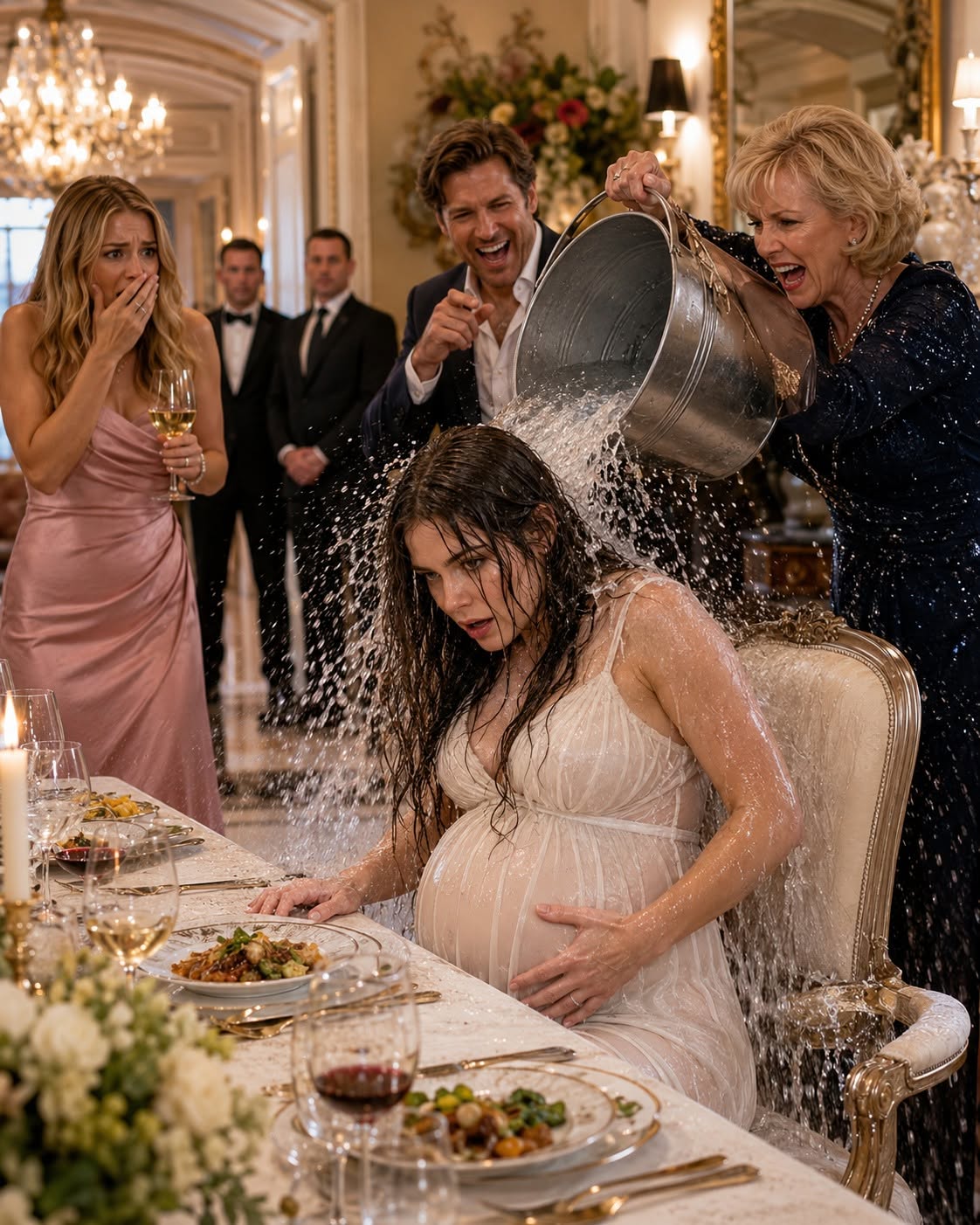
The gracious foundation chair who served the poor while wearing diamonds donated by people whose names appeared on hospital wings.
There was no place in that story for a first baby.
Arthur found the sealed birth record before sunrise.
A girl born thirty-eight years earlier at St. Anne’s Hospital in Bellweather.
Mother: Diane Louise Mercer.
Father: unlisted.
Child: female, transferred to county care after forty-eight hours.
Diane’s maiden name was not Mercer. Official records listed it as Bell.
But Ruth Mercer—the nurse who raised Celia in hiding—had used Mercer all her life.
“Were they sisters?” I asked.
Arthur shook his head. “No family link appears in ordinary records.”
Celia sat beside the hospital window, a bandage at her hairline. “Ruth once told me Mercer was a name you could disappear inside.”
Elena, working from a laptop at the foot of my bed, found a second record: the infant had been adopted privately six months later through a law firm used by Vale Meridian.
The adoptive file was sealed.
“Can a court open it?” I asked.
“With cause,” Arthur said. “Evelyn’s criminal investigation may be enough.”
Marcus entered holding a paper cup of coffee he had forgotten to drink. He had not spoken about his father since the nursery standoff.
“Diane is requesting a deal,” he said. “She claims she can identify the Custodians’ remaining assets and Evelyn’s offshore accounts.”
“In exchange for?”
“Release pending trial and immunity from kidnapping charges.”
“No.”
Arthur lifted one eyebrow. “The prosecutors decide immunity.”
“Then tell them the victim opposes it.”
Marcus looked at the burned note. “She may talk about the child if you ask.”
The interview took place through secure video because Dr. Patel would not allow me to leave the maternity floor.
Diane appeared in a county detention room wearing gray clothing without jewelry or makeup. For the first time, I saw how much of her authority came from staging.
She still held herself straight.
“Enjoying the view?” she asked.
“I’m trying to understand my mother’s warning.”
Her face did not change.
I held up the recovered note.
Ask Diane what happened to her first baby.
Something moved in her eyes.
Then vanished.
“I had no first baby.”
“St. Anne’s Hospital says otherwise.”
“Records can be forged. Your family taught everyone that.”
“Diane Louise Mercer.”
Her mouth tightened.
“Who was the father?”
She looked toward her attorney. He advised her not to answer.
I leaned closer to the screen.
“You spent years calling me a burden. You mocked my pregnancy, stole my records, and discussed taking my daughter. Was all of it because someone took yours?”
For one second, grief cracked her face.
Then rage sealed it again.
“They did not take her.”
“What happened?”
“She was sick.”
“From Bellweather?”
Diane looked away.
The baby had been born with a heart defect and tremors consistent with the River plant exposure. Vale Meridian executives paid for treatment on the condition that Diane sign confidentiality papers. When the child’s care became expensive, a company lawyer arranged adoption by a family with better medical insurance.
“I was eighteen,” Diane said. “Alone. My mother cleaned offices at the plant. They told me the baby would die if I kept her.”
“Did she?”
“I don’t know.”
“You never looked?”
“I looked every day for twelve years.”
Her voice broke, and suddenly I saw the young woman beneath the cruelty—a frightened teenager told that wealth could save her child only if she surrendered her.
It did not excuse what Diane became.
But it explained where the first wound had opened.
“Ruth helped you disappear under Mercer,” I said.
“She worked at St. Anne’s. She tried to stop the adoption. Later, she contacted me and said the records were false.”
“What was false?”
“The adoptive parents. The placement. Everything.”
“Who took the baby?”
Diane looked directly at me.
“Caroline.”
My breath caught.
“Why?”
“Your mother believed the child’s illness proved the plant contamination. She moved her into private care under Second Foundation protection.”
“Where?”
“I don’t know. Caroline said the baby would be safer if no one knew. She promised to bring her back when the investigation ended.”
“It never ended.”
“No.”
“And you joined the people responsible?”
Diane’s eyes hardened. “I learned that powerless women lose their children. I decided never to be powerless again.”
“So you helped them take other people’s children?” Celia asked from beside me.
Diane stared at her through the screen.
Recognition slowly changed her face.
“Who are you?”
“Celia Hale.”
Diane closed her eyes.
“You knew I was alive,” Celia said.
“I suspected.”
“You approved the operation.”
“I approved pressure. Not murder.”
“You keep making that distinction.”
“It mattered to me then.”
“And now?”
Diane looked old.
“Now very little matters.”
I returned to the question. “What was your daughter’s birth name?”
Her lips trembled.
“Hope.”
Elena froze at the laptop.
“What?” I asked.
She turned the screen toward us. The Vermont care facility receiving monthly payments from Second Foundation housed a long-term patient named Hope Mercer.
Age thirty-eight.
Congenital heart disease. Neurological impairment. No listed relatives.
Diane’s face crumpled.
For the first time since I met her, she cried without using tears as a weapon.
“She’s alive?”
“We don’t know whether it’s the same person.”
“It’s her.”
“You cannot know that.”
“Caroline promised.”
Diane pressed both hands to the table. “Take me to her.”
“You are in custody.”
“Cassidy, please.”
The word please sounded foreign in her mouth.
I thought of the bucket of dirty water. Of her laughter. Of the nursery prepared to take my daughter. Of a terrified eighteen-year-old signing away a sick baby because a corporation controlled medical care.
Justice and mercy stood in the same room and refused to look at each other.
“I will ask prosecutors to arrange a verified video call after DNA confirmation,” I said. “Nothing more.”
“Hope may not understand who you are,” I warned. “She may not want contact. The facility will decide what is medically and emotionally appropriate.”
Diane pressed her lips together. “I understand.”
“No, you don’t. You are hearing that someone else controls access to a person you love. That is what you tried to do to me.”
She recoiled as if I had slapped her.
“I was trying to protect my granddaughter.”
“You prepared legal documents before she was born. You monitored my pregnancy. You treated my death as a path to custody.”
Tears remained on her face, but her voice hardened. “Because I knew what families like yours do.”
“And you became worse than them.”
The attorney beside her shifted uncomfortably. Diane stared at the table.
“When Caroline told me Hope was alive, I begged for a photograph,” she said. “She refused. She said information could become a weapon.”
“She was right.”
“She also became the one holding it.”
That was true. My mother had protected Hope by taking the decision away from Diane. Maybe no safe choice existed. Maybe secrecy had been necessary for a time and unforgivable when it became permanent.
“What would you have done if Caroline returned Hope to you?” I asked.
Diane answered without hesitation. “I would have left everything.”
“Even the foundation?”
“Yes.”
“Even power?”
Her pause lasted less than a second. It was still too long.
I saw that she recognized it too.
“Perhaps,” she whispered, “that is why Caroline never trusted me.”
For several seconds, neither of us spoke. The detention-room camera continued recording, indifferent to grief. Diane wiped her face with the rough sleeve of her uniform and seemed surprised by the absence of a handkerchief, an assistant, or someone paid to protect her dignity. The ordinary discomfort humbled her more than any headline had.
Diane nodded rapidly. “Thank you very much, Cassidy.”
“But you tell them everything. Every account. Every threat. Every Custodian.”
Her gratitude vanished into calculation.
There she was again.
“What do I receive?”
“The chance to tell your daughter why you chose power over becoming someone she could be proud of.”
Diane stared at me.
Then she gave the investigators three offshore banks, two political intermediaries, and the name of the private equity firm financing Evelyn’s escape.
Harrowgate Capital.
One of Vale Meridian’s largest outside shareholders.
Priya called minutes later with worse news.
Harrowgate had acquired additional shares during the morning collapse and demanded an emergency shareholder meeting. Combined with pledged votes from frightened institutions, it could challenge my control if founder shares were restricted by criminal or medical proceedings.
“They’re using the scandal to launch a takeover,” Arthur said.
Diane smiled faintly from the screen. “Evelyn always believed disaster was simply a discounted purchase.”
“Who leads Harrowgate?” I asked.
Diane looked at me with something close to pity.
“Your father.”
May you like
My father had died when I was six.
At least, that was the second story my family had built my life around.