CHAPTER 20 WHAT WE BUILT AFTER
WHAT WE BUILT AFTER
One year later, the old Morrison mansion became a recovery center for families affected by corporate environmental harm.
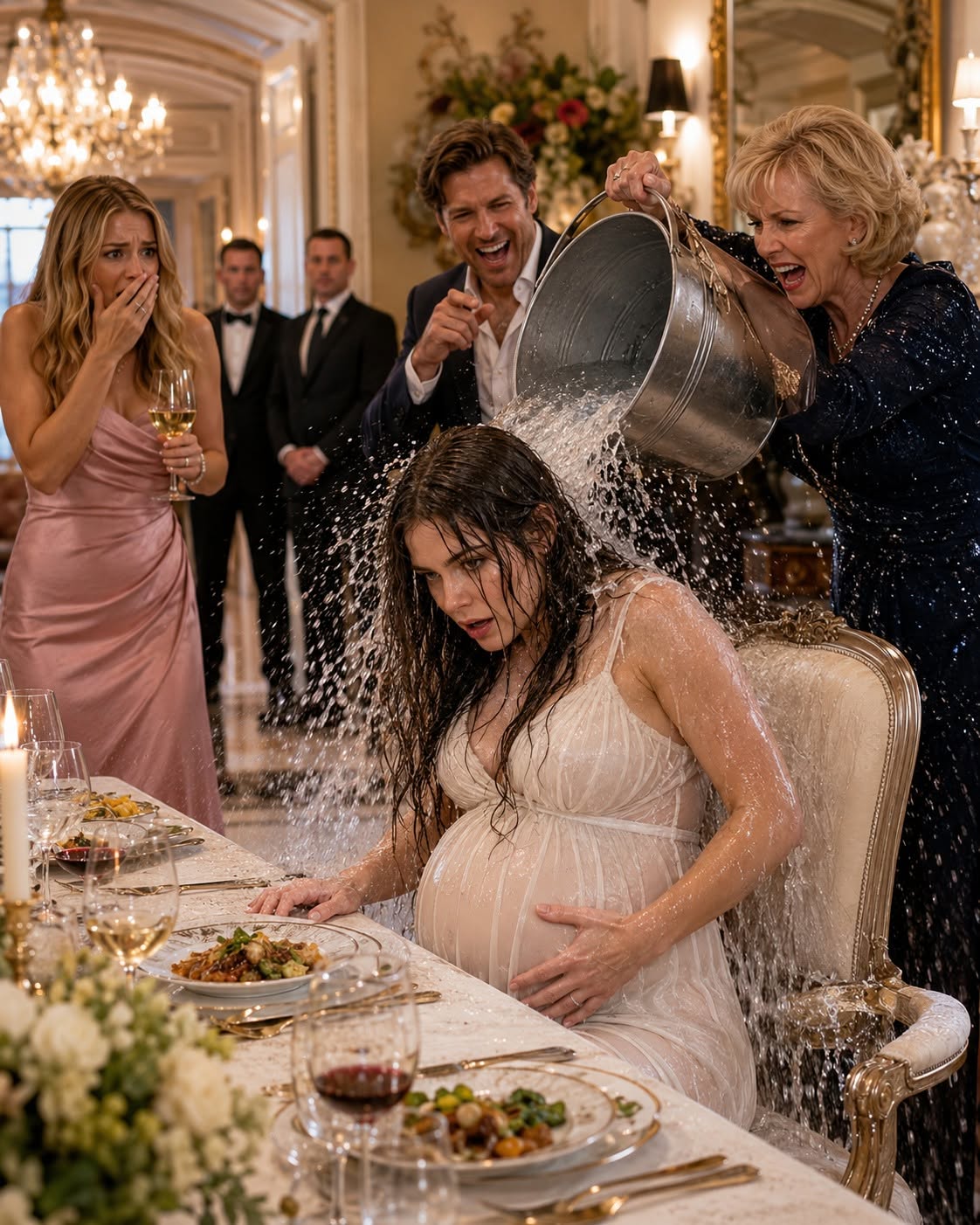
The dining room where Diane poured filthy water over me was converted into a legal clinic. The surveillance room became evidence storage for independent investigators. The burned nursery was rebuilt as a quiet playroom with wide windows facing the garden.
The Persian rug was never replaced.
I wanted the floor to remember.
Vale Meridian survived the year, though survival looked nothing like victory.
We sold three divisions, closed two executive clubs, canceled private aircraft leases, and reduced headquarters spending by forty percent. Senior leaders lost bonuses. Some shareholders sued. Some directors resigned. Competitors took customers. Headlines declared us finished at least once a week.
But payroll never stopped.
Pensions remained funded.
The Bellweather Medical and Restoration Trust opened claims without requiring silence. Water systems were replaced. Families received lifelong screening. Northstar’s monitors entered hospitals under an open research program, and its environmental findings were published whether they helped the company or hurt it.
The stock recovered slowly.
Trust recovered more slowly.
That was appropriate.
I served as executive chair during transition, then kept my promise and stepped into a single board seat. Priya became permanent chief executive by unanimous vote. She changed the executive floor dress code, eliminated reserved elevators, and required every senior officer to spend two weeks each year in field operations.
“Your grandfather would call it theater,” she told me.
“My grandfather built a private apartment above the boardroom.”
“Fair point.”
The founder’s floor became a public archive and ethics institute. Elias’s bedroom remained preserved behind glass, not as a shrine, but as a warning that a company should never become one person’s home.
Arthur retired as general counsel six months after the vote.
He claimed he wanted to garden.
Celia claimed he did not know the difference between a garden and a legal brief.
They lived in separate houses twenty minutes apart and had dinner every Thursday. Some weeks they argued. Some weeks Celia left early. Some weeks they sat until midnight reading Miriam’s letters.
Repair did not look like a reunion photograph.
It looked like returning the next Thursday.
Marcus remained head of security after an independent review concluded that he had not known his father’s history. He published the review anyway, including the findings that embarrassed him. He later created a witness-protection unit governed outside executive control.
Elena graduated at the top of her accounting class.
She rejected three offers from Vale Meridian before accepting a role in the independent oversight office.
“I don’t want anyone to think you rewarded me,” she said.
“I’m offended you believe I would underpay you as a reward.”
She laughed.
Jessica pleaded guilty to unlawful surveillance and obstruction. She avoided prison after extensive cooperation but lost her professional license and performed community service with a maternal health privacy organization. She sent one letter apologizing to me.
I did not answer.
Not every apology requires a relationship.
Diane received an eight-year sentence.
Before sentencing, she stood in court and admitted that pain did not excuse the pain she caused. The judge called her cooperation substantial and her conduct devastating.
Hope Mercer attended by video from Vermont. She did not understand the legal details. When Diane spoke, Hope hummed the same lullaby.
Diane cried quietly.
I visited Hope twice with my daughter.
The first time, Hope Caroline Vale was six months old and fascinated by the yellow beads on her namesake’s sweater. Older Hope touched the baby’s foot and smiled.
Diane had asked me to tell her daughter that she was sorry.
I did.
Hope listened, then returned to humming.
Some lives cannot be repaired by the person who broke them.
That truth belongs beside mercy.
Evelyn received twenty-two years after providing evidence against surviving Custodians in three states. She wrote to me from prison, arguing that history would prove she had saved more lives than she harmed.
I sent the letter to the public archive without replying.
Jonathan’s trial had not yet begun. His attorneys claimed he suffered from a delusional belief that only he could preserve Vale Meridian. Prosecutors called it motive, not illness.
He requested photographs of his granddaughter.
I declined.
When Hope is old enough, she may choose what relationship, if any, she wants with the man who tried to use her birth as a succession event.
Brendan’s path was more complicated.
He pleaded guilty to financial conspiracy, evidence obstruction, and unauthorized access. Because he cooperated early enough to prevent further harm and physically stopped Jonathan at the hospital, he received a reduced sentence of eighteen months followed by strict probation.
Before reporting, he signed away every claim to my assets, accepted sole legal custody for me, and agreed that future contact with Hope would depend on therapists, courts, and her well-being—not his rights alone.
He saw her four times in supervised visits before prison.
At the first, he brought an expensive stuffed horse. Hope cried.
At the second, he brought nothing and sat on the floor while she crawled around him.
At the third, she handed him a wooden block.
At the fourth, she fell asleep against his chest.
He cried after she left.
I did not comfort him.
But I did not take the memory away.
My relationship with Brendan was over. Completely.
Co-parenting, if it eventually became possible, would not be a romantic redemption. It would be a long test of whether remorse could become behavior.
I had learned not to confuse emotional scenes with change.
On Hope’s first birthday, we held a small gathering at the Bellweather school gymnasium.
No ballroom.
No diamonds.
No publicist.
Samuel Lorne brought a wooden music box that played Diane’s lullaby. Elena brought a tiny calculator as a joke. Priya brought a hard hat with HOPE printed across the front. Marcus brought a child-sized raincoat because he believed preparedness should begin early.
Arthur brought nothing.
Celia carried a wrapped package from both of them.
Inside was a small brass compass made from the melted founder keys.
The old V had been removed.
On the back were four words:
POWER MUST ANSWER TO PEOPLE.
I held it in my palm.
“You actually melted them,” I said.
Celia smiled. “Arthur objected for three weeks.”
“They were historical artifacts,” he said.
“They were keys to a governance disaster.”
“They could have gone in a museum.”
“They are in a museum. A portable one.”
Hope grabbed the compass and immediately tried to put it in her mouth.
Arthur looked horrified.
Celia laughed so hard she had to sit down.
The moment was ordinary.
That made it precious.
Later, after the guests left, I walked with Hope to the river.
The water had been tested that morning. Safe levels. Not perfect. Better.
I sat on the bank where my mother once met families under the name C. Hart. Hope leaned against me, warm and sleepy.
For years, I believed hiding my name allowed me to find honest love.
The truth was more complicated.
Hiding protected me from some people and exposed me to others. It let me live without the noise of wealth, but it also let me avoid looking directly at what wealth had done.
My daughter would not inherit that avoidance.
She would know who her family was.
All of them.
The builder who concealed harm because he feared collapse.
The mother who tried to make restitution without confession.
The father who disappeared and turned protection into control.
The husband who loved, betrayed, and finally told the truth too late to save the marriage.
The women who weaponized loss.
The survivors who refused to disappear.
And me.
The woman who waited too long to use her power, then almost mistook punishment for justice.
Hope stirred and opened her eyes.
The late-afternoon sun turned the river gold.
“Someday,” I told her, “people will tell you this company belongs to you.”
She blinked at me.
“It doesn’t. Not the way they mean. You may inherit shares. You may inherit stories. But you do not inherit the right to own other people’s futures.”
She reached for the brass compass hanging from my hand.
I closed her fingers around it.
“Choose what you build. Choose who you become. And when anyone says cruelty is necessary to protect something valuable, look closely at what they are protecting.”
A church bell sounded across Bellweather.
Hope smiled.
Behind us, the old school lights came on for an evening support meeting. Families arrived carrying medical folders, children, casseroles, questions, anger, and hope that did not need to be capitalized to matter.
I stood and carried my daughter toward them.
I thought about the night in the dining room and the version of me who believed one command would simply cut off the people who mocked her. She had not known that pulling one thread would expose an entire history. She had wanted distance. What she found was responsibility.
Protocol Seven had begun with three words typed in silence.
It ended with no secret command.
No hidden owner.
May you like

No single key.
Only a door held open, and people walking through it together.